Last updated November 17, 2026

Free written scope consultation - allowances, timeline, and change-order rules on paper before a single trade is scheduled
The Complete Driveway & Pavers Guide for Mesquite Homeowners
Mesquite sits on some of the most expansive clay soil in Texas, soil that can move up to 4 inches vertically in a single season. Most driveway guides were written for somewhere else, for sandy coastal lots or gravelly hill country plots, and they leave out the one variable that decides whether your driveway looks the same in October as it did in April. A paver job that looks flawless in spring can be heaving and cracked by fall if the base wasn’t built for this ground. This guide covers what the clay actually does, how each material holds up under Mesquite heat and soil movement, why drainage grading matters more than the surface, the permit and HOA rules that catch homeowners off guard, and real installed cost ranges for Mesquite.
Quick Answer
A driveway in Mesquite needs an engineered base built for expansive clay, not a standard six-inch gravel bed borrowed from a milder climate. Interlocking concrete pavers on a properly graded, compacted base tolerate that soil movement far better than poured concrete or asphalt, which is why they cost more up front ($12 to $22 per square foot installed) and hold up longer in North Texas. Get the grading and drainage right and most Mesquite driveways last decades. Skip it and even premium pavers fail within a few years.
Styles & brands we work with
- Kitchen remodeling
- Bathroom remodeling
- Home additions & ADU
- Roofing
- Windows & doors
- Driveway & pavers
- Fence
Table of Contents
- Why Mesquite’s Clay Soil Changes Every Driveway Decision
- Concrete vs. Asphalt vs. Brick vs. Interlocking Pavers
- How Deep Should the Paver Base Be in Mesquite?
- Drainage Grading: The Part That Actually Decides Durability
- City of Mesquite Permits and HOA Rules
- What a Driveway Costs in Mesquite
- Step-by-Step: How a Paver Driveway Goes In
- Patterns, Colors, and Choosing a Look That Ages Well
- Keeping It Alive in Texas Heat
Why Mesquite’s Clay Soil Changes Every Driveway Decision
The blackland clay under Mesquite swells when it’s wet and shrinks when it dries. In a wet spring it takes on water and lifts; through a dry August it contracts and drops. That shrink-swell cycle is measured as a shrink-swell index, and the soils mapped across much of Dallas County and the Mesquite area rate high on that scale. A slab poured over it doesn’t sit still. It gets pushed and pulled from underneath, and the first hairline cracks show up where the soil moved most.
What this means for your driveway comes down to a few practical facts:
- Your base is the real driveway. The pavers or concrete are a wearing surface. The graded, compacted aggregate under them does the structural work, and in clay country that base has to be deeper and better drained than in sandy soil.
- Water is the enemy, not the clay itself. Clay stays stable when its moisture is consistent. The failure starts when water pools in one spot and not another, so one corner of the driveway is always wet and the rest is always dry.
- Tree roots compound it. Mature pecans, oaks, and elms pull moisture out of the clay and shift it around, which is a real consideration on the older lots in neighborhoods like Lawson and Town East.
- Summers test it. Long stretches near or above 100°F dry the soil hard, and that’s when edges curl and slabs fault if they were never reinforced for movement.
We’ve seen plenty of driveways in Mesquite that were installed perfectly by the book, just the wrong book. A base spec written for a milder climate doesn’t hold here. When we quote a job, the soil report and the grading plan drive the number more than the pavers do.
Concrete vs. Asphalt vs. Brick vs. Interlocking Pavers
Every material has a fair case in Mesquite, but they age very differently once the clay starts moving and the sun starts working on them. Here’s the honest side-by-side.
- Poured concrete costs the least up front, roughly $6 to $10 per square foot installed. It’s rigid, so it fights the clay rather than flexing with it, and in Mesquite heat it wants control joints and steel reinforcement to keep cracking controlled. Expect cracks over time and periodic patching. A crack isn’t a failure, but it’s part of the deal.
- Asphalt runs $5 to $9 per square foot installed. It flexes with soil movement better than concrete, which helps on clay, but Texas sun softens it and it needs resealing every couple of years. It also holds heat, which matters on a west-facing driveway.
- Clay brick looks timeless and handles heat well, at $14 to $25 per square foot installed. Bricks are rigid units, so they need a solid base and careful edge restraint to keep from shifting. Set properly, they’re very durable.
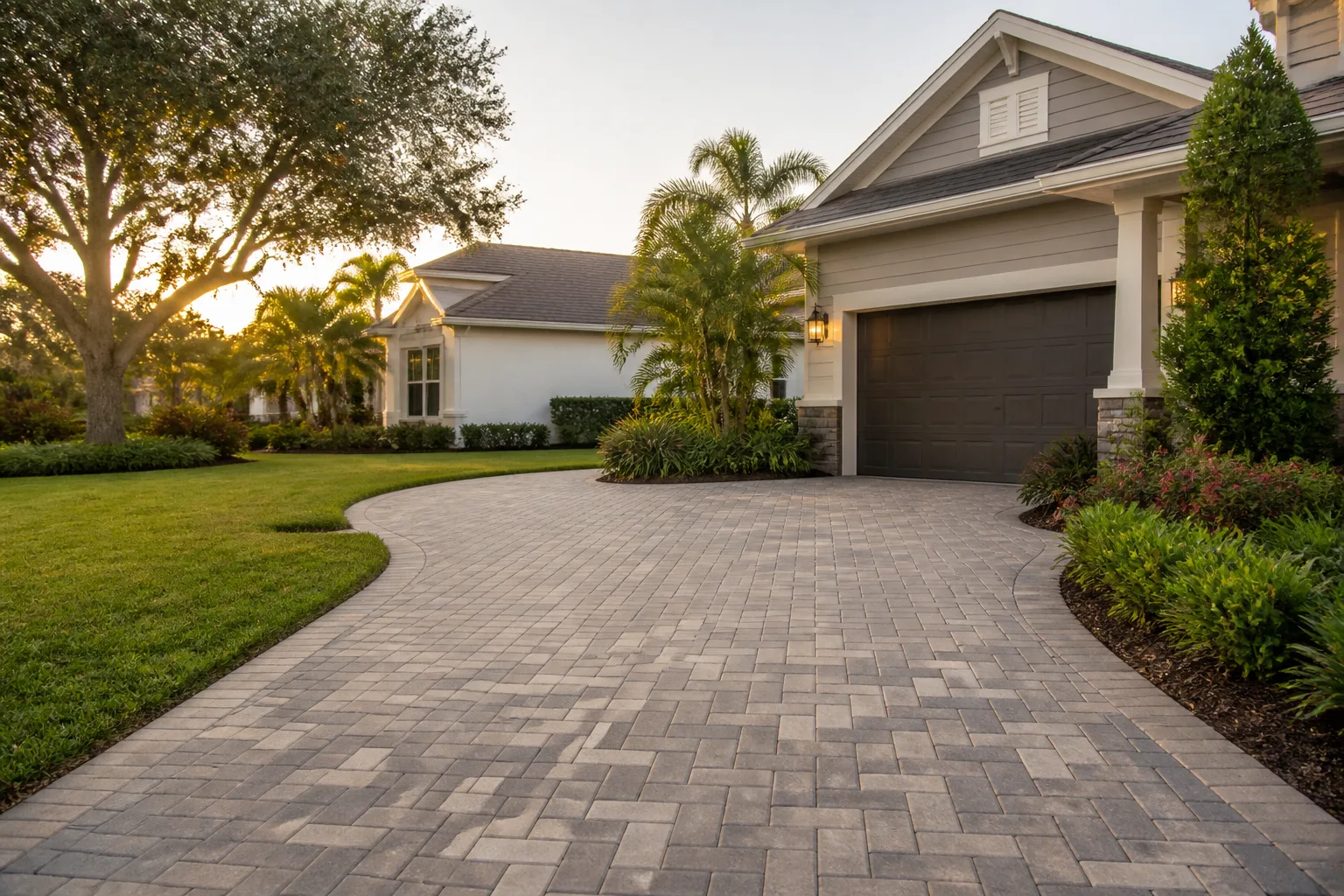
- Interlocking concrete pavers cost $12 to $22 per square foot installed and are the best fit for expansive soil. The units flex slightly as a system, joints let water drain through to the base, and a cracked or stained paver swaps out without touching the rest. That’s why we recommend them for most Mesquite driveways where the budget allows.
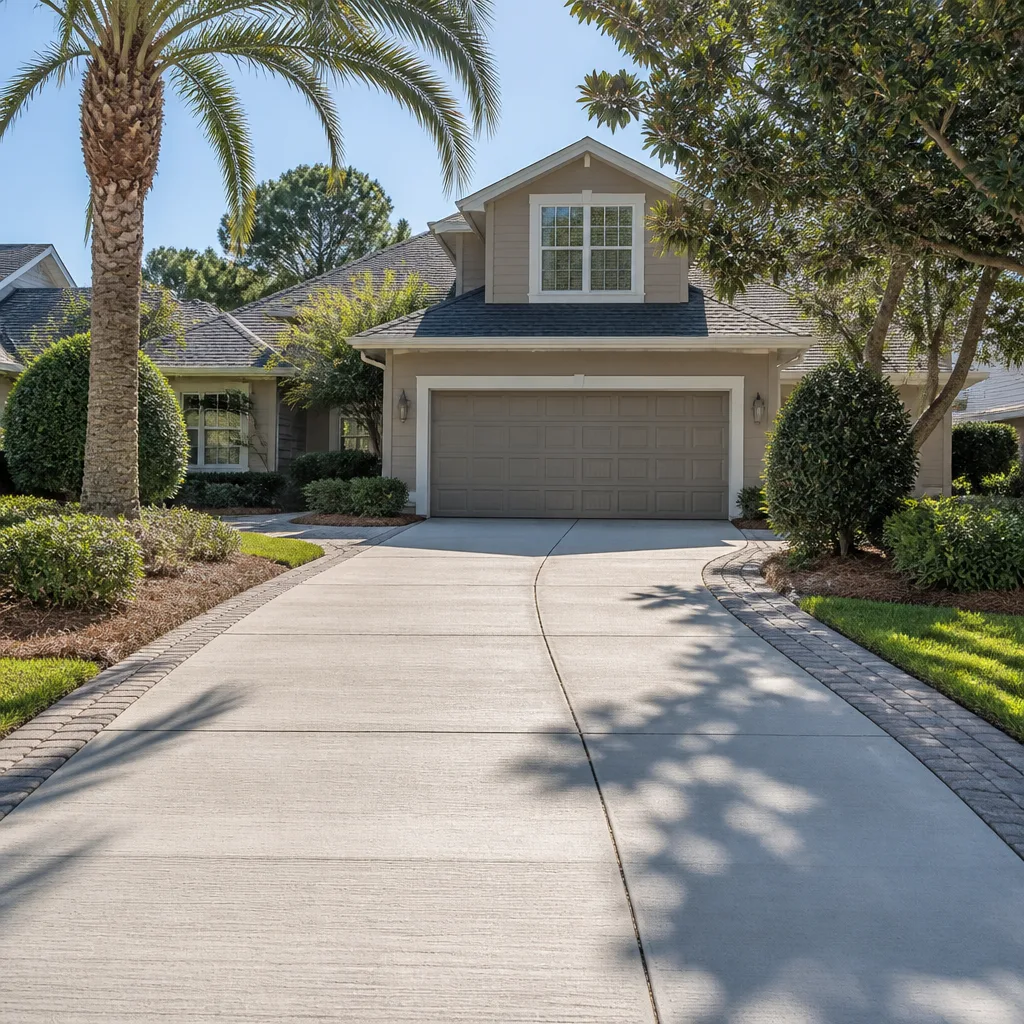
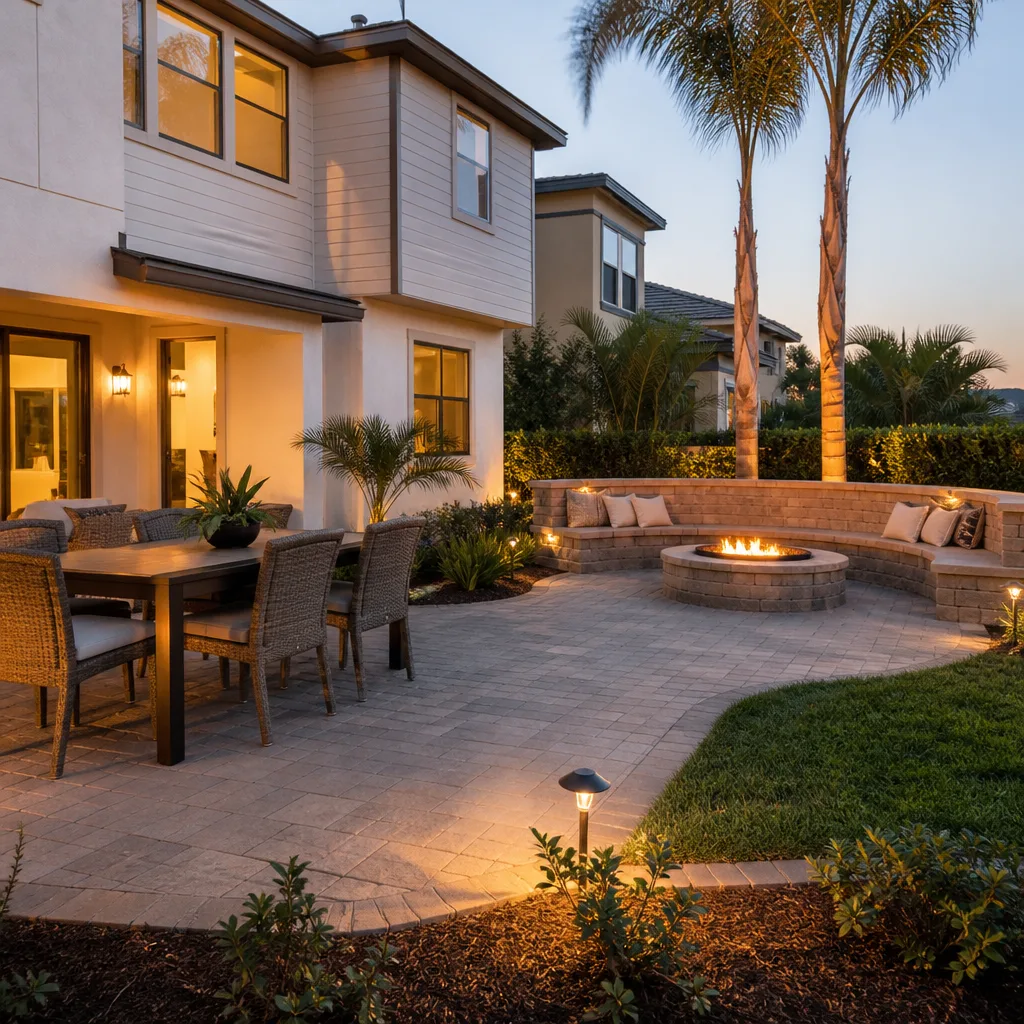
If you want the surface to match a patio or walkway, we can tie the driveway into the same hardscape family. You’ll find more on our Driveway & Pavers in Mesquite page, including how we handle color and pattern continuity from the street to the back door.
How Deep Should the Paver Base Be in Mesquite?
This is where local knowledge separates a driveway that lasts from one that doesn’t. A standard paver base in many parts of the country is 4 to 6 inches of compacted aggregate. In Mesquite’s clay, that’s often not enough. For a residential driveway here we typically build a base of 8 to 12 inches of graded, compacted crushed stone, sometimes deeper where the soil is worst or the driveway carries heavier vehicles.
A few things drive the number up or down:
- Soil condition at the site. Two lots a mile apart can behave differently. A quick look at the ground and how it drains tells us a lot before we ever dig.
- Traffic. A standard family car needs less than a heavy truck or an RV pad. Tell us what parks there.
- Existing grade. A driveway that needs to shed water away from the garage may need extra base and a slight slope, which affects depth.
- Drainage design. If we’re moving water to a specific low point or a French drain, the base profile changes.
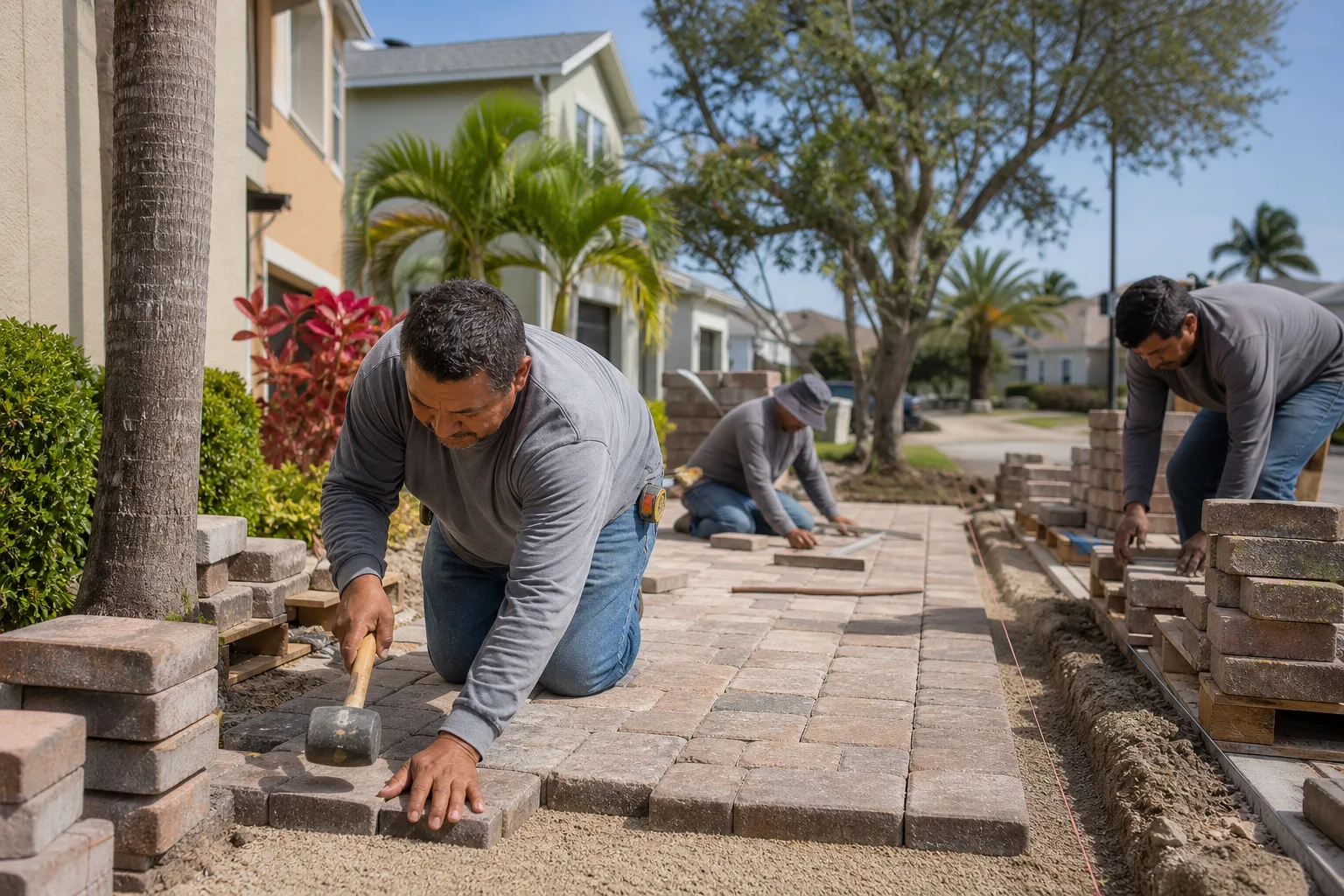
The base gets compacted in lifts, usually 2 to 4 inches at a time, with a plate compactor. Skipping the lifts is one of the most common shortcuts, and it’s invisible once the pavers go down. It just shows up later as settling. Our technicians have up to 12 years of experience building hardscapes in North Texas clay, and we’ll walk you through the base plan before a shovel hits the ground.
Drainage Grading: The Part That Actually Decides Durability
Pavers don’t fail because the pavers are bad. They fail because water sat under them. In Mesquite, where clay holds water rather than draining it away, grading is the single most important design decision on the whole job.
Good drainage on a Mesquite driveway means a few things done right:
- Slope away from the house. A minimum of about 2% fall away from the garage and foundation keeps water moving instead of sitting against the slab.
- A permeable base. Open-graded stone under the pavers lets rain pass through the joints and into the base rather than sheeting across the surface.
- Edge restraint. A solid border locks the pavers in place and keeps the base from spreading at the edges, which is where drainage issues often start.
- A plan for the low side. If the lot drains toward the street or a neighbor, we design for that. A channel drain, French drain, or a graded swale handles the water that has nowhere else to go.
- Roof and gutter coordination. Downspouts that dump next to the driveway dump water into the worst place. We reroute them as part of the grading plan.
When grading is right, the pavers ride out the wet and dry cycles. When it’s wrong, no volume of premium pavers saves you. This is the piece most quick bids skip because you can’t see it in a photo.
City of Mesquite Permits and HOA Rules
Permit and HOA requirements are where homeowners get surprised after the fact. The rules vary with the scope of work, so check before you build rather than after.
City of Mesquite permits. A simple re-lay or like-for-like replacement may not need anything. But a new driveway, a widened apron, a change to your driveway approach where it meets the street, or grading that alters drainage toward a public right-of-way often triggers a permit or an engineering review. Any work in the public right-of-way, like the apron at the curb, typically needs city approval and sometimes a contractor working through the permit process. Confirm current requirements with the city’s building and development services before work starts.
HOA rules. Many Mesquite subdivisions have covenants that restrict paver color, pattern, width, and materials, or require architectural review board approval before a driveway changes. Some specify approved color families or prohibit certain finishes visible from the street. Get written approval first. An HOA can require you to tear out and redo a driveway that violates the covenant, and nobody wants to pay twice.
When we take on a project, we help you sort out which approvals apply and pull the permits that are required. Passing final inspection matters, and it should be part of the plan from day one. If your project grows into a garage or an added bay, that ties into a larger permitting picture, which is where our Home Additions & ADU in Mesquite work comes in.
What a Driveway Costs in Mesquite
Here’s a realistic picture of installed costs in the Mesquite market. These are ranges, and your final number depends on size, base depth, drainage, access, and material.
| Material | Installed cost per sq ft | Notes for Mesquite |
|---|---|---|
| Asphalt | $5 – $9 | Flexes with clay, needs resealing every couple of years, holds heat |
| Poured concrete | $6 – $10 | Lowest up-front, cracks over time, needs control joints and reinforcement |
| Clay brick | $14 – $25 | Great heat performance, needs solid base and edge restraint |
| Interlocking concrete pavers | $12 – $22 | Best match for expansive clay, repairable, drains through joints |
A typical two-car driveway in Mesquite runs roughly 400 to 600 square feet, which puts an interlocking paver job somewhere around $5,000 to $13,000 depending on the specifics. What pushes the number up or down here:
- Base depth and soil prep. Deeper base for bad clay or heavy vehicles adds cost but is the whole point.
- Drainage work. A French drain or channel drain is a line item, not a hidden extra.
- Demo and haul-off. Tearing out an old slab and hauling it away is real labor.
- Access. Tight lots and fences slow the crew down.
- Paver choice. A basic concrete paver and a premium clay brick sit at different price points.
Upfront pricing means the number you see is the number you pay. No change orders for surprises nobody mentioned. We also run 0% financing for 18 months and $1,000 off projects over $10,000, which takes some of the sting out of a job this size.
Step-by-Step: How a Paver Driveway Goes In
Here’s what a proper Mesquite install looks like from start to finish. Most residential paver driveways take several days depending on size.
- Site evaluation and design. We look at the soil, existing grade, drainage, and how you use the space, then quote materials and layout.
- Demo and excavation. The old surface comes out and the soil is excavated to the depth the base requires.
- Base installation. Graded crushed stone goes in and gets compacted in lifts, built up to the depth the clay requires.
- Grading and drainage. We shape the base to shed water away from the house and route it to a drain or swale.
- Edge restraint and bedding layer. A solid border gets set, then a thin sand bedding layer is screeded flat.
- Paver laying. Pavers go down in the chosen pattern, cut to fit at the edges and around obstacles.
- Compaction and joint sand. The finished surface is compacted and the joints are swept full of sand.
- Final walkthrough. We clean up, inspect the grade, and hand it over. The workmanship is covered by our 730-Day Done Right Promise, if it’s not done right, we make it right.
Brand choice matters too. We work with hardscape partners like Belgard because the units hold up to Texas sun and freeze-thaw cycles, and the choice of paver correlates with how well the joints stay tight over the years.
Patterns, Colors, and Choosing a Look That Ages Well
The pattern you pick is a durability decision as much as a design one. Some patterns lock together better and resist shifting under traffic.
- Herringbone is the strongest interlocking pattern and the best choice for a driveway under clay movement and vehicle loads. It’s the traditional pick for a reason.
- Running bond is simpler and cheaper to lay, and it works well for lighter traffic and budget-conscious jobs.
- Basket weave gives a classic look and decent interlock, popular for traditional homes.
- Large-format and complex patterns look striking but need more base perfection and more cutting, which adds cost.
On color, pick for the long haul, not the trend. Light tones reflect heat, which matters in Mesquite summers. Multi-tone and blended colors hide tire marks and dust better than flat dark colors. Dark charcoal looks sharp but shows every footprint and runs hotter. If you want the driveway to coordinate with a patio, we can pull the palette together with brands like Silestone accents and Caesarstone detail elements alongside the pavers, since we’ve built our material partnerships to let you choose quality rather than settle for whatever’s in stock.
Keeping It Alive in Texas Heat
A well-built paver driveway needs less work than you’d think, but a little attention goes a long way in Mesquite.
- Re-sand joints as needed. Sweep fresh joint sand in once or twice a year, especially after heavy spring rains, to keep the joints tight and the pavers locked.
- Check drainage after storms. Watch where water pools. A small low spot that holds water is worth fixing early.
- Pull weeds while they’re small. Weeds in joints usually mean the joint lost sand. Re-sand to close the gap.
- Rinse, don’t pressure-blast. A gentle rinse cleans the surface without blasting sand out of the joints.
- Address cracks or shifts fast. A single settling paver can be re-bedded. Left alone, it rocks and takes its neighbors with it.
Concrete and asphalt need their own care, patching, sealing, sealcoating, and crack filling. Pavers let you fix a single spot instead of living with a bigger problem. Beyond the driveway, think about how the hardscape connects to the rest of your property. A good edge between drive and yard matters, and our Fence Installation in Mesquite work frequently ties the two together so the whole front of the lot looks intentional.
Common Mistakes to Avoid
- Trusting a base spec from a mild climate. If a bid lists a generic 4 to 6 inch base with no mention of your clay soil, ask questions. That base may settle and heave within a season or two in Mesquite.
- Ignoring drainage until the first big storm. Water pooling against the garage is a warning sign, not bad luck. Design drainage into the plan, not the repair list.
- Skipping the HOA check. Homeowners in covenant-governed Mesquite subdivisions tear out new driveways every year because they didn’t get architectural approval first. Get it in writing.
- Choosing the cheapest per-square-foot bid. The low bid usually thins the base, skips the drainage, or skips compaction. You won’t see any of that until it fails.
- Laying pavers over an unprepared base. A pretty top layer over soft, uncompacted ground settles within a year. The base is the job.
- Forgetting the edge restraint. Without a locked border, pavers creep and open a gap at the driveway edges, which lets water in.
- Never re-sanding joints. Lost joint sand lets water and weeds in and lets the pavers shift. It’s a five-minute chore that protects a five-figure investment.
See the difference
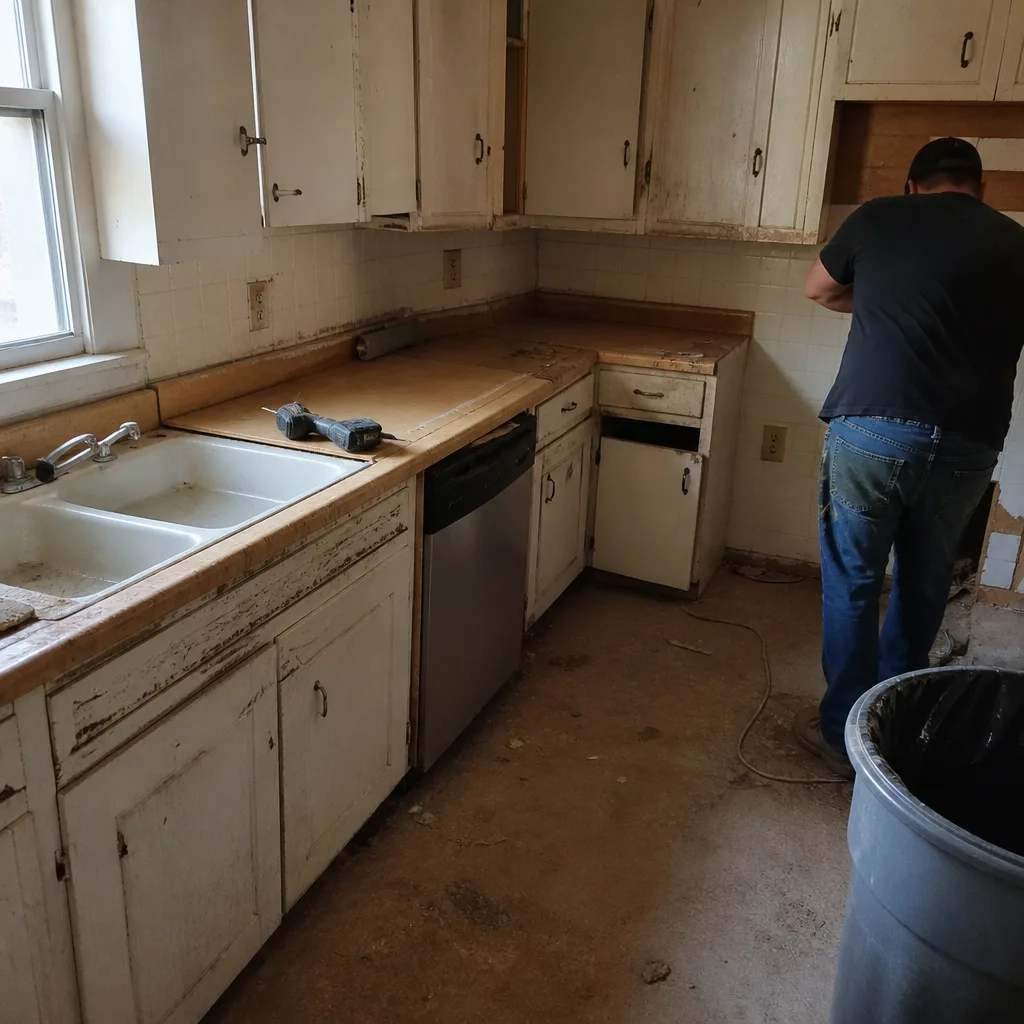 Before
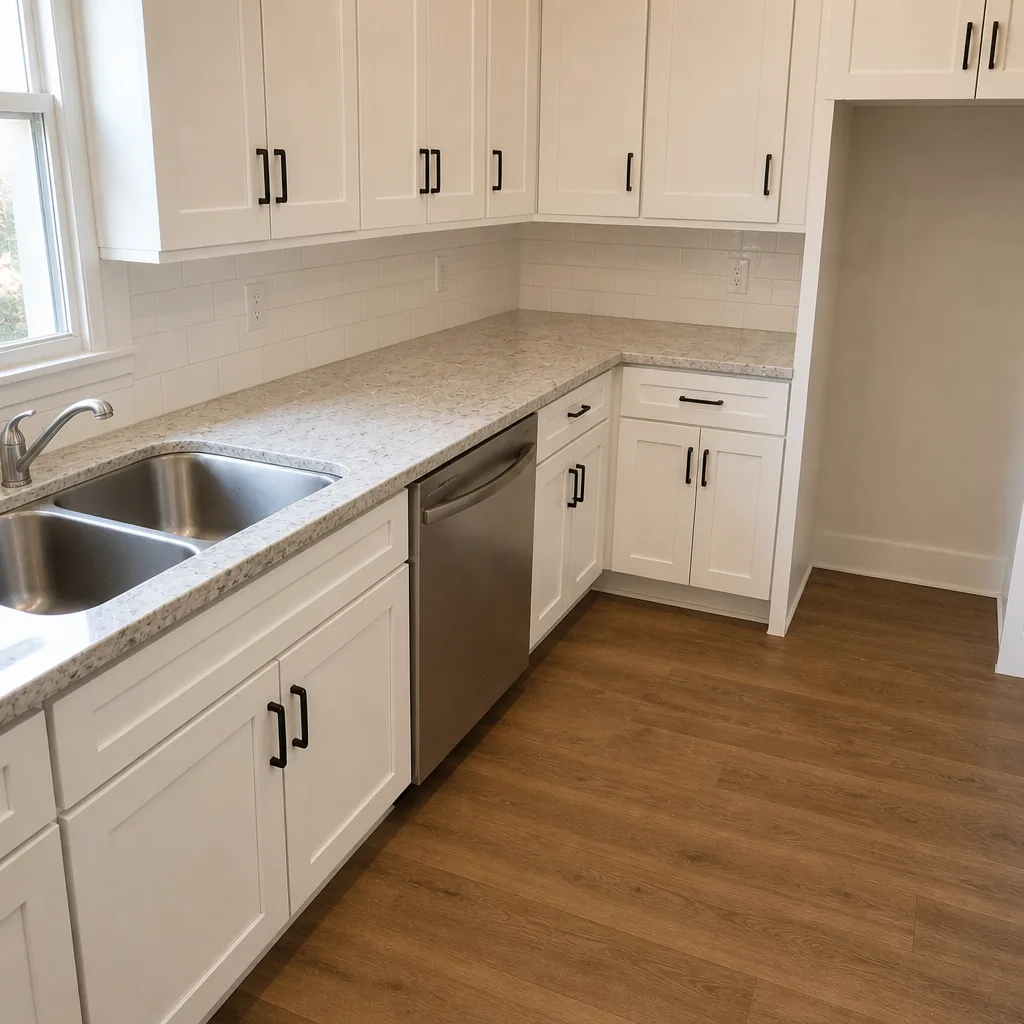 After
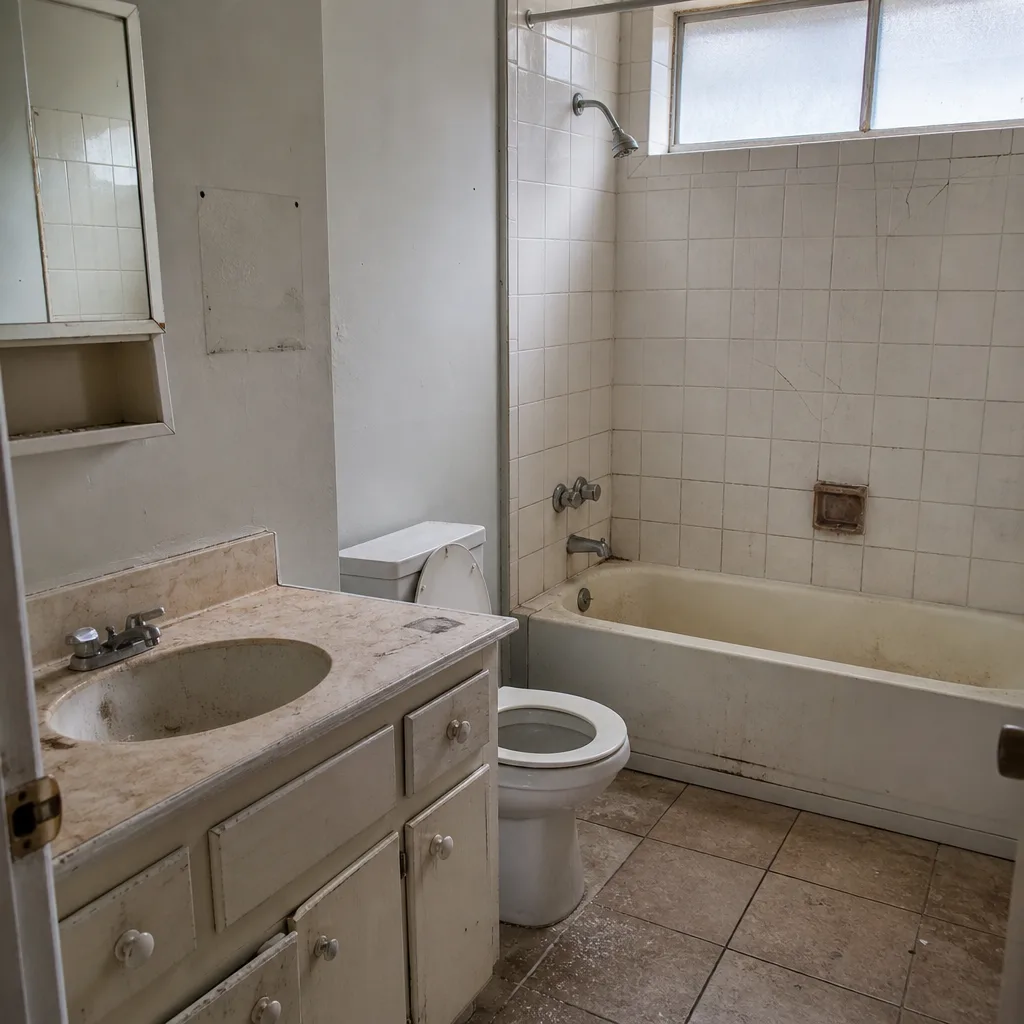 Before
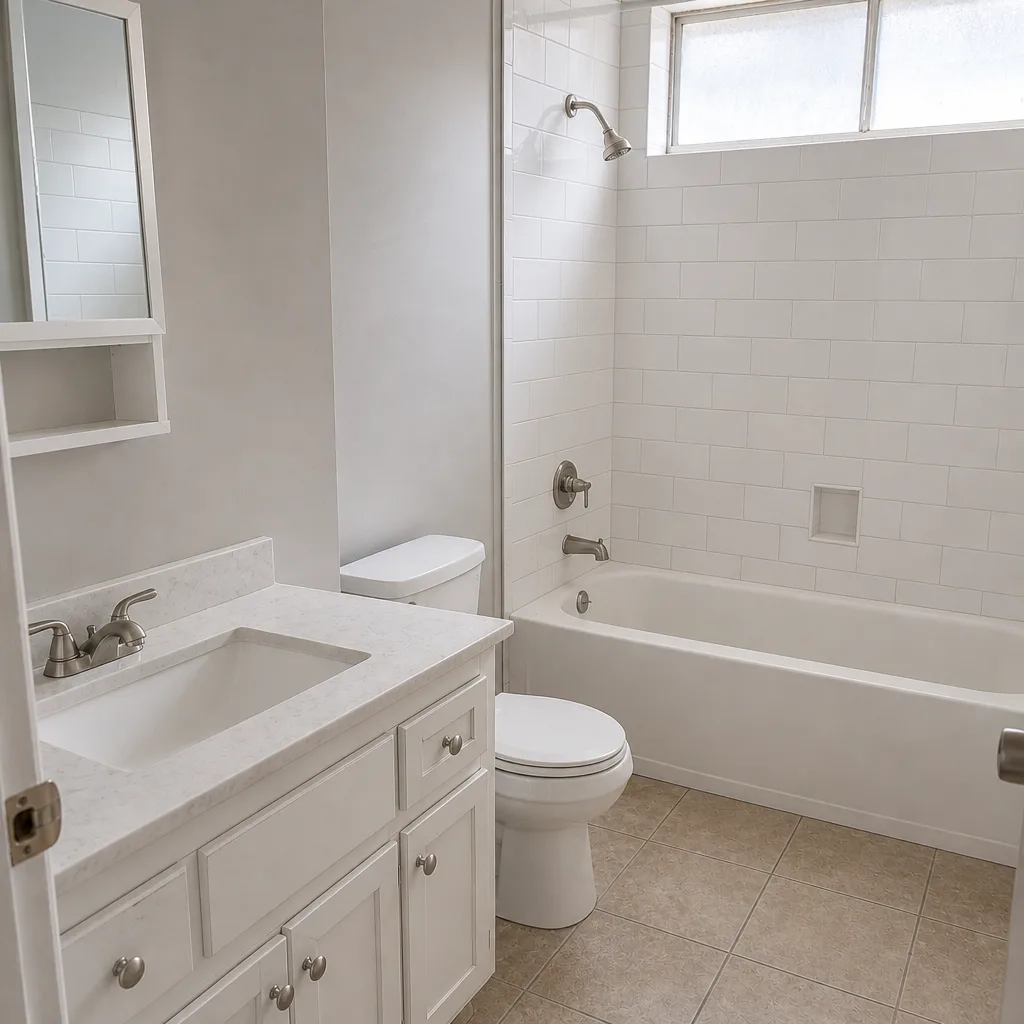 After
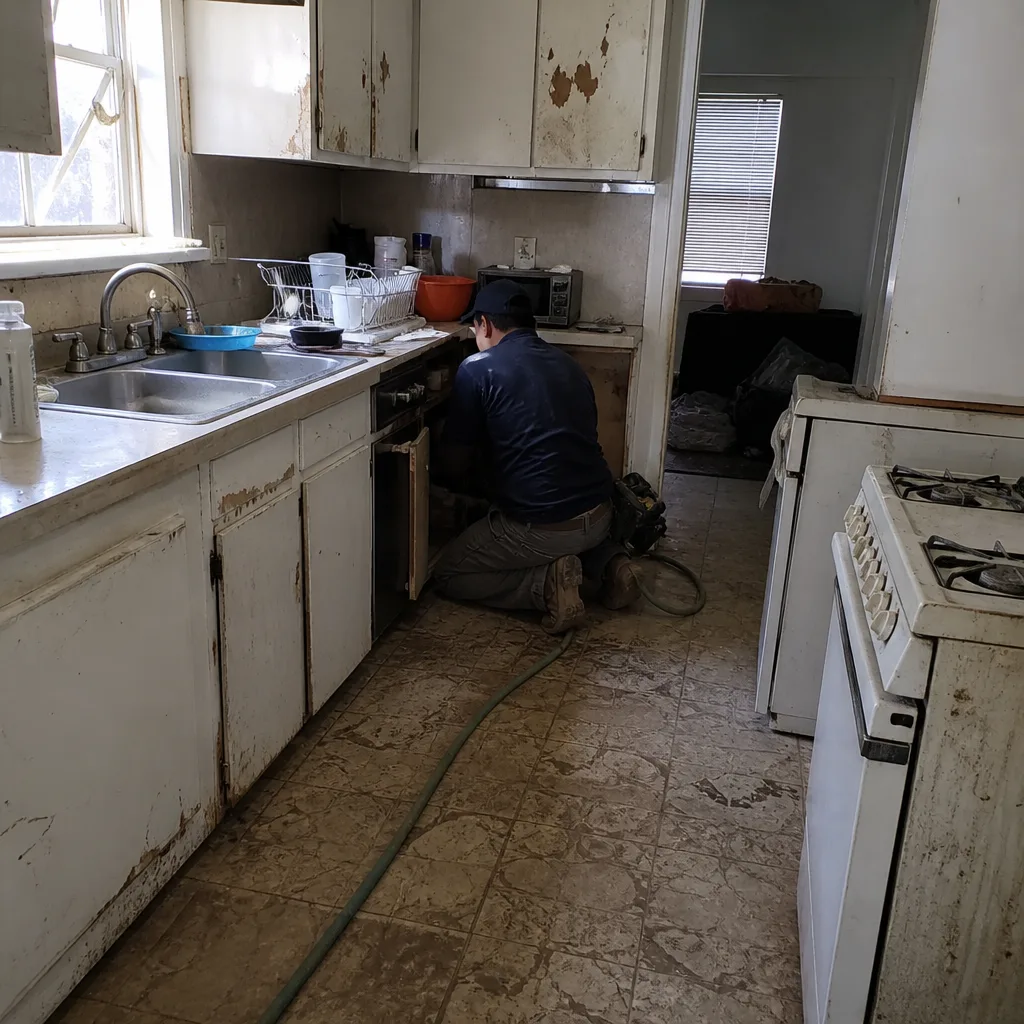 Before
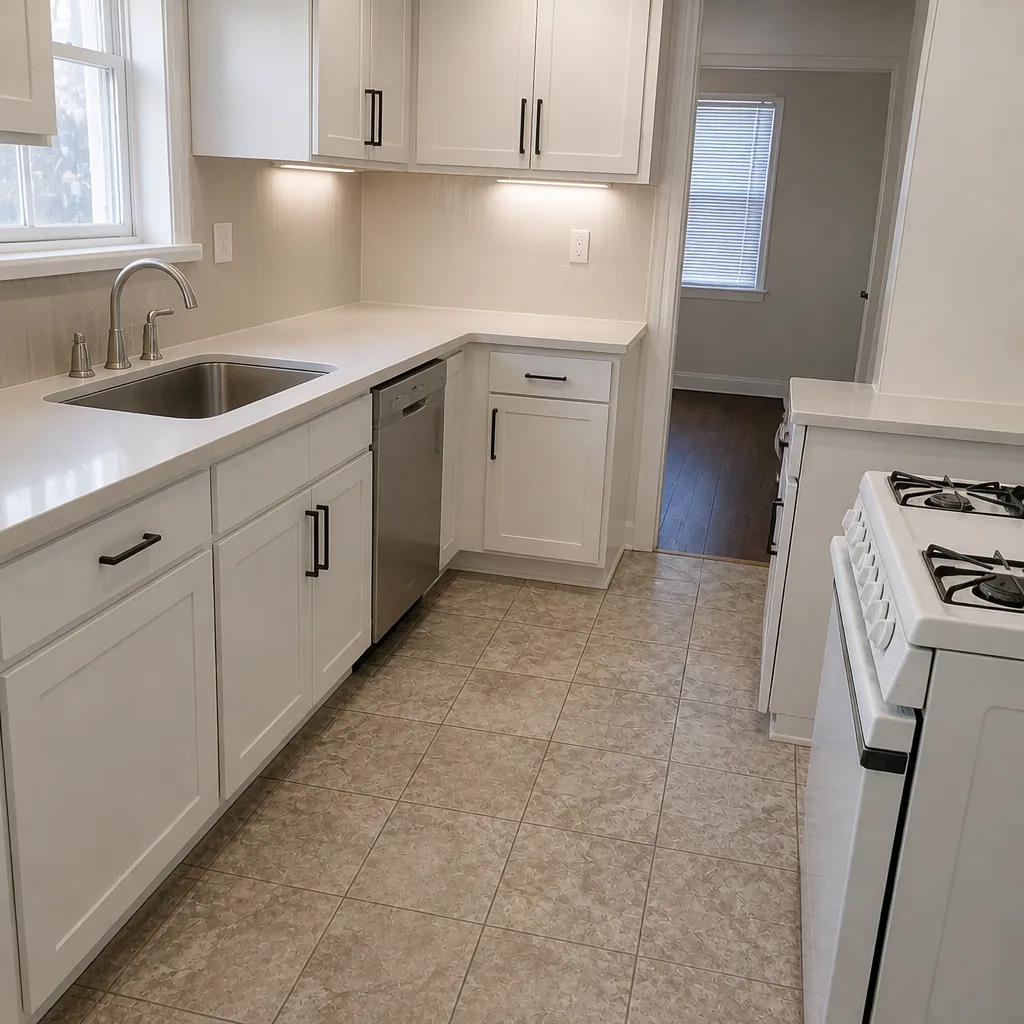 After
When to Call a Professional
Some jobs are a weekend project. A driveway on expansive Mesquite clay isn’t one of them. Call a professional when you’re tearing out an existing concrete or asphalt driveway, when you’re widening the apron near the street, when the base needs excavation and drainage work, or when water is pooling against the house or garage. Spring heave, edge settling, faulted concrete, or pavers that shift when you walk on them are signs the base or drainage needs a real look. And if a project touches the driveway approach, a public right-of-way, or a corner of the lot near a fence or added structure, get the permitting and grading planned up front. Groundwork Construction Co. of Mesquite offers free estimates in Mesquite, call (888) 426-8078. You’ll get a written, upfront number and a plan built for this soil.
Frequently Asked Questions
Interlocking concrete pavers run about $12 to $22 per square foot installed in Mesquite, so a typical 400 to 600 square foot two-car driveway lands roughly between $5,000 and $13,000. Base depth, drainage work, demo, and paver choice move the number. Call (888) 426-8078 for an exact quote, estimates are free.
It’s the expansive clay soil. It swells when wet and shrinks when dry, sometimes moving several inches in a season, and that cycle pushes and pulls on rigid surfaces like concrete and asphalt until they crack. Flex-tolerant pavers on a properly graded base handle the movement better. Call (888) 426-8078 to talk through your lot.
For a residential driveway in Mesquite, we typically build an 8 to 12 inch compacted aggregate base, deeper than the 4 to 6 inches common in milder climates. Soil condition, vehicle weight, and grading all affect the exact depth. Call (888) 426-8078 and we’ll evaluate your site.
It depends on the scope. A like-for-like replacement may not need one, but a new driveway, a widened apron, or work in the public right-of-way usually requires city approval, and HOA architectural review may apply too. Confirm current requirements with the City of Mesquite before work starts, and call (888) 426-8078 and we’ll help sort out what applies.
Not with upfront pricing. The number we quote is the number you pay, and the base depth and drainage scope are spelled out before we start, not added on later. The work is also covered by our 730-Day Done Right Promise. Call (888) 426-8078 for a free estimate.
A paver driveway on a properly engineered base with good drainage can last decades, and a single damaged paver can be swapped without replacing the whole surface. The base and grading are what determine the lifespan, not the pavers alone. Call (888) 426-8078 to plan a job that holds up.
The Bottom Line
In Mesquite, the driveway under the driveway is the clay. Get the base deep enough, compact it in lifts, and grade the water away from the house, and your surface will look the same in fall as it did in spring. Skip any of that and even premium pavers fail early. Interlocking pavers are the best fit for this soil, with real installed ranges from $12 to $22 per square foot, and the difference between a five-year driveway and a thirty-year one lives in the base and the drainage plan. Check HOA and city requirements before you build, re-sand your joints, and don’t let a cheap bid talk you out of the work you can’t see. For the bigger picture on how all our services fit together, start at the Groundwork Construction Co. of Mesquite home page.
Ready to plan a driveway built for Mesquite clay? Call Groundwork Construction Co. of Mesquite at (888) 426-8078 for a free estimate. You’ll get a written, upfront number, a plan for your soil, and work backed by the 730-Day Done Right Promise.
Written by the team at Groundwork Construction Co. of Mesquite.