
Last updated November 17, 2026






Free written scope consultation - allowances, timeline, and change-order rules on paper before a single trade is scheduled
Bathroom Remodeling Maintenance Schedule: What to Do and When
Most grout failures, fixture leaks, and ventilation damage that show up 18 months after a remodel trace back to one missed 90-day maintenance window that nobody told the homeowner about. The new tile looks perfect on the walkthrough day, the caulk is crisp, the fan hums quietly, and then life moves on. Eighteen months later there’s a soft spot near the shower curb, a hairline crack running down the back wall, or a musty smell that won’t leave no matter how often you clean. None of it is random. Every material in a remodeled bathroom ages on its own clock, and the ones that fail first are almost always the ones nobody serviced. This guide lays out a month-by-month and year-by-year maintenance calendar tied to what actually got installed in your bathroom, with Mesquite-specific notes on how North Texas humidity swings speed up the timeline. You’ll learn the exact checkpoints at 30, 90, and 365 days that catch small failures before they become five-figure repairs.
Quick Answer
A bathroom remodel maintenance schedule should hit four checkpoints: 30 days after completion (re-caulk touch-ups and fixture checks), 90 days (grout sealer verification and fan performance test), 365 days (full seal inspection and drain snaking), then every 6 to 12 months depending on material. Caulk gets replaced every 1 to 3 years, grout gets resealed annually, exhaust fans get cleaned every 6 months and replaced every 8 to 10 years, and fixture cartridges last 5 to 7 years before they need service.
Styles & brands we work with
- Kitchen remodeling
- Bathroom remodeling
- Home additions & ADU
- Roofing
- Windows & doors
- Driveway & pavers
- Fence
Table of Contents
- The Critical 30, 90, and 365-Day Post-Remodel Checkpoints
- A Material-by-Material Service Calendar
- Why North Texas Humidity Changes the Timeline
- Ventilation: The System That Decides Everything Else
- What Voiding a Warranty Actually Looks Like
- The Printable Bathroom Maintenance Checklist
- A Mesquite Seasonal Calendar
- Common Mistakes to Avoid
The Critical 30, 90, and 365-Day Post-Remodel Checkpoints
The first year after a bathroom remodel is where the most important work happens, and it’s the year most homeowners skip entirely. Materials settle. Caulk that looked tight on installation day shrinks as it cures. Grout that seemed perfect expands and contracts through a full seasonal cycle for the first time. Fixture cartridges break in. If you’re going to inspect your bathroom at any three points, make it these.
Day 30: The Settling Check
Walk the whole bathroom with a flashlight and a roll of paper towels. Look specifically at:
- Every caulk seam, especially the shower-to-tub or shower-to-floor transition, looking for hairline gaps or pulls
- The base of the toilet for any movement or moisture ring
- Under every sink for slow drips at the supply lines and P-trap connections
- The floor grout lines for any that have cracked or pulled away from tile edges
- Fan operation with a tissue test (hold tissue to the grille; it should pull and hold)
At day 30, most issues are cosmetic touch-ups. If you find a leak or movement, that’s a warranty item, and the 730-Day Done Right Promise exists for exactly this moment. Catch it now and it stays a small fix.
Day 90: The First Real Inspection
This is the checkpoint most homeowners miss, and it’s the one that decides whether your bathroom enters year two in good shape or starts accumulating damage. During the first 90 days, a full seasonal swing has passed through Mesquite (from cool spring to hot early summer), and materials have done their first real expansion-contraction cycle. By day 90:
- Verify the grout sealer is still beading water (sprinkle water on a grout line in the shower; it should bead, not soak in)
- Re-check every caulk seam you inspected at day 30, because failures compound quickly
- Test the exhaust fan’s airflow again, and pull the grille to check the blades for dust buildup (in a new bathroom this should be minimal, but a poorly sized fan will start showing strain)
- Run every fixture through a full hot-cold cycle and listen for rattles or drips
- Open the vanity cabinet and check the wall behind the supply lines for any moisture
Day 365: The Annual Reset
One year in, your bathroom has been through a full Mesquite summer and a full winter. The temperature and humidity swings have done all the damage they’re going to do in year one, and you can see what actually failed versus what held. This is the day you clean or replace the fan, reseal the grout if it needs it, and look at the caulk lines with fresh eyes. Anything still working after 365 days is likely to keep working for a while if you stay on schedule.
A Material-by-Material Service Calendar
The mistake homeowners make is treating “bathroom maintenance” as one task. It isn’t. Caulk, grout, tile, fixtures, and ventilation all age on different timelines. Get them confused and you’ll either over-maintain (wasting money) or under-maintain (wasting money faster). Here’s how we break it down.
Caulk: The Fastest-Failing Material in the Room
Caulk is the wear item in a bathroom. It’s designed to flex with the surface movement around it, but eventually it stops flexing and starts pulling. In a bathroom with a shower used daily, expect to replace caulk at every seam every 1 to 3 years. Silicone caulk (typically what gets used at the tub-to-tile line) lasts longer than acrylic, but even silicone starts to fail around year 3 in a Mesquite bathroom. Check quarterly. Replace at first sign of pulling, cracking, or discoloration. That $12 tube of caulk is the difference between years of clean tile and a $4,000 subfloor repair.
Grout: The Slow Degrader
Grout itself doesn’t fail often, but the sealer wears out. Grout lines should be resealed every 12 months on shower walls and floors, and every 18 to 24 months on lower-contact surfaces like the bathroom floor behind the toilet. Test the sealer at the 90-day mark, again at 365 days, and then annually. If water beads, sealer is working. If it soaks in, reseal. Grout cracking beyond hairline width means the substrate is moving, which is a call-a-professional situation.
Tile: The Long-Term Investment
Porcelain and ceramic tile last decades with minimal attention. The tile itself doesn’t fail; what fails is what’s under and around it. Inspect tile edges at floor transitions and shower curbs annually for looseness. A tile that sounds hollow when tapped is a warning sign. Grout movement is the leading indicator of tile trouble, so watch grout lines. When properly installed and sealed, floor tile in a bathroom should hold up 20 to 30 years before any replacement talk.
Fixtures: The 5 to 7 Year Cycle
Faucet cartridges, shower valve cartridges, and toilet fill valves are the moving parts of the plumbing system, and they age out on a reasonably predictable schedule. Expect to replace:
- Faucet cartridges: every 5 to 7 years
- Shower valve cartridges: every 5 to 10 years (Kohler and other premium brands often run longer)
- Toilet fill and flush valves: every 5 years
- Shower heads: every 8 to 10 years, or sooner if flow drops noticeably from mineral buildup
- Supply line hoses: every 5 to 7 years, though stainless-braided lines last longer than rubber
These aren’t guesses; they’re the intervals that show up most in our own service data. The supply lines are the ones homeowners forget, and they’re the ones that cause the most damage when they fail, because they fail invisibly behind the toilet tank or inside the vanity cabinet.
Ventilation Fan: The System That Protects Everything Else
Your exhaust fan is the most important mechanical component in the bathroom after the plumbing itself, and it’s the one homeowners touch least often. A fan motor doesn’t usually fail outright; it just gets weaker. Fan cleaning should happen every 6 months, and full replacement lands around 8 to 10 years in normal Mesquite use. If your fan is older than 8 years or runs longer than 15 minutes to clear steam after a shower, it’s time to talk replacement.
Why North Texas Humidity Changes the Timeline
Bathroom maintenance schedules you find online are usually written for a stable climate. Mesquite isn’t one. Between June and September, outdoor humidity regularly sits above 70%, and afternoon temperatures push past 100°F. Between November and February, an arctic front can drop temperatures 40 degrees in 24 hours and force heaters to run for a week straight. Your bathroom materials live in the middle of that swing, and it matters.
What this means in practice:
- Caulk expands and contracts harder here than in coastal or desert markets. Mesquite sits in what’s essentially a humidity-to-drought sandwich. Caulk that would last 3 years in Phoenix or Seattle often lasts 18 to 24 months here before it starts pulling. Plan on checking quarterly, not annually.
- Grout sealer breaks down faster on the north-facing side of the house. North walls in a Mesquite bathroom stay cooler and damper, and mold moves faster there. Watch sealed grout on the wall behind the exterior-facing shower wall.
- Winter freezes threaten exterior-wall supply lines. Bathrooms plumbed against a north or west exterior wall in older Mesquite neighborhoods (especially those built before the 1990s) are the ones most vulnerable during a hard freeze. Insulate any exposed pipe runs in the vanity before the first freeze hits.
- Spring pollen loads up the exhaust fan. Mesquite’s February-through-April pollen season accelerates dust and debris buildup on fan blades, which reduces airflow through summer. That’s why the 6-month fan cleaning is a hard rule here, not a suggestion.
- Hard water from the local supply accelerates mineral deposits. Shower heads, faucet aerators, and glass doors need de-scaling every 60 to 90 days or the buildup becomes permanent.
For homeowners thinking about a larger project that would change the bathroom’s exterior wall lines or plumbing layout, this is where it helps to plan around the whole house, not just the bathroom. Our team handles Home Additions & ADU in Mesquite with the same maintenance-first discipline, so what gets built today can actually be maintained tomorrow.
Ventilation: The System That Decides Everything Else
Every maintenance decision in a bathroom runs through the exhaust fan. If the fan is working, grout stays dry, caulk lasts longer, mold has a hard time establishing, and paint holds up. If the fan is weak or clogged, every other material in the room ages faster. That’s why we treat the fan as the primary system and everything else as secondary.
How to Check Your Fan (Without Taking It Apart)
- Turn the fan on and hold a square of toilet paper against the grille for 10 seconds. It should stick firmly. If it flutters or falls, airflow is failing.
- Time how long it takes to clear the mirror after a hot shower. If it’s still foggy after 10 minutes, the fan isn’t moving enough air.
- Listen for grinding, rattling, or a motor that sounds labored on startup. Any of those signals means bearing wear.
- Pull the grille every 6 months (usually twist-and-pull, no tools) and vacuum the blades and motor housing with a brush attachment.
- Check that the exhaust terminates outside the house, not into the attic. This matters more than homeowners realize, and it’s a common shortcut we correct in Mesquite homes.
When to Replace vs. Clean
Cleaning handles most of the problem until the fan gets old. Replace the fan when airflow is weak even after cleaning, when the motor is louder than a normal conversation, or when the unit is 8 to 10 years old. A modern fan sized properly for the room is one of the cheapest upgrades in a bathroom and one of the highest-impact on the materials around it. Installing a humidity-sensing or timer switch is worth the extra cost, because it removes the human error of forgetting to run it long enough.
What Voiding a Warranty Actually Looks Like
Warranties don’t get voided by dramatic accidents. They get voided by quiet omissions. The 730-Day Done Right Promise from Groundwork Construction Co. covers workmanship across every project, and it’s one of the longest guarantees in the residential construction space. But there are maintenance realities that can affect any warranty, and homeowners deserve to know what they actually are.
What usually causes a workmanship warranty claim to get complicated:
- Missed caulk maintenance. If caulk fails and water gets behind a tub surround for 12 months, the resulting water damage is maintenance-related, not workmanship-related. The original install was correct; the surface then went unserviced.
- Exhaust fan neglect. If a fan clogs and fails to ventilate the room, mold and grout damage that follows is a maintenance failure. Warranty coverage for that damage gets complicated because the failure was preventable.
- Improper cleaning products. Acidic cleaners (including many “natural” citrus-based products) eat grout sealer and etch natural stone. Using them voids tile manufacturers’ warranties outright, and the workmanship guarantee on the tile can’t cover a failure caused by what was applied to the surface afterward.
- DIY modifications. Adding a showerhead, swapping a faucet, or installing glass shelving without following manufacturer specs can void the specific product warranty on that component, even if the rest of the bathroom is fine.
- Skipped annual inspections. Some fixture manufacturers require documented annual maintenance (usually simple evidence like resealing records) for extended warranty coverage after year 1.
The fix is simple: keep a small maintenance log, and be specific. “Resealed shower grout, June 15” is enough. That log is the proof you did the work when a claim comes up. The 730-Day Done Right Promise covers what we install and how we install it, and we stand behind it without fine print. The maintenance piece is what the homeowner controls, and it’s the piece that decides how far the workmanship really goes.
The Printable Bathroom Maintenance Checklist
Here’s the checklist version. Print it, tape it inside the vanity door, and reference it at each checkpoint. It’s short on purpose, because a maintenance schedule you don’t actually follow is useless.
Post-Remodel Checkpoints
- Day 30: Inspect all caulk seams, toilet base, sink connections, and fan airflow. Note anything that looks off.
- Day 90: Test grout sealer with water bead, re-inspect all caulk seams (quarterly from here forward), full fixture hot-cold cycle, fan grille vacuum.
- Day 365: Full annual service. Reseal grout if needed, replace any failing caulk, clean fan motor and housing, de-scale shower head and faucet aerators.
Recurring Schedule
- Every 60 to 90 days: De-scale shower heads, faucet aerators, and glass doors. Wipe down grout lines with a neutral pH cleaner.
- Every 6 months: Clean the exhaust fan. Test airflow. Check the toilet base for movement. Inspect under-sink plumbing for drips.
- Every 12 months: Reseal shower grout. Inspect all caulk seams and replace any that are pulling. Check the inside of the vanity for signs of moisture. Test the shower valve for smooth temperature control.
- Every 18 to 24 months: Reseal bathroom floor grout. Inspect the toilet fill valve for wear. Check supply lines for cracking or stiffness.
- Every 3 years: Replace all caulk at seams, even if it looks intact. Caulk costs less than water damage.
- Every 5 to 7 years: Replace faucet cartridges, shower valve cartridge, and toilet fill valve. Replace supply lines.
- Every 8 to 10 years: Replace the exhaust fan. Replace shower heads.
For exterior maintenance that protects the whole house (which in turn protects the bathroom and every other room from moisture intrusion), we keep a parallel schedule in our guide to Fence Installation in Mesquite and our Driveway & Pavers in Mesquite page, because the fundamentals of scheduled maintenance apply to every system on the property.
A Mesquite Seasonal Calendar
Bathroom maintenance clusters better around seasons than around the calendar year alone, especially in Mesquite. Here’s what we work through month by month.
Spring (March through May)
Pollen is the biggest stressor on the exhaust fan this time of year, so plan a fan cleaning early in March and another by mid-May. Check your caulk lines after winter, because the freeze-thaw cycle of February often opens hairlines that weren’t there in the fall. If you haven’t resealed grout since last spring, do it now.
Summer (June through August)
Peak humidity puts the most strain on caulk and grout. Run the fan 20 minutes after every shower, not 5. Watch for any sign of mold in grout lines or at the base of the shower door. If the glass door starts spotting more than usual, that’s mineral content in the water; de-scale every 60 days during the summer.
Fall (September through November)
Before the first freeze arrives (typically mid-to-late November in Mesquite), check any plumbing on exterior walls. Insulate exposed supply lines in the vanity if the wall is on the north or west side of the house. This is also the month to test the shower valve and faucet cartridges, because the temperature swings stress them.
Winter (December through February)
Keep cabinets under exterior-wall sinks open during hard freezes so warm air reaches the pipes. If you’re leaving town for the holidays, drip the faucets and set the heat at 55°F minimum. Winter is the best time for the 365-day full inspection, because the bathroom is used more, so any issue shows up fast.
Common Mistakes to Avoid
- Treating caulk as a one-time install. Caulk is the single fastest-wearing material in a remodeled bathroom, and homeowners who don’t budget for replacement every 1 to 3 years end up with water damage behind the tile. In Mesquite, plan on the shorter end of that range.
- Using the wrong grout cleaner. Lemon, vinegar, and citrus-based cleaners will eat the sealer within weeks and eventually etch the grout. Stick to neutral pH cleaners, and re-test the sealer any time you switch products.
- Skipping the 90-day inspection. This is the most common cause of everything from fixture leaks to hollow-sounding tile. By day 90 you have enough data to catch every problem while it’s still cheap to fix.
- Forgetting the exhaust fan. We’ve seen Mesquite bathrooms where the fan hadn’t been cleaned in 6 years, and the resulting moisture damage tracked back through the entire tiled wall. It’s a 10-minute job that protects a $15,000 installation.
- Not testing the drain pan or curb. On a shower with a tile curb, water seeps under the curb cap if caulk fails there, and the damage is invisible until the wood under the pan is soft. Check the curb seam every quarter.
- Assuming “warranty” means “set and forget.” Any workmanship guarantee covers installation, not skipped maintenance. Keep your reseal and cleaning records, because they’re what turns a warranty into an actual remedy.
- Replacing fixtures without matching the originals. A DIY faucet swap on a Kohler fixture with an incompatible cartridge voids the fixture warranty, and it’s a repair that often costs more to undo than it saved. Match manufacturers whenever possible.
See the difference
 Before
 After
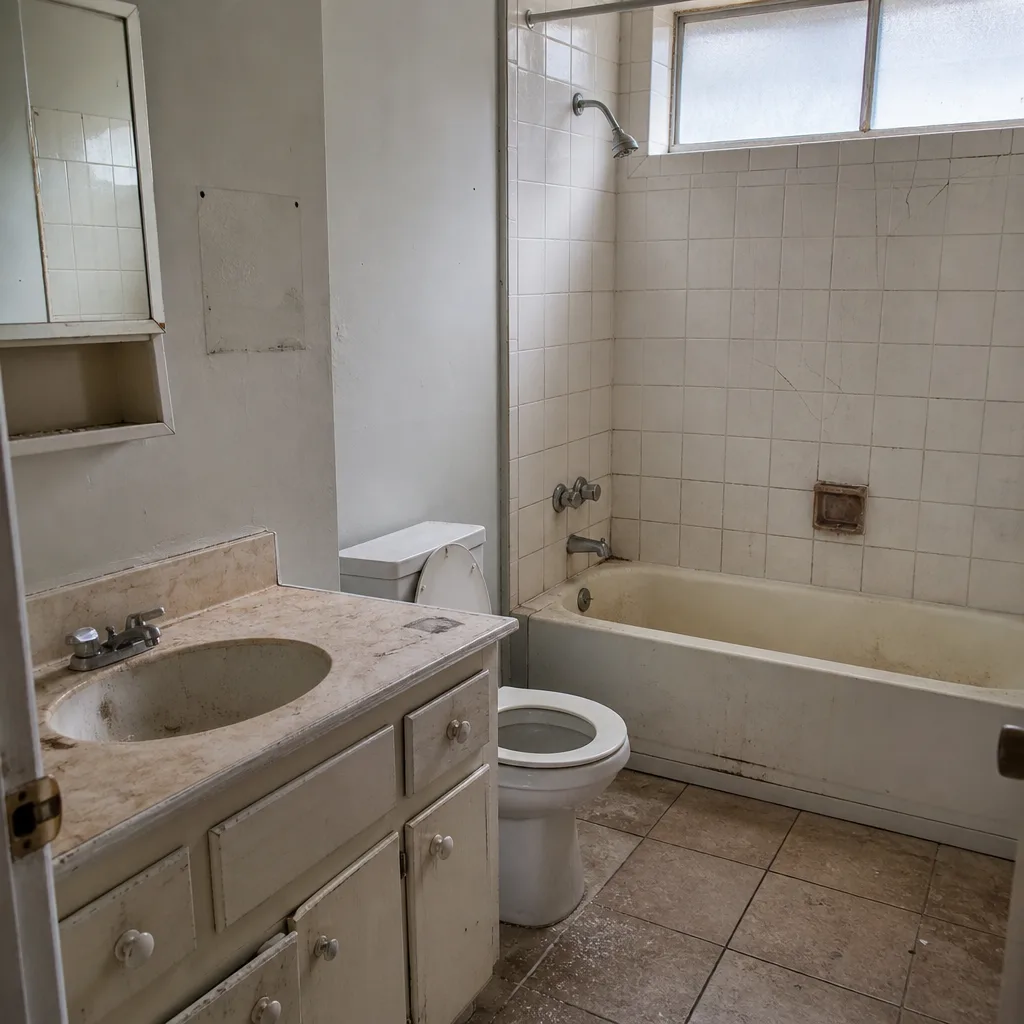 Before
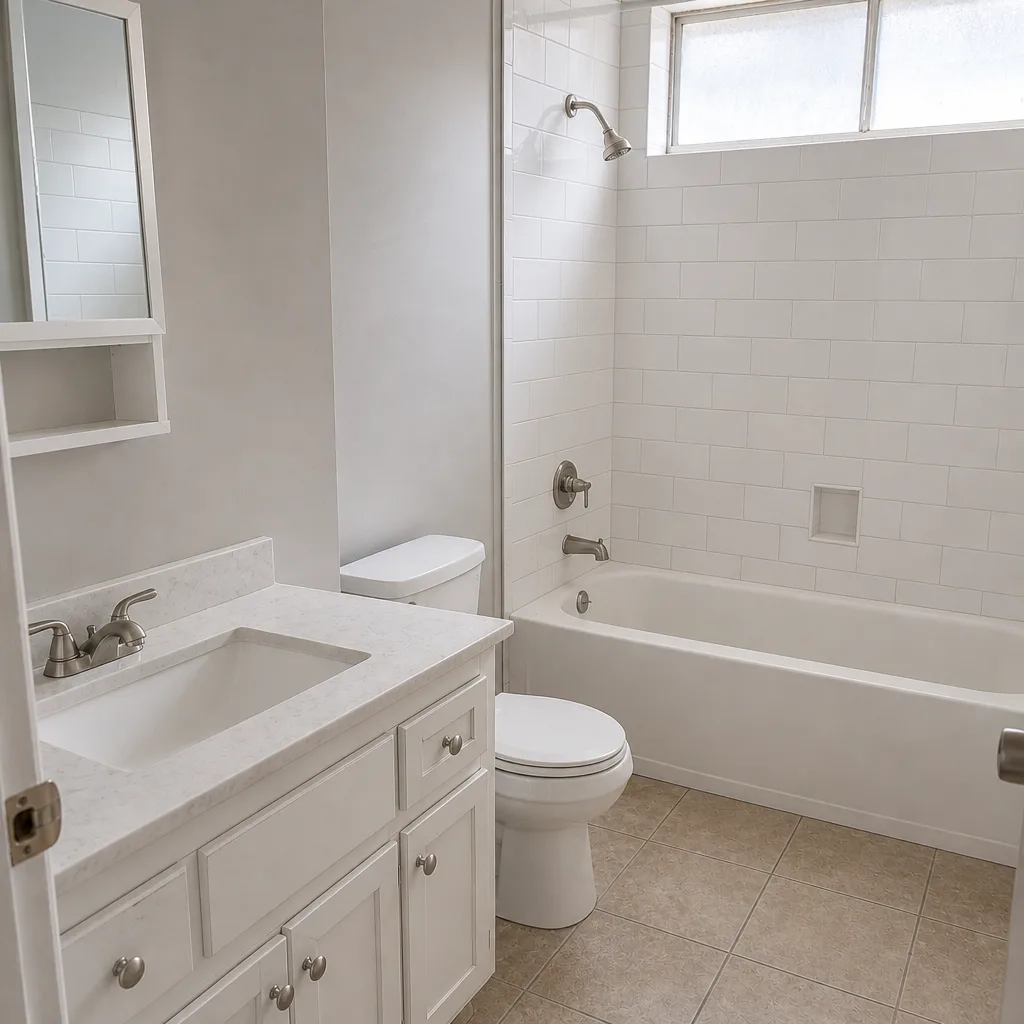 After
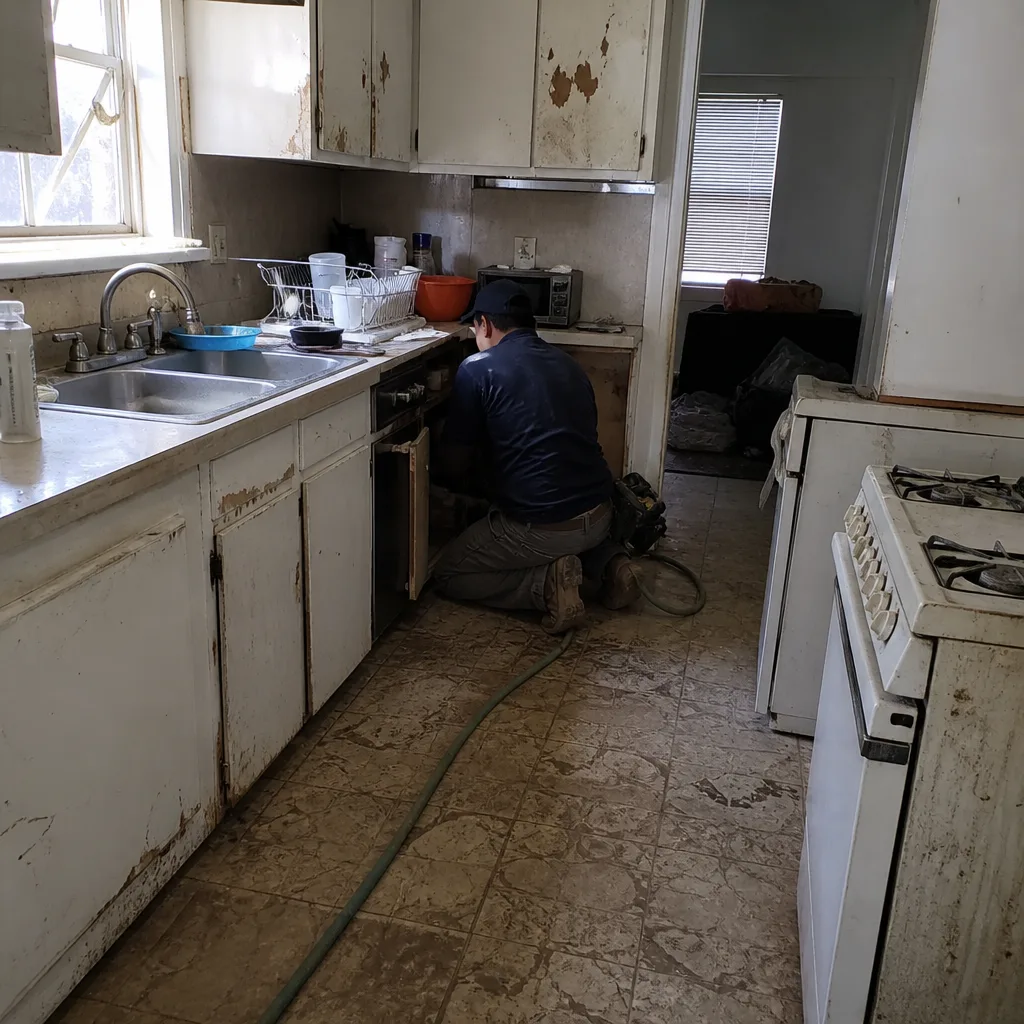 Before
 After
When to Call a Professional
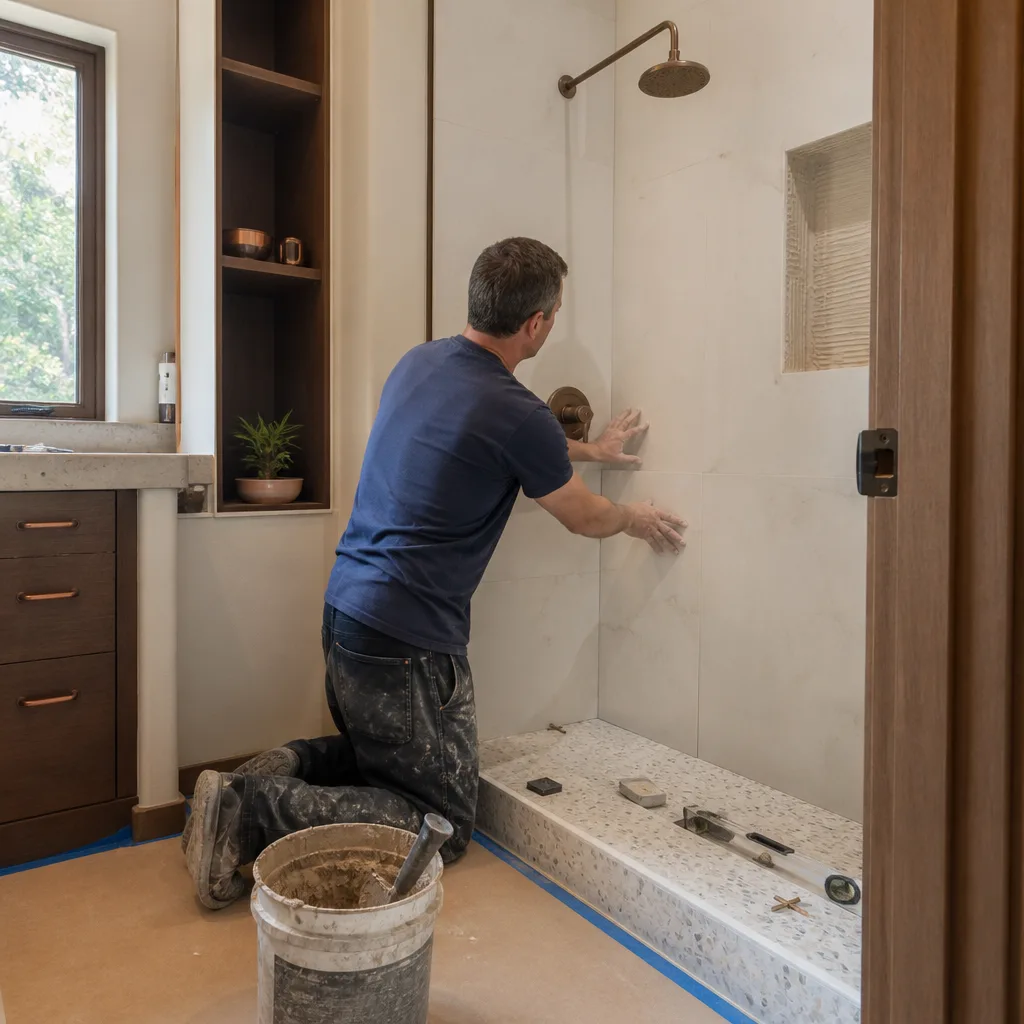
Some maintenance is homeowner work. Some isn’t. Anything involving the shower valve cartridge, supply line replacement inside a wall, or a hollow-sounding tile means calling a professional, because the failure is inside the system, not on the surface. Persistent moisture smell, mold returning within weeks of cleaning, or a fan that won’t clear steam after a full cleaning are all signs to bring someone in. So is any movement in the toilet base or floor tile.
If your bathroom came through a recent remodel and you’re not sure what maintenance it needs, or it’s due for its first 365-day inspection, Groundwork Construction Co. of Mesquite offers free estimates in Mesquite. Call (888) 426-8078 and our team will walk your bathroom and give you a straight answer on what’s holding up, what needs attention, and what to plan for. Live person, 24/7, no voicemail.
Frequently Asked Questions
Every 12 months for shower grout and every 18 to 24 months for floor grout. Mesquite’s humidity swings break down sealer faster than a stable climate, so testing at the 90-day and 365-day checkpoints tells you exactly when re-application is due. Call (888) 426-8078 if you’re unsure what your grout needs.
You can caulk a tub-to-tile seam yourself with silicone caulk, but reach out for anything involving a shower curb, a floor-to-wall transition, or a tile shower wall. Those seams are where water damage starts, and a poor caulk job does more harm than good. Estimates are free if you want the work done right.
Typically 18 to 24 months in a Mesquite bathroom, compared with 3 years in a more climate-stable market. The temperature swings and humidity cycle around Dallas County strain the caulk harder than almost anywhere else in the country. Most bathrooms we service need a full re-caulk at the 2-year mark.
Skipped maintenance, not dramatic accidents, is usually what voids warranty claims. Unresolved caulk failures, neglected exhaust fans, and acid-based cleaners on grout are the top three causes. Any project covered by our 730-Day Done Right Promise stays covered on workmanship, and we’ll always tell you honestly what’s maintenance and what’s ours to fix.
Hold a square of toilet paper against the grille. If it sticks firmly for 10 seconds, airflow is adequate. If it flutters or falls, the fan or duct needs attention. In Mesquite, clean the fan every 6 months because of pollen loads, and plan to replace it once it’s older than 8 years.
The 90-day post-remodel inspection. By that point, materials have gone through their first real seasonal swing, caulk has fully cured and started flexing, and any factory defects in fixtures have surfaced. It’s the checkpoint that catches small problems while they’re still cheap. Call (888) 426-8078 to schedule your free inspection.
The Bottom Line

A bathroom remodel is a system of materials aging on their own clocks. Caulk gets replaced every 1 to 3 years. Grout gets resealed every 12 months. Fans get cleaned every 6 months and replaced every 8 to 10 years. Fixtures last 5 to 7 years before their cartridges need service. Mesquite’s specific humidity swings compress these intervals, so treating the 30-, 90-, and 365-day checkpoints as mandatory rather than optional is what protects the investment. Nothing here is expensive if you stay on schedule, and everything gets expensive if you don’t. Print the checklist, tape it inside the vanity, and call us when you need a professional eye on any part of the system. That’s how a remodel actually stays done right.
For everything that surrounds the bathroom, from the front of the house to the back, our Groundwork Construction Co. of Mesquite home page shows the full scope of services we handle across Mesquite, and it’s the best place to start if a bathroom refresh is part of a bigger project.
Written by the team at Groundwork Construction Co. of Mesquite.