Last updated November 17, 2026






Free written scope consultation - allowances, timeline, and change-order rules on paper before a single trade is scheduled
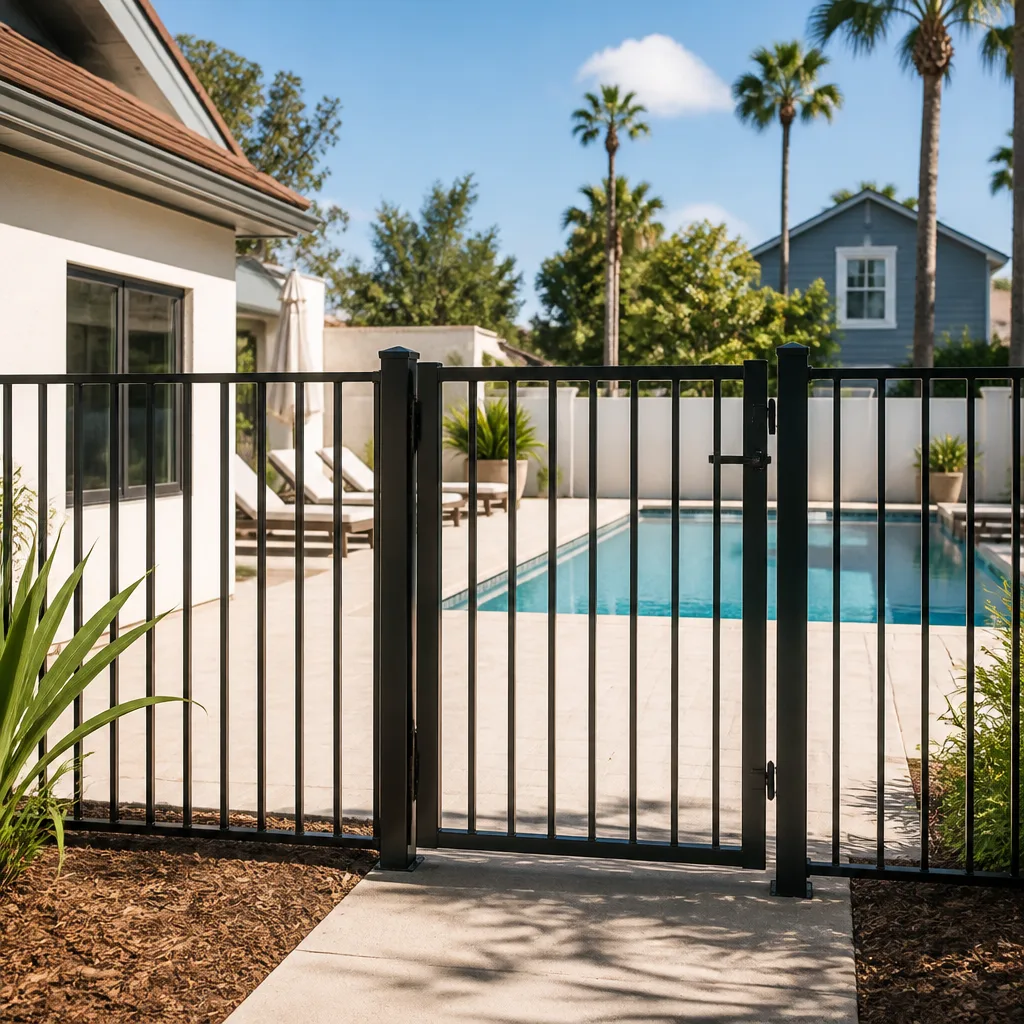
Fence Installation Warning Signs Every Homeowner Should Know
The contractor who doesn’t call 811 before digging isn’t just breaking Texas law. He’s about to put a shovel through a gas line, a fiber cable, or your neighbor’s irrigation main, and you’ll be the one writing the check. Every year we walk onto properties in Mesquite where a fence went up fast and looked fine for one season, then started leaning, sagging, or heaving out of the ground by the second summer. The fence itself was never the problem. The decisions made before the first post went in were. This guide teaches you to read the job before the job starts: the quote, the site walk, the post holes, the string line, the contract. By the end you’ll know exactly which warning signs separate a real fence crew from a storm-chasing sub who’ll be unreachable in 90 days.
Quick Answer
The biggest warning signs of a bad fence installation are a quote delivered in minutes without anyone walking your property, no call to 811 for utility locates, no written contract, post holes shallower than the frost line for your area, and a crew that skips concrete or eyeballs spacing instead of measuring it. In Mesquite’s expansive clay soils, those shortcuts turn into leaning and heaving fences within two to three seasons. A legitimate installer walks the line, locates utilities, measures spacing, and puts the scope in writing before anyone digs.
Styles & brands we work with
- Kitchen remodeling
- Bathroom remodeling
- Home additions & ADU
- Roofing
- Windows & doors
- Driveway & pavers
- Fence
Table of Contents
- Why a 10-Minute Quote Is a Red Flag, Not a Convenience
- The 811 Call: The First Test Every Fence Crew Must Pass
- Post Depth in Mesquite’s Clay Soil: The Standard and How Crews Cheat It
- What “No Written Contract” Actually Exposes You To in Texas
- Visual Red Flags During Installation
- The Questions That Separate a Real Crew From a Storm-Chaser
- Permits, HOA Rules, and Property Lines in Mesquite
- Common Mistakes to Avoid
Why a 10-Minute Quote Is a Red Flag, Not a Convenience
A fence quote that lands in your inbox ten minutes after you fill out a web form, with no one ever setting foot on your property, tells you one thing: the number wasn’t built from your yard. It was built from a price-per-foot multiplier and a guess. That’s not efficiency. It’s a bid designed to win the click, not to survive contact with your actual soil, slope, and gate placement.
Here’s what a real site walk catches that a phone quote can’t:
- Grade changes. A yard that drops 14 inches across the run needs stepped panels or racked pickets. A per-foot quote won’t see it, and the crew will either charge you more mid-job or install a fence with gaps at the bottom.
- Soil conditions. Mesquite sits on expansive clay that swells when wet and shrinks when dry. Post depth, hole width, and concrete volume all change based on what’s in the ground, and you can’t assess that from a satellite image.
- Utility conflicts. Sprinkler lines, gas risers, and buried electrical runs change where posts can legally and safely go.
- Access. Can a truck and trailer reach the back line, or does material have to be hand-carried 80 feet? That’s labor, and labor is money.
- Existing fence condition. Are the posts rotted at the base or just weathered on the surface? Replacing pickets on dead posts is throwing money away.
In our experience, the quote you get after a genuine walk-through is usually within a few hundred dollars of the final invoice. The one you get over the phone is a placeholder that moves. Upfront pricing means the number you see is the number you pay, and that number can only be honest if somebody actually looked at the job.
The 811 Call: The First Test Every Fence Crew Must Pass
Texas law requires anyone digging to contact 811 so utilities can mark their lines before excavation. This isn’t paperwork theater. A post hole punched through a buried gas service or a fiber trunk can cost thousands to repair, and if the crew didn’t call, the liability can land on the property owner who hired them. If your installer shrugs at the mention of 811, stop the job.
The locate process itself is simple, and a professional treats it as step one:
- Call 811 or submit the request online at least two full business days before digging. In most of the Dallas-Fort Worth area that’s the required window.
- Wait for utility companies to mark public lines with paint and flags. Don’t let anyone dig before the marks are down.
- Hand-dig or carefully probe within the tolerance zone around each mark. Power equipment never goes near a flagged line.
- Mark private lines yourself or hire a private locator. 811 only covers public utilities; sprinkler systems, yard lighting, and lines to a detached garage or ADU are the homeowner’s responsibility.
The flags and paint you’ll see in the yard during a proper locate aren’t mess. They’re the difference between a fence and an insurance claim. Any crew that treats that step as optional is telling you exactly how they’ll handle every other risk on the job.
Post Depth in Mesquite’s Clay Soil: The Standard and How Crews Cheat It
Post depth is where fences quietly fail. The general standard is that one-third of a post’s total above-ground height should be buried, plus a few inches for the concrete footing. In practice, that means a 6-foot fence calls for roughly 24 to 30 inches of post in the ground, and many local installers go deeper because of the clay and seasonal movement. A hole dug to 12 or 18 inches will hold for a year, maybe two, then the freeze-thaw cycle and wet-dry swelling of the clay starts working the post loose.
Here’s how a shortcut crew cheats the standard without you noticing:
- Short holes, tall posts. They dig fast with an auger set too shallow and set the post anyway. The fence looks right on day one and leans by year two.
- No concrete, or a splash of it. Dirt-packed posts and concrete only at the top of the hole are common scams. The footing needs concrete around the full buried length to resist movement.
- Undersized footings. A hole barely wider than the post leaves no room for concrete to grip. The hole should be roughly three times the post’s width.
- Crown at the bottom. The bottom of the hole needs a wider bell or at least a flat base so the concrete forms a plug. A V-shaped hole lets the whole footing ride up with frost heave or shrink-down.
You don’t need to stand over the crew with a tape measure to check this. Ask up front what depth they dig for a 6-foot fence and what concrete mix they use. Ask them to show you the first two holes before they’re filled. A legitimate installer will answer without hesitation and won’t mind you looking. If the answer is vague or the holes are already filled with dirt by the time you walk outside, you have your answer.
What “No Written Contract” Actually Exposes You To in Texas
Texas has a specific law, the Residential Construction Liability Act, that governs disputes between homeowners and contractors on residential work. It creates a process you must follow to bring a claim, including notice and an opportunity for the contractor to inspect and offer to repair. Having a written contract doesn’t just protect against being overcharged. It establishes the scope, the schedule, the warranty, and the standard of workmanship that the law and any court will look at if things go sideways. Without it, you’re relying on someone’s memory and good faith.
A contract for fence work should spell out:
- The exact linear footage and materials: post size and species, picket or panel type, rail count, concrete specification, hardware.
- Whether old fence removal and haul-off are included. This is the single most common surprise charge.
- Who pulls permits if your city or HOA requires them.
- The payment schedule and what each payment is tied to. Large up-front cash deposits with no milestones are a warning sign.
- The warranty terms: what’s covered, for how long, and whether it covers labor, materials, or both.
- The dispute process and the contractor’s business address and contact information.
When a contractor says “we don’t need paperwork, we’ve been doing this for years,” that’s not a sign of trustworthiness. It’s a sign they don’t want a record. A written, itemized scope is the baseline. Our own approach is the same one we use on every trade, from a fence installation in Mesquite to a full kitchen: the scope goes in writing, the price locks, and the guarantee is documented before work starts.
Visual Red Flags During Installation
Once the crew is on site, you have a window to spot problems before they’re buried under concrete and pickets. Walk out a couple of times during the first day. You’re not being nosy. You’re protecting an investment that should last 15 to 20 years with proper materials and workmanship.
Post spacing. Fence posts for a standard privacy fence should generally be set 8 feet apart, on center, with consistent spacing throughout. Walk the line with a tape measure or count the rails. If one section is noticeably wider than another, the crew eyeballed it, and that section will sag or rack under wind load.
Skipped or thin concrete. Look in the holes before they’re filled. You should see a reasonable volume of concrete mix around each post, and it should be mixed, not dumped dry. Some crews pour dry mix in and let rain set it, which makes a weak, inconsistent footing that fails the first dry season.
Misaligned string lines. A tight string line set along the face of the posts keeps the fence dead straight. If the crew marks the line on the ground with no string, or the string sags between posts, expect a wavy fence. A slight bow in an 80-foot run is noticeable from the street.
Racked or out-of-plumb posts. Check posts before the pickets go on. A 6-foot post out of plumb by even an inch reads clearly to the eye and gets worse as the wood dries. Any post that already leans while the concrete is setting is set wrong.
Untreated or thin wood. Ask what grade and treatment the posts and rails are. Ground-contact rated, pressure-treated lumber is the baseline in North Texas. Untreated pine in the ground here rots in three to four seasons, sometimes less. Stained or stained-grade pickets need to handle full afternoon sun and occasional hail, which Mesquite gets plenty of.
The Questions That Separate a Real Crew From a Storm-Chaser
Storm-chasers and seasonal subs are a year-round reality across the Dallas-Fort Worth area. Some of them do honest work. The problem is you can’t tell which is which from a truck and a handshake, and when your gate misaligns 90 days from now, you need somebody who answers. Here’s the short list of questions to ask before signing anything.
- “How long have you worked in this area?” A crew that knows Mesquite’s clay, local permit offices, and HOA quirks will answer specifically. A sub from out of state will not.
- “Will you call 811 before you dig, and can you show me the mark-out?” The answer should be a clear yes with no visible eye roll.
- “What’s your standard post depth for a 6-foot fence, and how wide do you dig the hole?” A real answer: 24 to 30 inches or deeper, hole roughly 8 to 10 inches wide for a 4×4. An evasive answer is a red flag.
- “Who pulls the permit if one is required?” The contractor should know whether your city requires a fence permit and be prepared to handle it.
- “What’s the workmanship warranty, in years?” A short warranty, or one that only covers materials, is a sign they expect to be gone by the time the problem shows up.
- “Can I call you in month three if a gate sags, and what does that service call cost?” The answer should be concrete: a phone number that reaches a person, and a documented process.
- “Who actually builds the fence, your crew or a sub?” Some legitimate installers subcontract, and that’s fine, as long as the contracting firm stands behind the work in writing.
- “Can you give me two recent local addresses I can drive past?” Local references you can actually see are worth more than a portfolio page.
Ask these questions over the phone before the site walk. If you get vague answers on two or more, that’s your decision made. This is the same filter we recommend before any larger home project, which is why we point homeowners toward this approach whether they’re considering a Driveway & Pavers in Mesquite project or a full Home Additions & ADU in Mesquite. The vetting process is the same, because the risks are similar.
Permits, HOA Rules, and Property Lines in Mesquite
Fence rules vary by city and subdivision, and a lot of the complaints we hear start with a homeowner who found out too late that the fence they built crossed a property line or broke a noise-and-visibility rule. In the Mesquite area, several HOAs in newer subdivisions set tighter restrictions than the city does: height limits, approved materials, colors, and sometimes a rear-yard setback. A good installer knows to ask what subdivision you’re in before quoting.
Two practical steps before any fence goes up:
- Have the property line staked or located. A survey is the only definitive answer, but your closing documents often include a plat. Fencing 6 inches onto a neighbor’s lot is a real dispute. Fencing 2 feet off is a wasted panel.
- Check HOA covenants and any municipal fence permit requirement. Some Mesquite-area HOAs require an architectural review before you build. Submitting after the fence is up is a much harder conversation.
If the scope includes a gate, a section replacement, or an extension that changes grade near a slab or a shed, it’s worth having a professional look at the interaction between the fence, drainage, and any existing structures. Water channeled against a foundation is a bigger problem than a leaning fence post. We see that question come up on remodels and additions often, and the fence line is usually part of the drainage story. A Groundwork Construction Co. of Mesquite home team member can flag those interactions on the free estimate walk.
Common Mistakes to Avoid
Most fence failures in Mesquite start with a homeowner mistake before the contractor ever shows up. Here are the ones we see most.
- Accepting the lowest bid on linear footage alone. The cheapest per-foot number usually leaves out old fence removal, concrete, or a gate. The line-item bid that looks higher is often the honest one.
- Paying a large deposit in cash up front. A reasonable deposit tied to material delivery is normal. A request for most or all of the job in cash before any material arrives is not.
- Skipping the 811 call because “it’s just a fence.” Buried gas, water, fiber, and irrigation lines don’t care that the job is small. The repair bill and liability do.
- Never checking post holes before the concrete goes in. Once poured, you’ve lost the chance to catch short holes and thin footings. Ask to see at least the first two.
- Ignoring the property line or HOA covenants. A fence that has to come back down is the most expensive fence you’ll ever build. Survey and review first.
- Accepting an unwritten workmanship warranty. “We stand behind our work” is a marketing line. A written guarantee with terms and a service process is an actual commitment.
- Choosing a stain or material that can’t handle North Texas sun and hail. Mesquite summers are hard on wood and composite alike. Ask what products the installer has actually seen hold up here for a decade or more.
See the difference
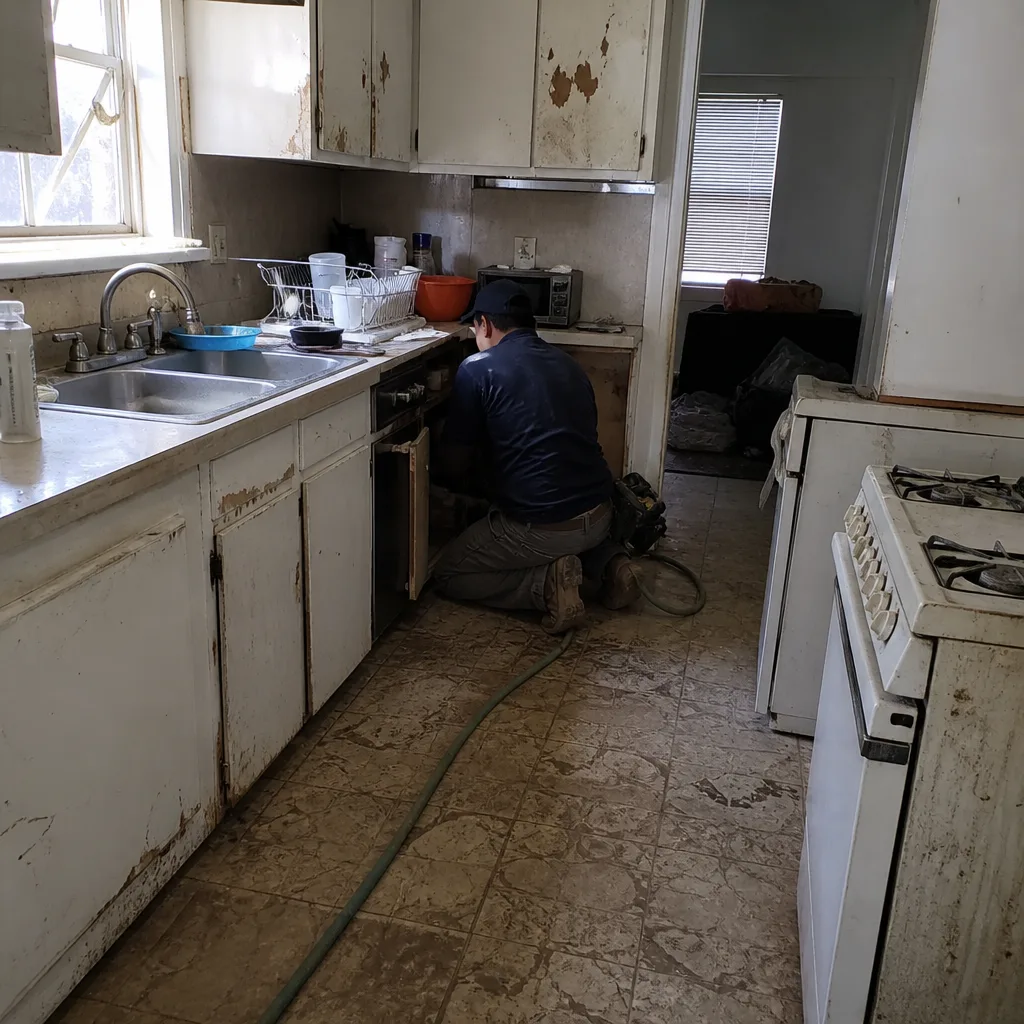
 Before
 After
 Before
 After
 Before
 After
When to Call a Professional
If a contractor won’t put the scope in writing, won’t confirm the 811 locate, or won’t tell you their post depth, stop the job and start over with someone else. That’s a professional call. If you’ve already had a fence installed and you’re seeing leaning posts, sagging gates, missing concrete, or a section that pulled out of the ground in the first two years, get a written assessment before attempting repair. The right fix depends on the footing, not the pickets, and guessing at it lets the real problem spread. If your fence line touches a drainage issue near a foundation, an ADU or addition project nearby, or a gate that feeds a driveway design, bring in an installer who can look at the whole property. Groundwork Construction Co. of Mesquite offers free estimates in Mesquite. Call (888) 426-8078 to schedule the walk-through, and we’ll put the scope in writing so you know exactly what you’re paying for.
Frequently Asked Questions
You check three things: a written, itemized contract with a workmanship warranty, a confirmed 811 utility locate before digging, and a willingness to walk your property in person instead of quoting by phone. Ask for two recent local addresses you can drive past and a phone number that reaches a person. A legitimate installer will answer all three without hesitation. Call (888) 426-8078 for a free estimate and you can see how the process works.
For a 6-foot privacy fence in Mesquite, plan on roughly 24 to 30 inches of post in the ground, and many local installers go deeper because of the expansive clay soil. The hole should be about three times the post’s width so the concrete has something to grip. A short hole with a shallow footing will hold for a season or two and then start moving with the wet-dry clay cycle. Any installer who can’t state their depth clearly is one to skip.
Some fence projects in the Mesquite area require a permit and most HOAs require architectural review before you build, so confirm both before ordering material. Height limits, material restrictions, and setback rules vary by subdivision, not just by city. The installer pulling the permit is usually the smoothest path. Ask the question on the estimate call and get the answer in writing, then call (888) 426-8078 if you’d rather have us walk it for you.
Expansive clay swells when wet and shrinks when dry, and that seasonal movement works the posts in shallow or thin footings loose over two to three years. A post set only 12 to 18 inches deep with minimal concrete starts to rock, water enters the gap, and the lean begins. Deeper footings with proper concrete bells resist that movement. The fix is at installation, not after the fence has already gone crooked.
You can, and it’s legal on your own property, but the risk is real. The 811 call, the property line check, the post depth for clay soil, the footing design, and the HOA review are all on you. One misstep on a gas line or a property boundary costs far more than the savings on labor. Most homeowners who call us after a DIY fence are fixing something that failed within two seasons. Get a free estimate at (888) 426-8078 before you commit either way.
A real workmanship warranty covers installation defects: post movement, footing failures, gate misalignment, and panel issues that trace back to how the job was built, not just material defects. If the warranty only covers the lumber, you’re carrying the labor risk yourself. Ours is a 730-Day Done Right Promise: if it’s not done right, we make it right. Ask any installer to put their warranty terms in writing before you sign. Call (888) 426-8078 to get the terms in your free estimate.
The Bottom Line
Bad fence work hides at the front end of the job, not the back end. The quote without a site walk, the missing 811 call, the shallow post hole, the dirt-packed footing, the handshake contract: each of those is a signal a homeowner can read in the first 48 hours if they know what to look for. In Mesquite’s clay and full-sun climate, those signals turn into leaning posts and sagging gates within two seasons. Read the job before the job starts. Vet the crew with real questions, get everything in writing, and hire someone who stands behind the work in writing, not just in conversation.
Ready to move forward? Groundwork Construction Co. of Mesquite offers free project estimates and a free design consult. Calls are answered by a live person 24/7, our technicians are background-checked and arrive in uniform, and every project is backed by our 730-Day Done Right Promise. Standing promotions include $1,000 off projects over $10,000 and 0% financing for 18 months. Call (888) 426-8078 to schedule your free estimate with Groundwork Construction Co. of Mesquite.
Written by the team at Groundwork Construction Co. of Mesquite.