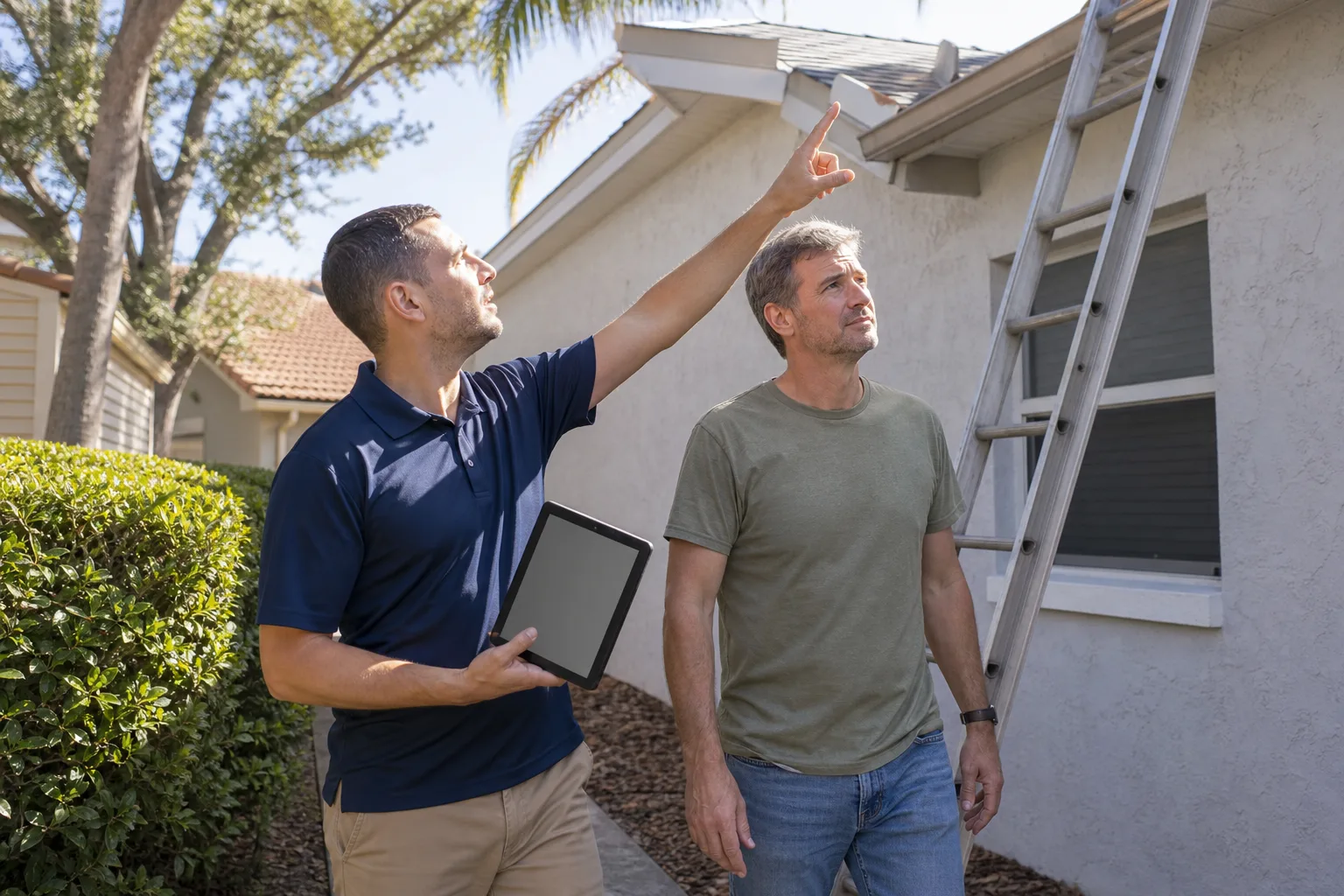



Free written scope consultation - allowances, timeline, and change-order rules on paper before a single trade is scheduled
Styles & brands we work with
- Kitchen remodeling
- Bathroom remodeling
- Home additions & ADU
- Roofing
- Windows & doors
- Driveway & pavers
- Fence
See the difference
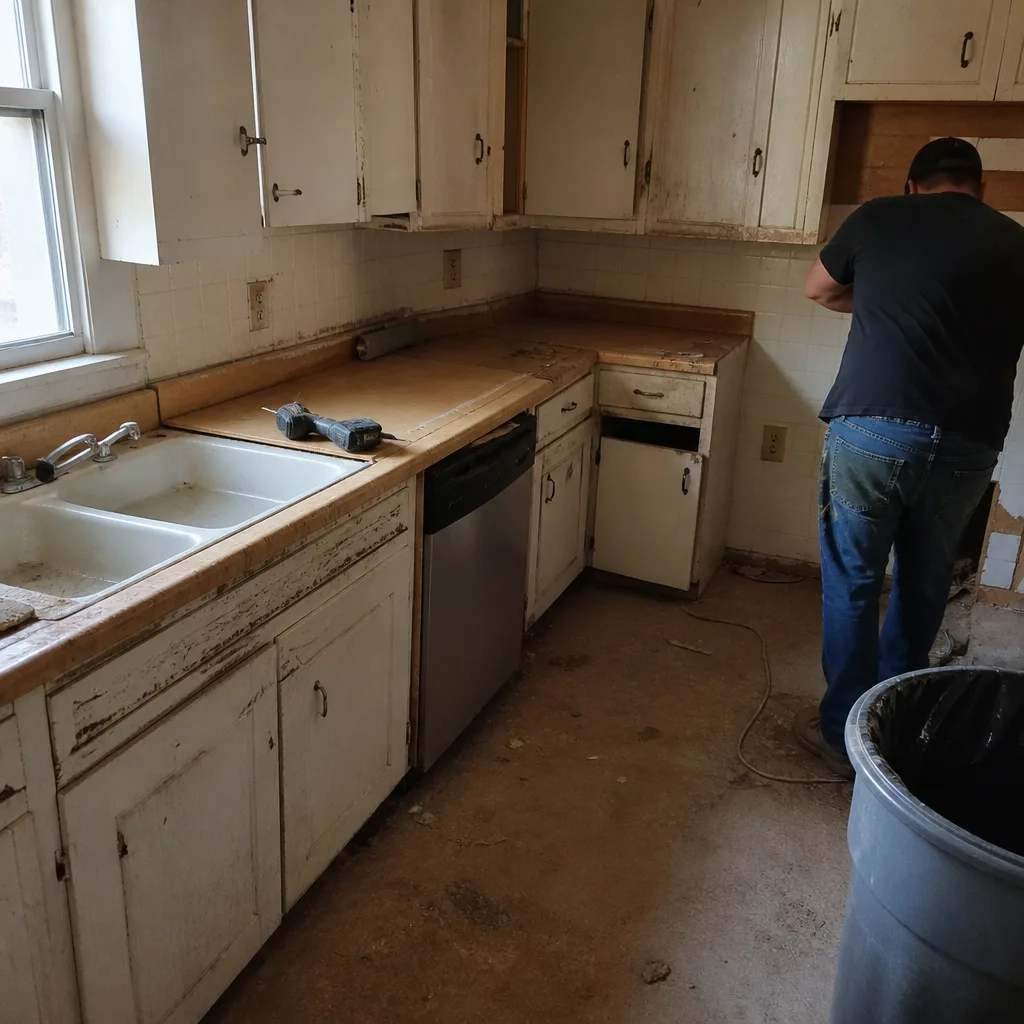 Before
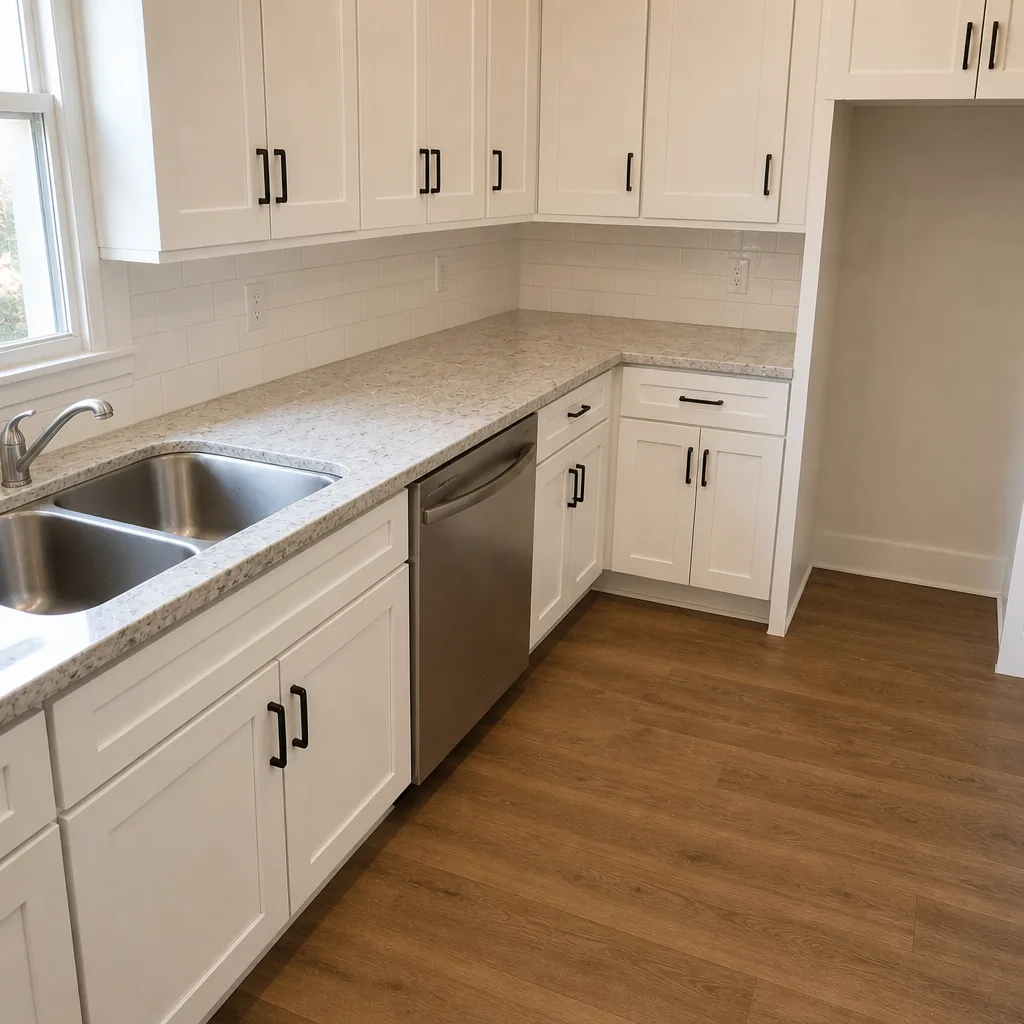 After
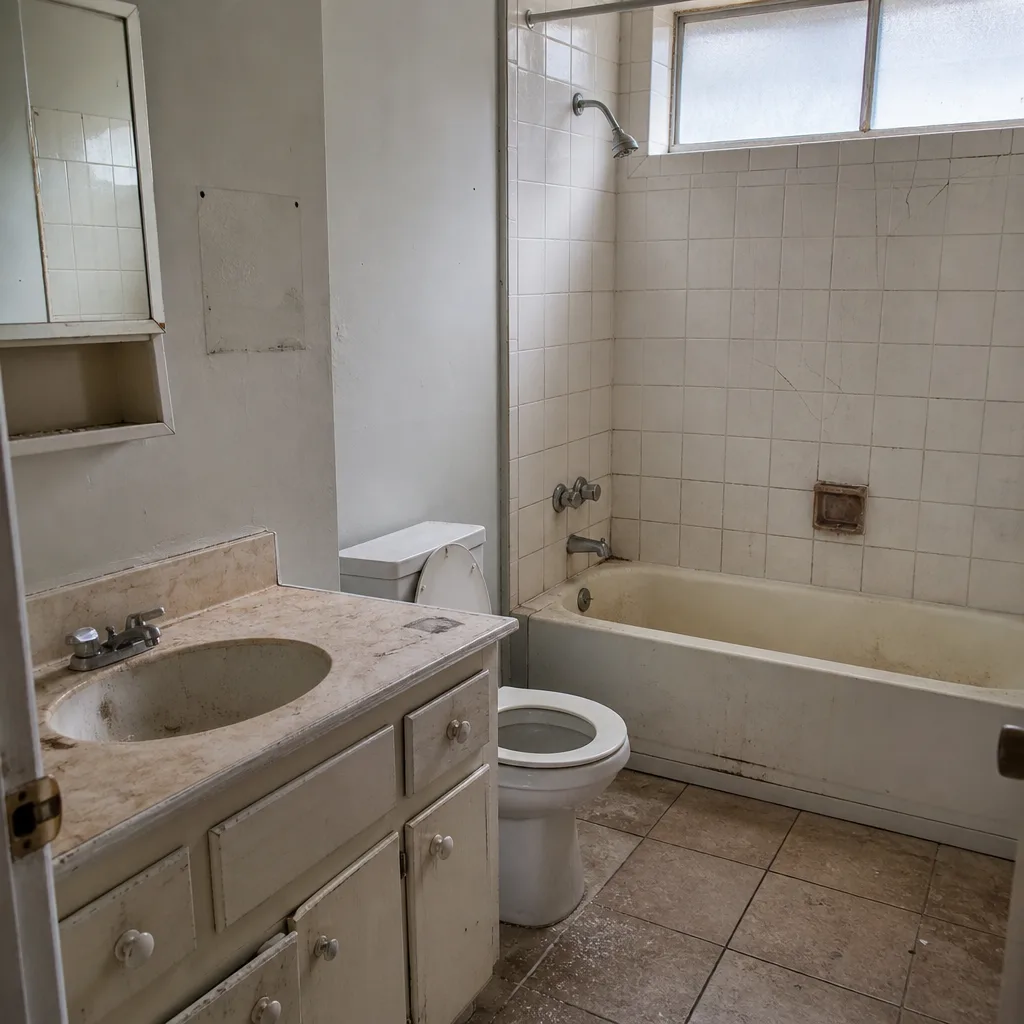 Before
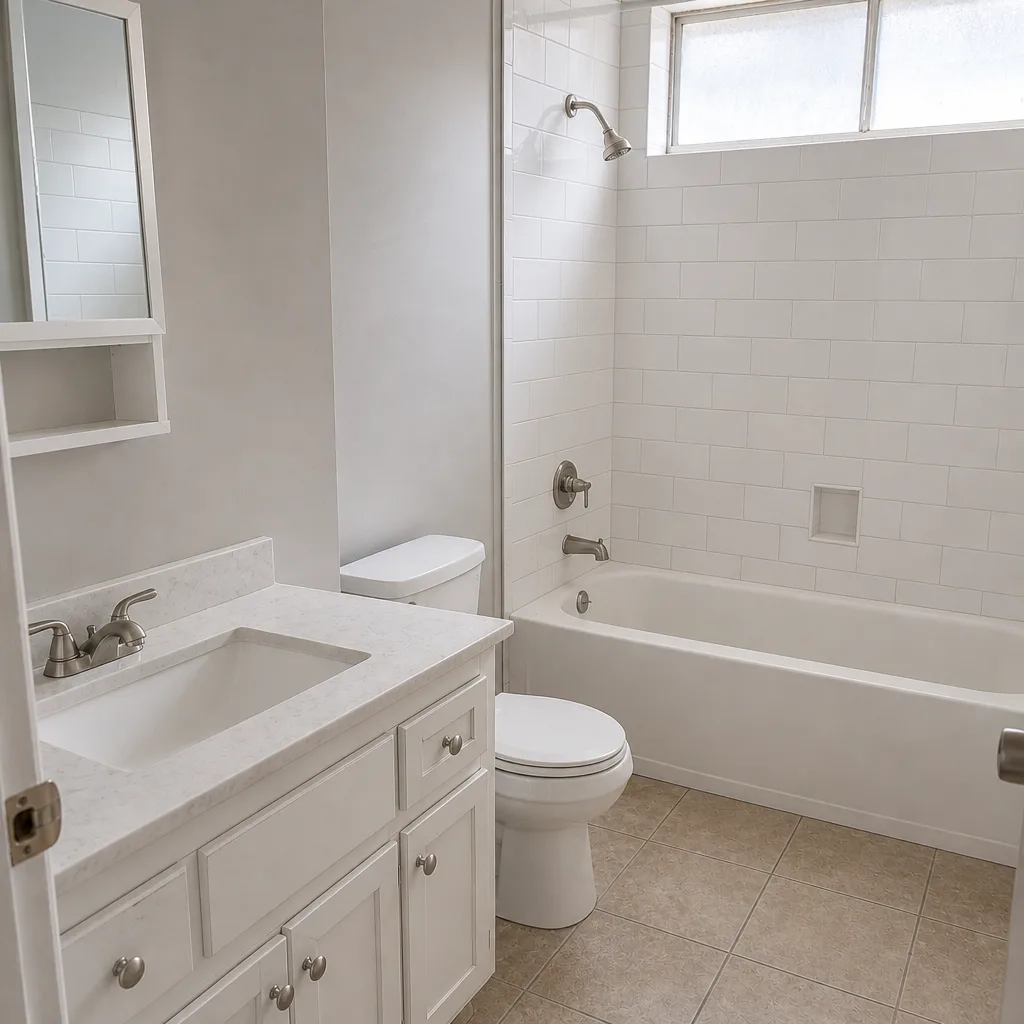 After
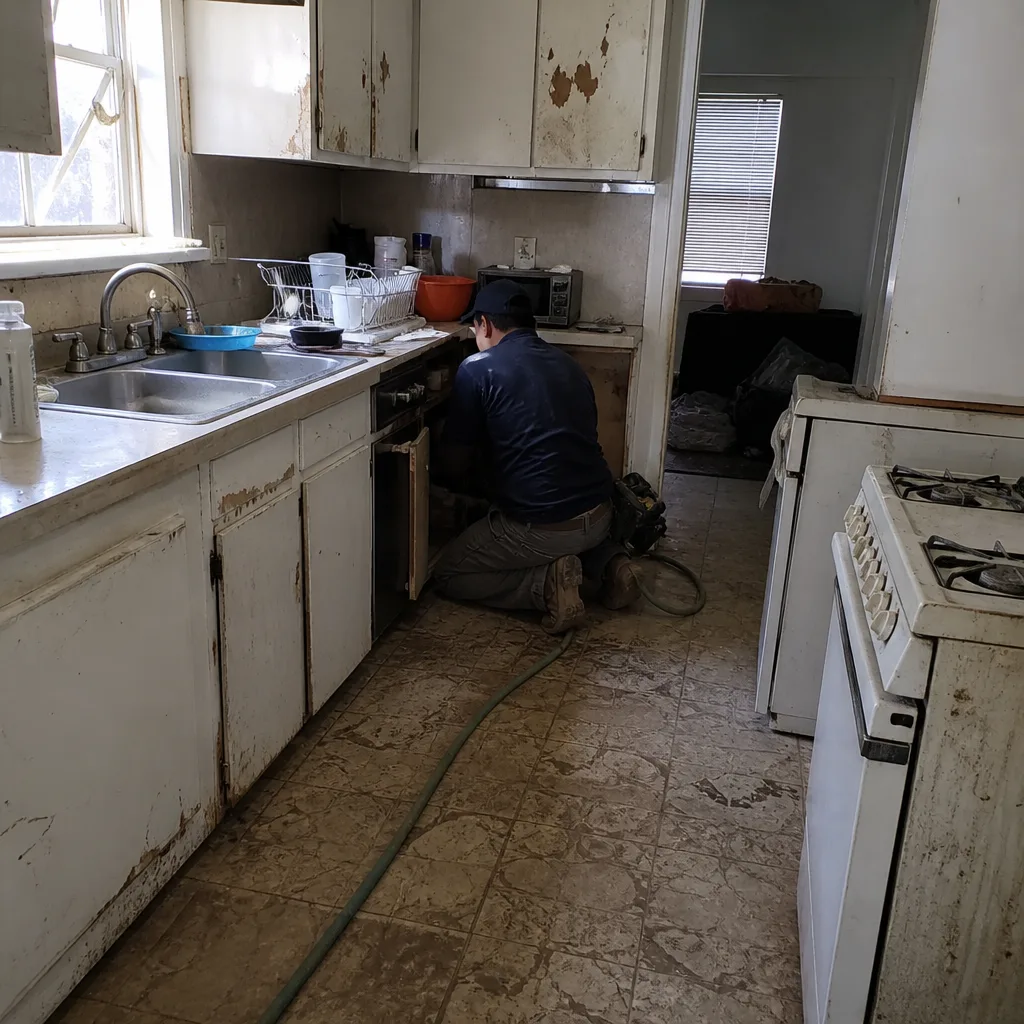 Before
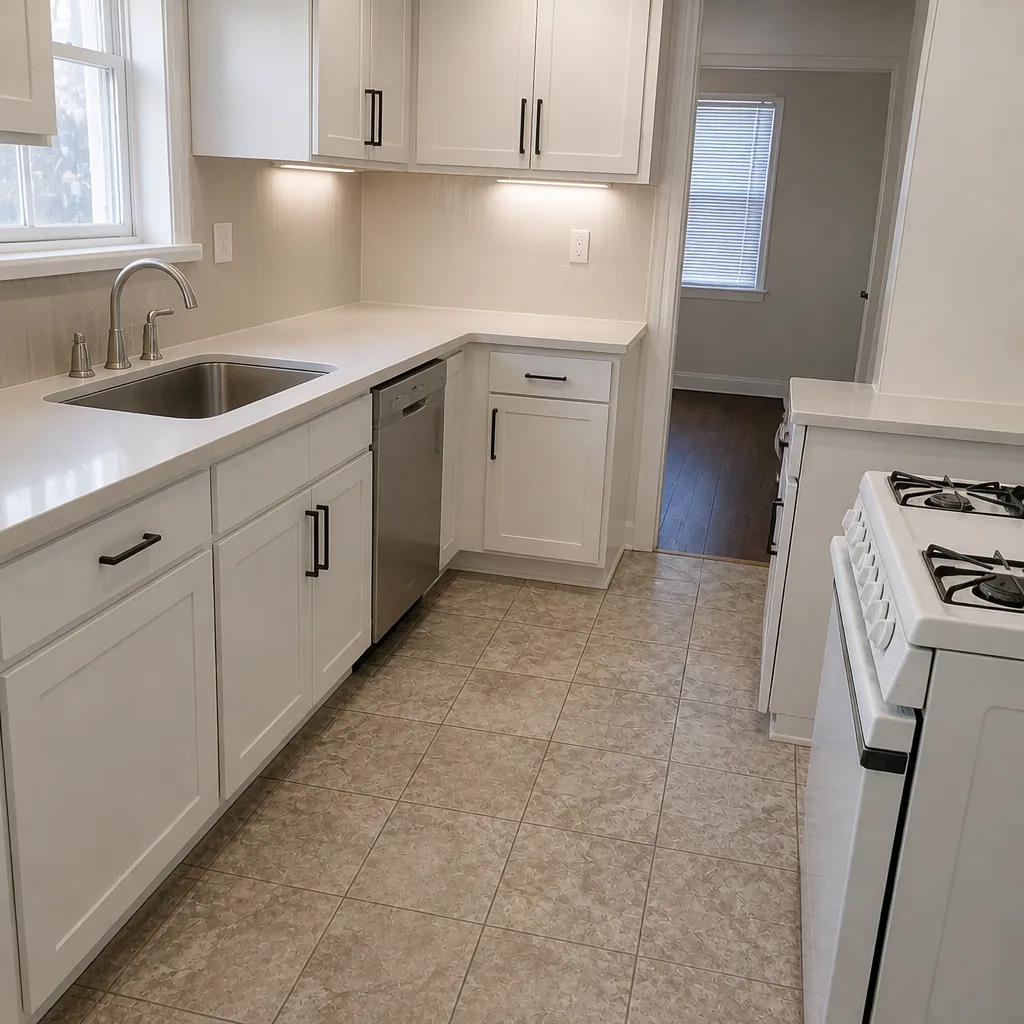 After
How Thick Should a Concrete Driveway Be in Mesquite, TX? 5 Inches Minimum, 6 for Trucks
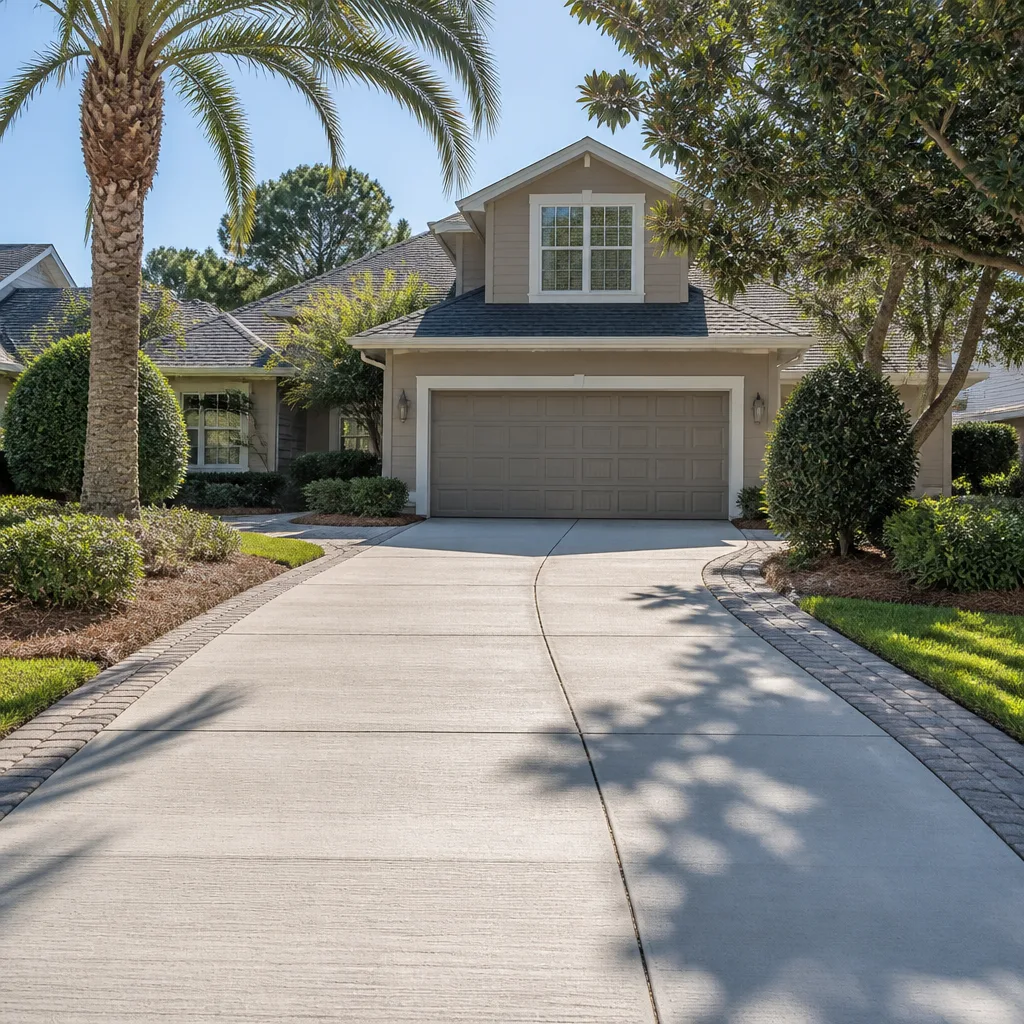
For a passenger-car driveway on Mesquite’s expansive clay, plan on 5 inches of concrete as the practical minimum, and 6 inches if your household parks a truck, a large SUV, or anything over 6,000 lbs. The code minimum most builders quote is 4 inches. In Mesquite, that’s the thickness most likely to crack within five years, not because concrete is weak, but because the black clay underneath it never stops moving. Groundwork Construction Co. of Mesquite pours to your vehicles and your soil, not to a generic minimum. For a straight answer on your specific driveway, call (888) 426-8078.
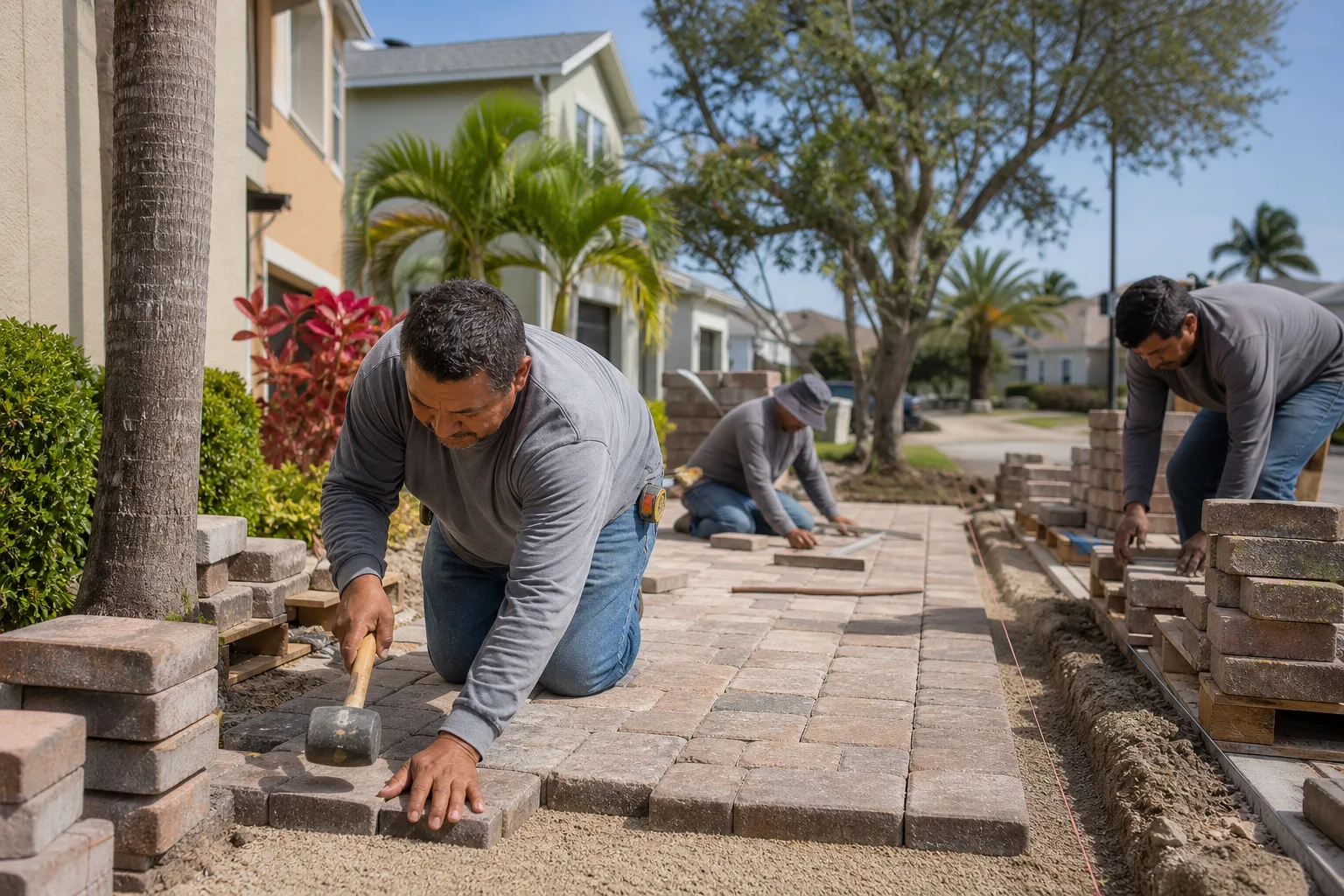
Why 4 Inches Usually Fails on Mesquite Clay
Across Mesquite, the soil is heavy black clay that swells when it’s wet and shrinks hard when it’s dry. North Texas gives you both in the same season. That wet-dry cycling shifts the sub-base under a slab, and when part of the slab is sitting on firm ground while another part is over a void, the concrete has to bridge the gap on its own. That’s bending stress.
A thicker slab resists that bending better. It’s the same idea as a plank of wood: a thin board flexes and snaps, a thick one carries the load. Moving from 4 inches to 5 inches adds 25% more concrete section, and that extra depth is what buys you years before a crack finds its way through. On a 1950s or 1960s ranch in Mesquite with an aging slab and settled grade around it, that margin matters even more.
A few local habits we see that push a driveway toward failure:
- Pours over undisturbed fill with no re-compaction, done fast to beat an afternoon storm
- Clay that was bone dry at pour time, then soaked for a week straight in spring
- Driveways that double as the parking spot for a work truck or a boat trailer all summer
- Tree roots from mature pecans and oaks lifting one corner of an older slab
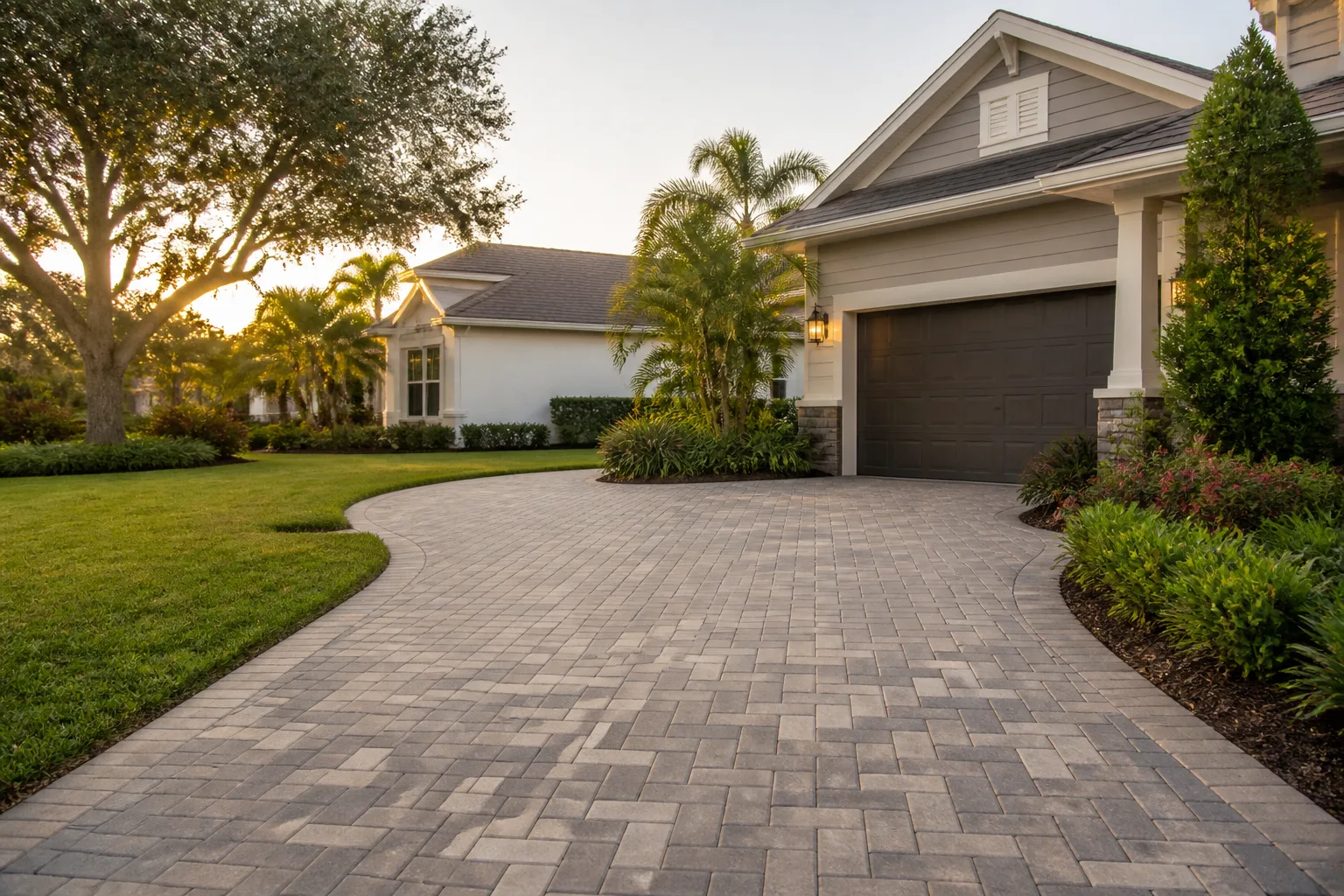
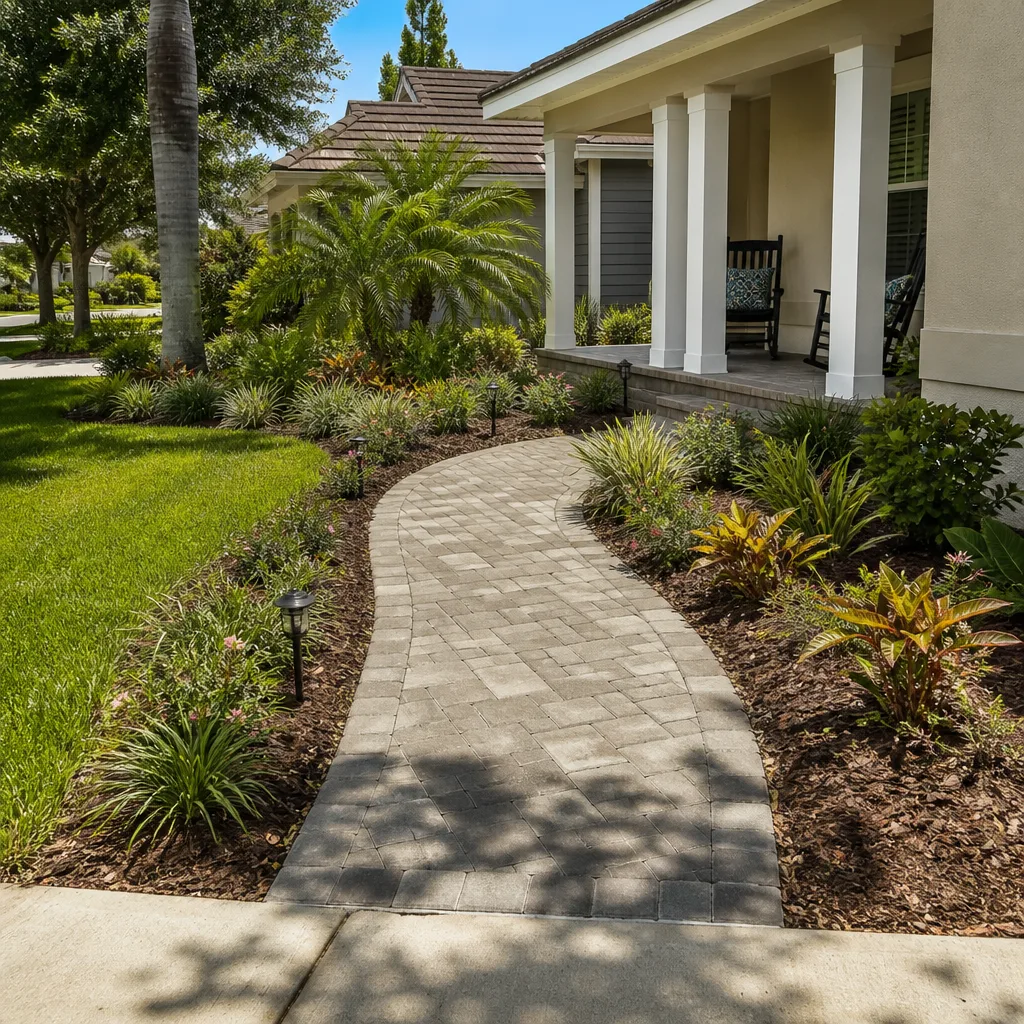
If you’re weighing concrete against a flexible surface that moves with the clay instead of fighting it, our Driveway & Pavers service covers the paver option, including Techo-Bloc and Cambridge systems set on a compacted base.
Thickness and Reinforcement Work as a System
Thickness alone won’t save a slab. The steel inside it decides how the concrete behaves when the soil moves. Here’s the combination that holds up in Mesquite:
- A 5-inch slab with #3 rebar on 18-inch centers outperforms a 6-inch slab with wire mesh. Mesh sits wherever it lands during the pour; rebar on chairs stays where it’s supposed to.
- Rebar on chairs, centered in the slab depth. Steel does its tensile job only when it’s in the middle third of the pour. Drop it to the dirt and it’s decoration.
- Control joints saw-cut every 8 to 10 feet on a 5-inch residential slab. Concrete shrinks as it cures, and joints give it a planned place to crack so the cracking doesn’t wander across the surface.
- A properly compacted, moisture-conditioned sub-base under the slab. This is the other half of the answer. Six inches of concrete over loose, dry clay will still crack; the slab and the base have to be built as one system.
When a homeowner tells us their last driveway cracked “for no reason,” the reason is almost always one of these: too thin, steel in the wrong place, or a base that was never conditioned before the pour. Our technicians have up to 12 years of experience reading exactly this, and we specify it in writing before the first shovel hits the ground.
What a Mesquite Concrete Driveway Costs
Thickness affects price, because more concrete and more steel cost more. These are the ranges we quote for Mesquite, and they hold whether you’re replacing a cracked 1960s slab or pouring new on an infill lot:
| Scope | Typical Range |
|---|---|
| Concrete driveway installation | $4,500-$12,000 |
| Full driveway replacement | $5,000-$14,000 |
| Paver driveway installation | $7,000-$18,000 |
| Asphalt driveway paving | $3,500-$9,000 |
| Driveway sealing | $250-$700 |
A 5-inch pour with rebar lands toward the upper end of the installation range; a standard 4-inch mesh pour drags it lower. You get upfront pricing, no surprises, and with the standing offer of $1,000 off projects over $10,000 plus 0% financing for 18 months, a properly built driveway stays within reach. We use Quikrete and Oldcastle materials, mixed and specified to match the depth we document.
Getting It in Writing Before the First Pour
Here’s the part most homeowners never see, and it’s the reason arguments start after a driveway cracks. Groundwork specifies slab thickness in writing before any work begins. You get a scope document that states the pour depth, the reinforcement type and spacing, and the control joint plan. So when your driveway is finished, there’s no question about what was actually built.
That matters because every project falls under the 730-Day Done Right Promise. If something isn’t right within that window, we make it right, and a written scope is what makes the guarantee verifiable instead of a handshake. Groundwork Construction Co. of Mesquite operates as your single contractor from foundation to finish line, with background-checked, uniformed technicians on every job and a live person answering the phone around the clock. Mesquite is a built-out suburb where nearly all the work is renovation and replacement on 50+ year-old ranch homes, so we plan every driveway around the mature slab, the grade, and the traffic it will carry.
Frequently Asked Questions
Six inches is the right call for trucks, large SUVs, and anything over 6,000 lbs in Mesquite, paired with #3 rebar on 18-inch centers and a well-compacted clay base. A 5-inch slab handles passenger cars fine, but heavy vehicles load the slab differently and the extra inch is cheap insurance against the bending stress that clay movement creates. Call (888) 426-8078 for a free estimate sized to your vehicles.
For a Mesquite driveway on expansive clay, rebar on chairs beats wire mesh every time. Mesh tends to sink to the bottom during the pour, where it does little for tensile strength. Rebar held in the middle of the slab depth is what resists the cracking that soil movement causes. Wire mesh is fine for a shed slab on stable ground; a vehicle driveway is a different job. Call (888) 426-8078 and we’ll walk you through it, free.
On a 5-inch residential slab, control joints should be saw-cut every 8 to 10 feet, and sooner on wider slabs. Joints give the concrete a planned line to shrink-crack along so the surface stays clean instead of cracking randomly across the drive. If your last driveway cracked right through the middle with no joint nearby, that’s the reason. Call (888) 426-8078 for an exact quote on a properly jointed pour, and estimates are free.
Usually no, and we won’t recommend it on Mesquite clay. An overlay hides the problem instead of solving it, and any movement in the old slab telegraphs straight through the new surface. A proper job means removing the failed slab, re-compacting and moisture-conditioning the sub-base, then pouring at the right thickness with rebar. Call (888) 426-8078 for a no-pressure assessment before you commit.
Talk to a Real Person Before the First Pour
If you’d rather have it looked at, Groundwork Construction Co. of Mesquite offers a no-pressure assessment in Mesquite. We’ll tell you the right thickness for your vehicles and your soil, put the spec in writing, and back it with the 730-Day Done Right Promise. Call (888) 426-8078 for a free estimate, reachable any hour.
Written by the team at Groundwork Construction Co. of Mesquite, serving Mesquite, TX.