Free written scope consultation - allowances, timeline, and change-order rules on paper before a single trade is scheduled
Paver Driveways in Royse City, TX: What the Job Really Costs and How Long It Takes
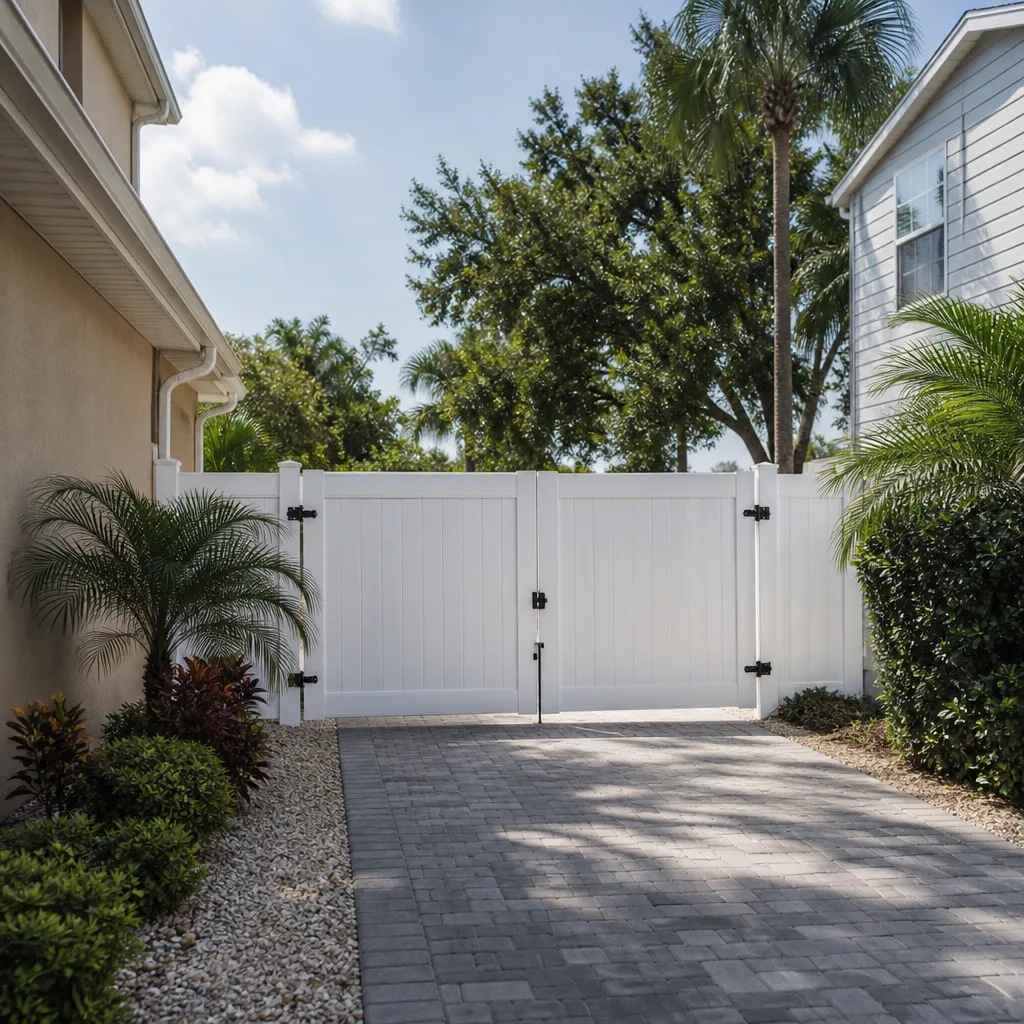
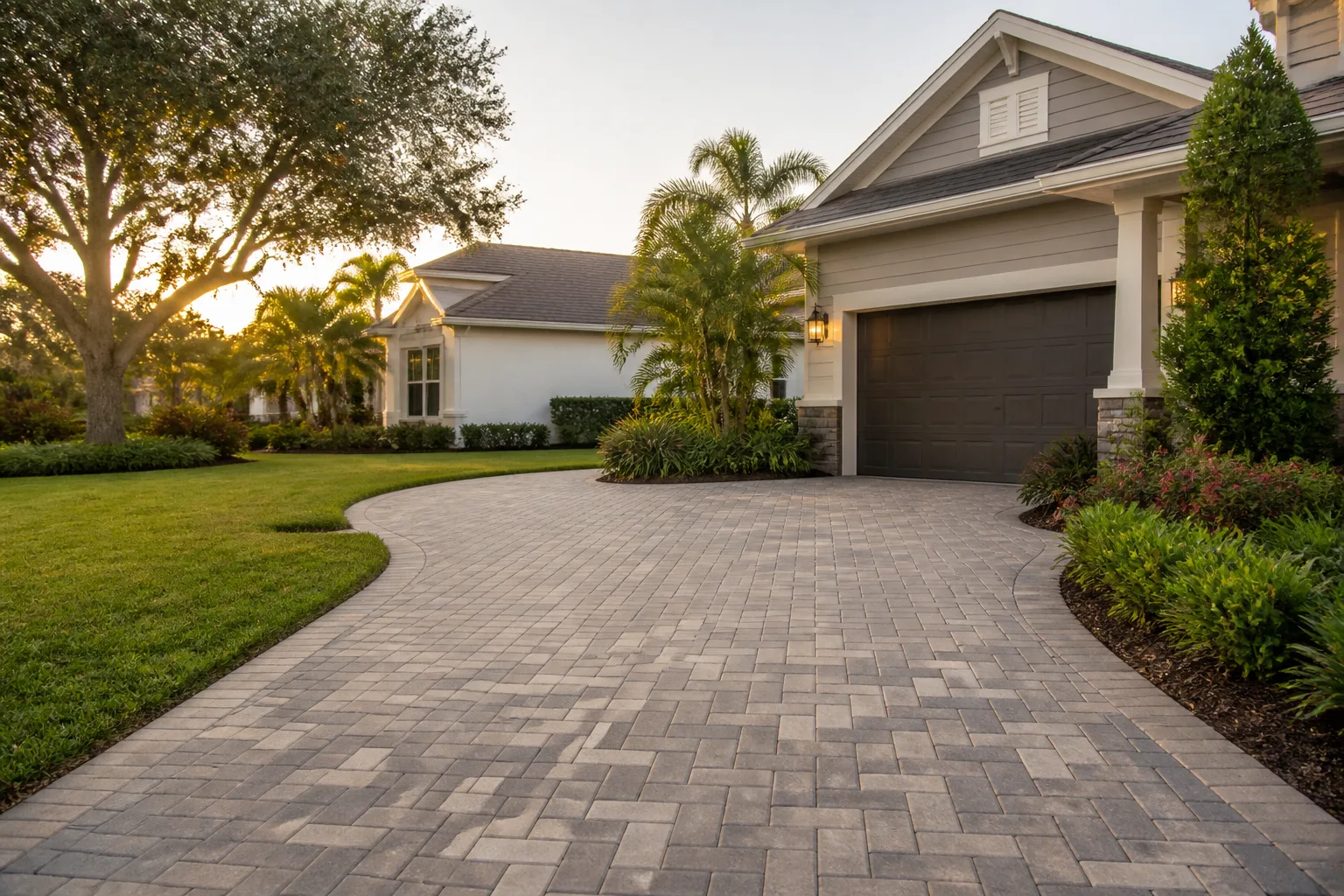
A paver driveway in Royse City typically runs $7,000 – $18,000 and takes five to seven working days from demolition to the final sweep of sand. Most of that time is base work: excavation, grading, and compacting the gravel layers that keep the pavers flat for the next twenty years. Call (888) 426-8078 and we’ll walk your driveway, measure it, and put a line-item number in writing before anyone touches a shovel.
How We Build a Paver Driveway, Stage by Stage
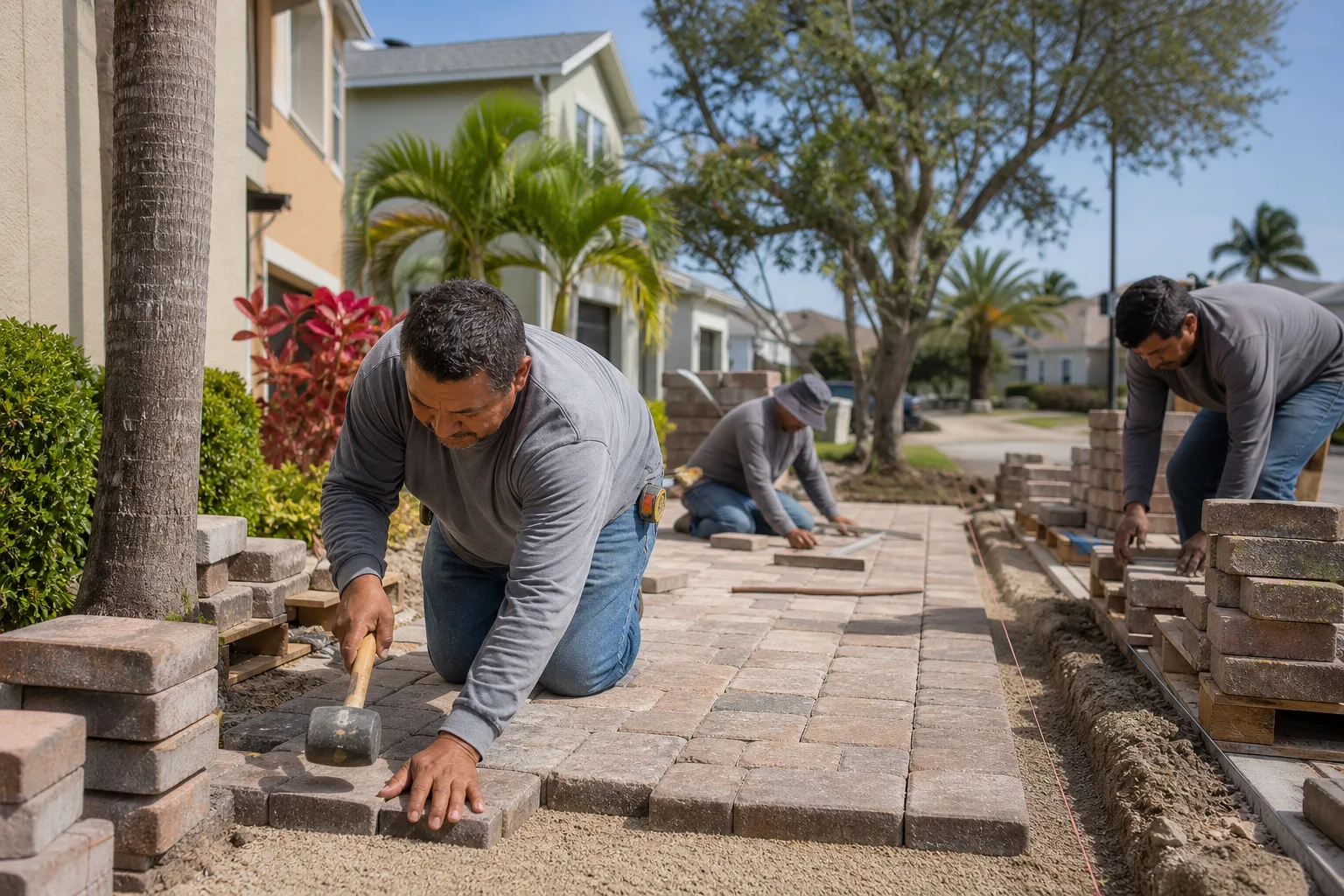
The order of operations is what separates a driveway that still looks new after a decade from one that ruts and heaves after three summers. Here’s exactly how the week goes.
Day 1: Layout, demolition, and haul-off
We mark the driveway edges and any transitions to the garage apron and sidewalk, then break out and haul off whatever’s there – old concrete, failing asphalt, or distressed pavers. On a 500-square-foot driveway, expect this to take most of the first day. You’ll confirm the final width and the transition point to the street before demolition starts, because that’s the moment it’s still easy to change.
Days 1 – 2: Excavation and subgrade
We dig down roughly 8 to 10 inches for a residential driveway carrying cars and light trucks. That depth matters in Royse City’s clay. You’ll decide during this stage whether you want a geo-textile separation fabric or a heavier base course – both add cost, and both are worth the conversation once we see what the soil is doing under your existing slab.
Days 2 – 3: Base installation and compaction
We bring in crushed stone in lifts and compact each lift separately, then check grade with a laser so water leaves the driveway instead of pooling against the garage. This is the stage that dictates drainage. If the grade has to be raised or reshaped, it’s decided here, not after the pavers go down.
Days 3 – 5: Setting bed and paver installation
A thin, screeded layer of bedding sand goes over the compacted base, and the pavers go down in the pattern you chose – running bond, herringbone, or a basketweave. A 500- to 700-square-foot driveway is typically two full days of laying. This is when you’d stop by to check color and pattern before we cut in the edges.
Days 5 – 7: Edge restraint, cuts, polymeric sand, final inspection
We anchor the perimeter with edge restraint, make the cuts at the apron and garage transition, and sweep polymeric sand into the joints. You’ll walk the finished surface with us and we sign off on the punch list together. The driveway can take foot traffic the same day and vehicle traffic within a day or two.
If this is part of a full Driveway & Pavers in Royse City project that also touches a walkway or patio, we sequence the phases so the crew isn’t tearing up finished work later. Our Driveway & Pavers service covers the wider scope when you’re ready to talk about it.
Styles & brands we work with
- Kitchen remodeling
- Bathroom remodeling
- Home additions & ADU
- Roofing
- Windows & doors
- Driveway & pavers
- Fence
The Options You’ll Choose Between
Pavers aren’t one product. These are the real decisions a buyer makes, and what each one does to the budget and the long haul.
- Concrete pavers (the standard choice): The everyday paver for Texas driveways. Built on a compacted base, they handle clay movement better than poured concrete because each unit moves independently. Colors and textures run from a plain gray to a tumbled, aged look.
- Clay brick pavers: The traditional option, warmer in color and heavier per square foot. They cost more than concrete, hold their finish longer, and suit the brick-and-limestone look that reads well on the acreage properties and older ranch homes around Royse City.
- Permeable pavers: A system where water drains through the joints and base into the soil instead of running off. Worth the extra cost on a sloped driveway or one that sheets water toward the garage. It adds a gravel reservoir under the base, which is a real line item.
- Pattern choice: Herringbone is the strongest for vehicle traffic and costs a bit more in cutting waste; running bond is the simplest and cheapest. A border course adds labor but gives the driveway a finished edge.
- Color-through vs. surface-coated: Pigment mixed through the paver holds color for the life of the pavement. A surface coating is cheaper up front and fades faster in the Texas sun.
Brands like Belgard make a range of concrete paver lines that wear well in this climate, and we’ll bring samples from a curated set of manufacturers so you’re choosing on finish, not on what happens to be available that week.
What Paver Driveways Cost in Royse City, TX
A standard two-car paver driveway lands at $7,000 – $18,000 in Royse City. A single-car driveway sits toward the low end of that range; a long, wide driveway on an acreage property with a slope pushes toward the top.
The number is built from five variables, and knowing them is how you spot a lowball bid:
- Square footage and layout: Nearly every bid comes down to price per square foot, so a 400-square-foot driveway and a 1,000-square-foot driveway are different jobs, not a discount on one.
- What’s coming out: Breaking and hauling off a thick poured slab costs more than tearing out a thin asphalt surface, and that labor shows up on the line items.
- Base depth and soil condition: Expansive clay, a high water table after rain, or soft subgrade means more excavation and more gravel. This is the most common reason a job lands above the low end.
- Paver grade and pattern: Concrete pavers versus clay brick, plus a herringbone pattern and a border course, each add cost.
- Drainage: Permeable base, a French drain along the garage, or regrading to shed water all add line items.
A written estimate from us breaks the job into excavation, base, materials, labor, edge restraint, and any drainage work – the number you see is the number you pay. What it typically doesn’t cover is widening or relocating a curb, moving a sprinkler main or gas line, or city right-of-way work if your apron has to be re-cut. We flag those before signing, not after.
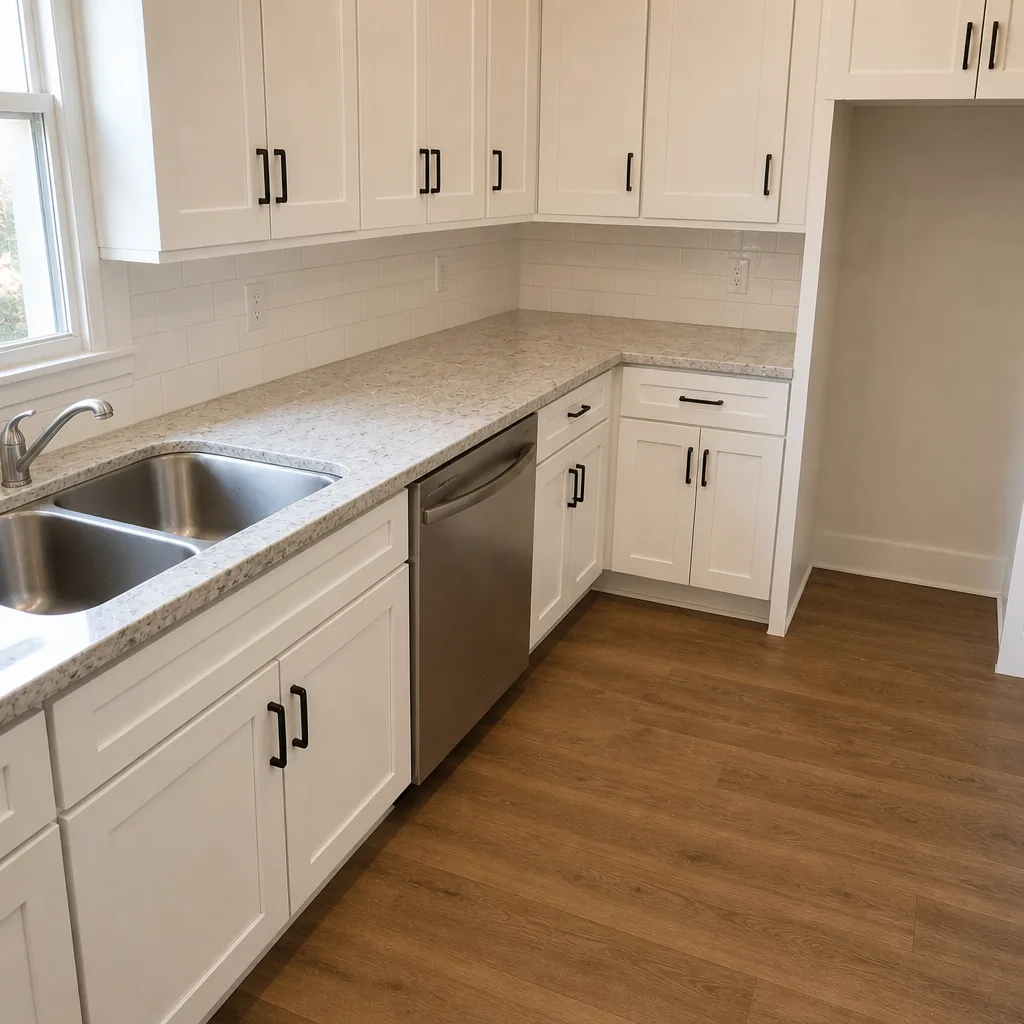
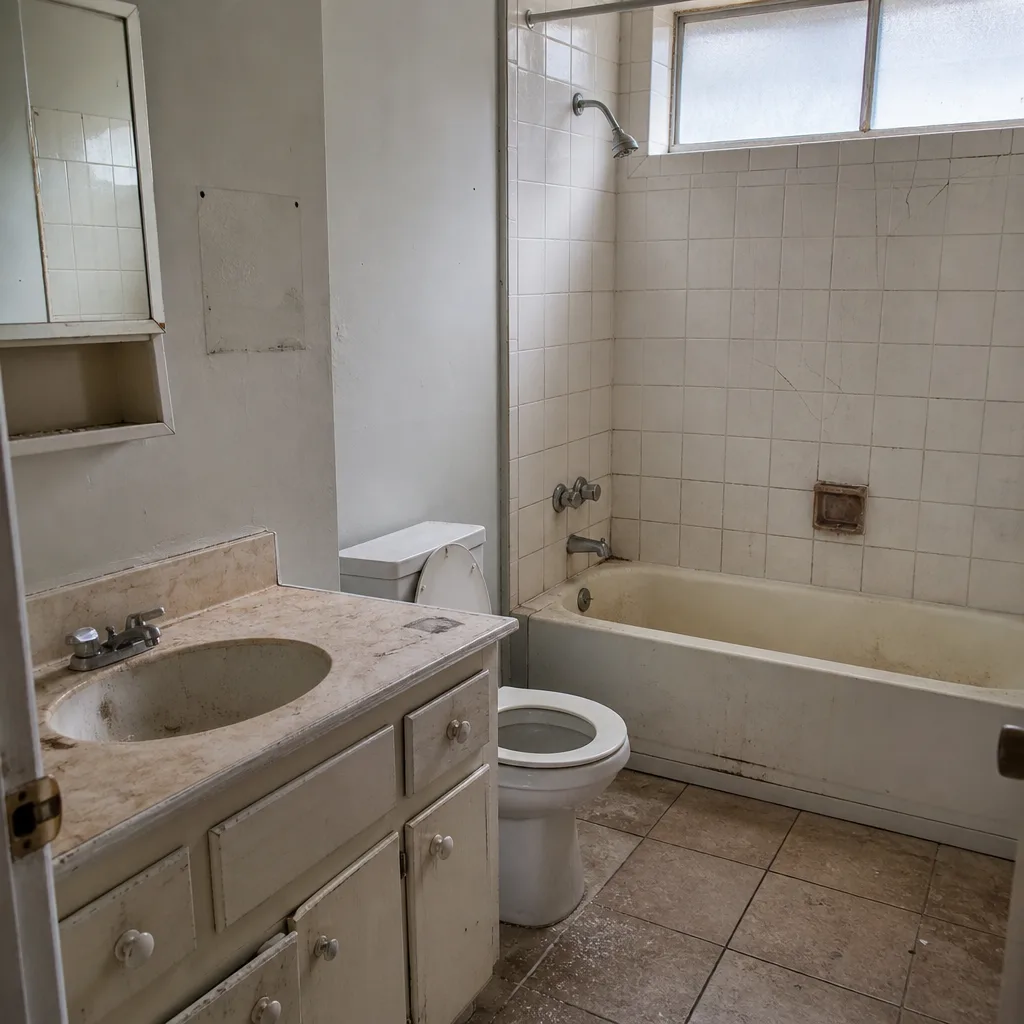
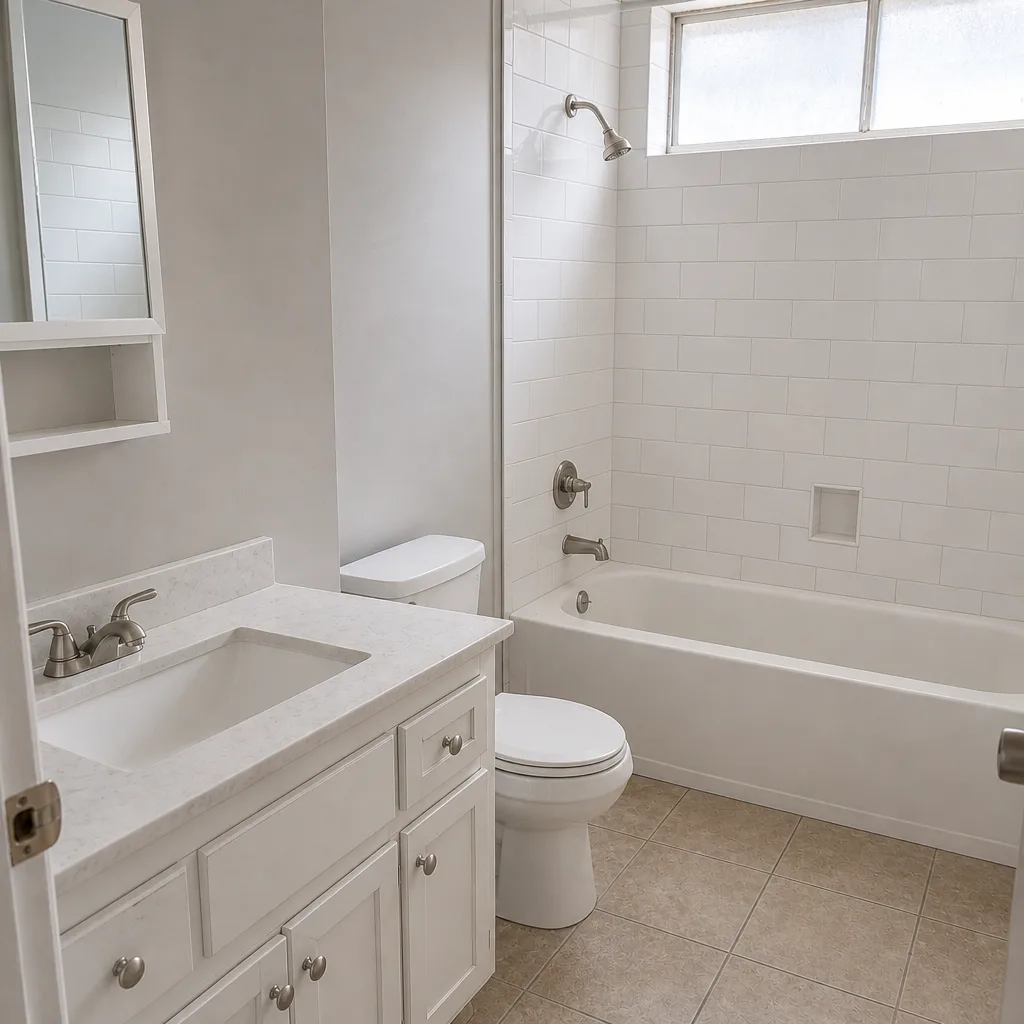
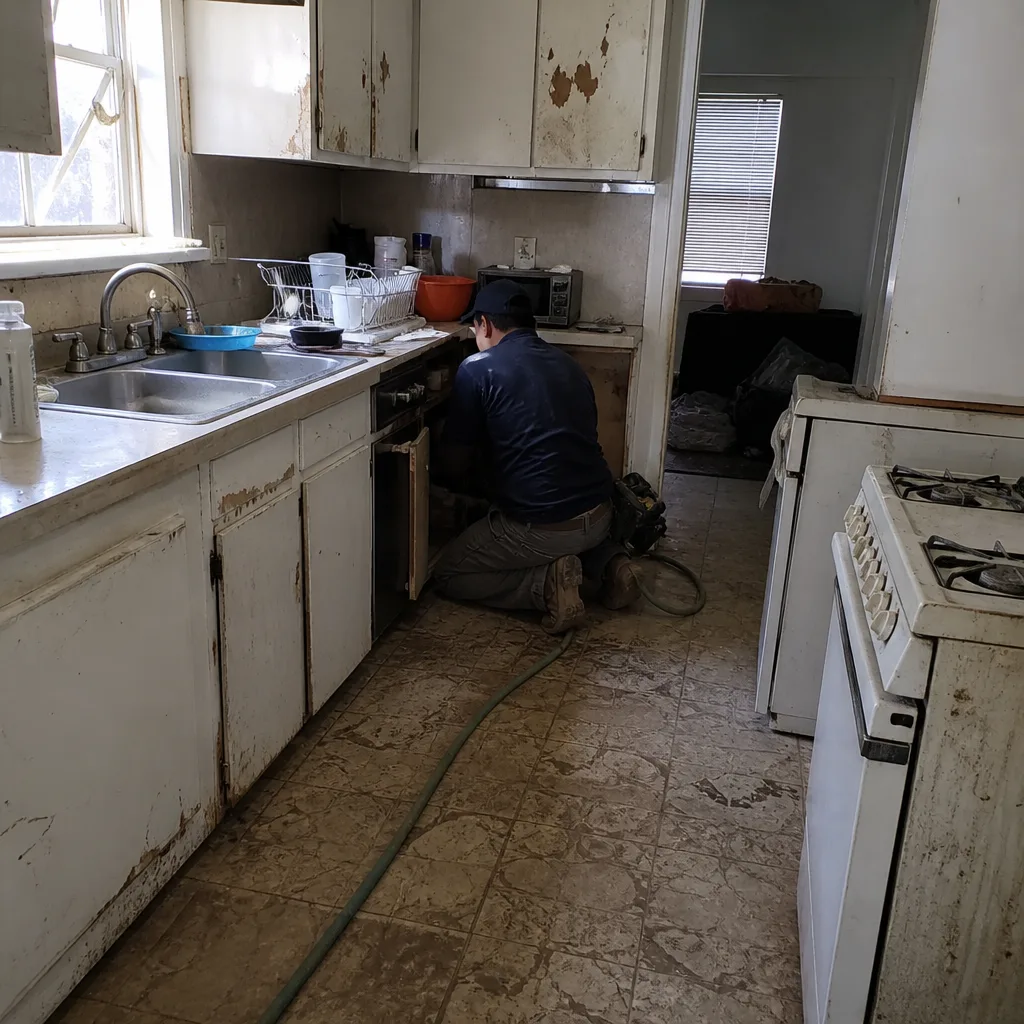
See the difference
 Before
 After
 Before
 After
 Before
 After
What Royse City Homes Specifically Do to This Job
Royse City sits on the eastern edge of the Dallas – Fort Worth growth corridor along I-30, and most of the housing here is new: subdivisions built in the last 15 to 20 years, with scattered 1970s – 90s ranch homes and acreage properties on the outskirts. That changes what a paver driveway job is. On an older ranch property off the rural roads, we’re more likely to find an original concrete slab that’s heaved at a corner where the Blackland Prairie clay has been swelling and shrinking for decades. In the newer subdivisions off I-30 and FM 548, the callbacks tend to be driveways that shifted within a few years of the home being built.
The soil is the whole story. That expansive clay needs a well-compacted base and a grade that moves water away from the house, or the pavement pays for it. Permitting runs through the city and inspections happen on the grading before the base goes down – we pull the permit and schedule the inspection as part of the job, so you’re not the one calling the city. HOAs in the newer subdivisions also have approval rules for paver color and street-facing geometry, and we’ll tell you up front when your HOA’s design guidelines dictate a particular paver style.
Our Royse City service area covers the whole city and outlying acreage properties. Homeowners planning a long-term change often pair this with ADU Design & Permitting in Royse City or a Garage Conversion ADU in Royse City, since a driveway apron to a new unit is part of the same permit conversation.
Paver Driveways in Royse City: Frequently Asked Questions
Most residential paver driveways take five to seven working days. A small single-car driveway can finish in four; a long acreage driveway with a slope and drainage work can stretch to eight or nine. Weather adds days if rain hits during excavation or base work, because saturated clay won’t compact properly.
Most paver driveway replacements require a permit and at least one grading inspection before the base goes in, and a driveway that touches the sidewalk or street apron usually adds a right-of-way review. We check the requirement for your address, pull the permit, and handle the inspection. Call (888) 426-8078 and we’ll tell you exactly what your lot needs.
Usually yes, as long as the new driveway footprint matches the old one and the depth stays above any buried lines. The exceptions are relocating a sprinkler main, a gas line near the apron, or a footing that has to be exposed. We locate utilities before we dig and price any relocation as a separate line item, so there are no surprise charges mid-job.
Concrete typically runs $4,500 – $12,000 and goes in faster, but it cracks in expansive clay because it’s a single rigid slab. Pavers run $7,000 – $18,000 and cost more up front, but each unit moves with the ground and a damaged section can be lifted and reset rather than replaced. If your lot has shown clay movement or drainage trouble, the paver cost usually pays for itself.
Every paver driveway we install carries our 730-Day Done Right Promise – if it isn’t done right, we make it right, for two full years. That covers workmanship on the base, grading, and installation. Paver manufacturers also carry their own product warranties on top.
Serving Royse City, TX – Our Local Coverage Area
We serve Royse City and nearby communities. Use the map below to see the area we cover. If you’re nearby, we can almost certainly help.
Get a Written Paver Driveway Estimate
Call (888) 426-8078 to schedule a free on-site estimate for paver driveways in Royse City. We’ll measure the driveway, look at the soil and drainage, walk through the paver options, and hand you a line-item quote with the excavation, base, materials, and labor broken out. Upfront pricing with no surprises, and a real person answers the phone around the clock. If we don’t think pavers are the right call for your lot, we’ll tell you that too.
Written by the team at Groundwork Construction Co.