Free written scope consultation - allowances, timeline, and change-order rules on paper before a single trade is scheduled
Styles & brands we work with
- Kitchen remodeling
- Bathroom remodeling
- Home additions & ADU
- Roofing
- Windows & doors
- Driveway & pavers
- Fence
See the difference
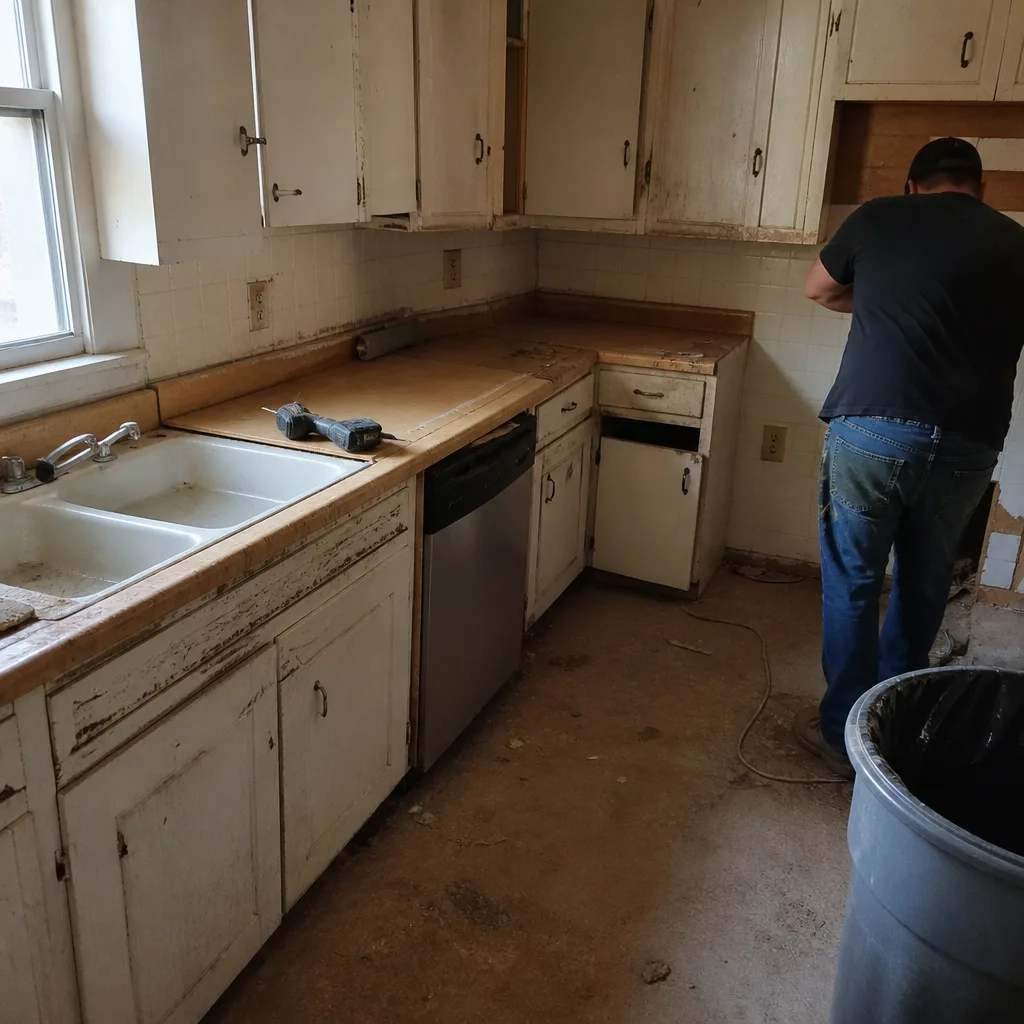 Before
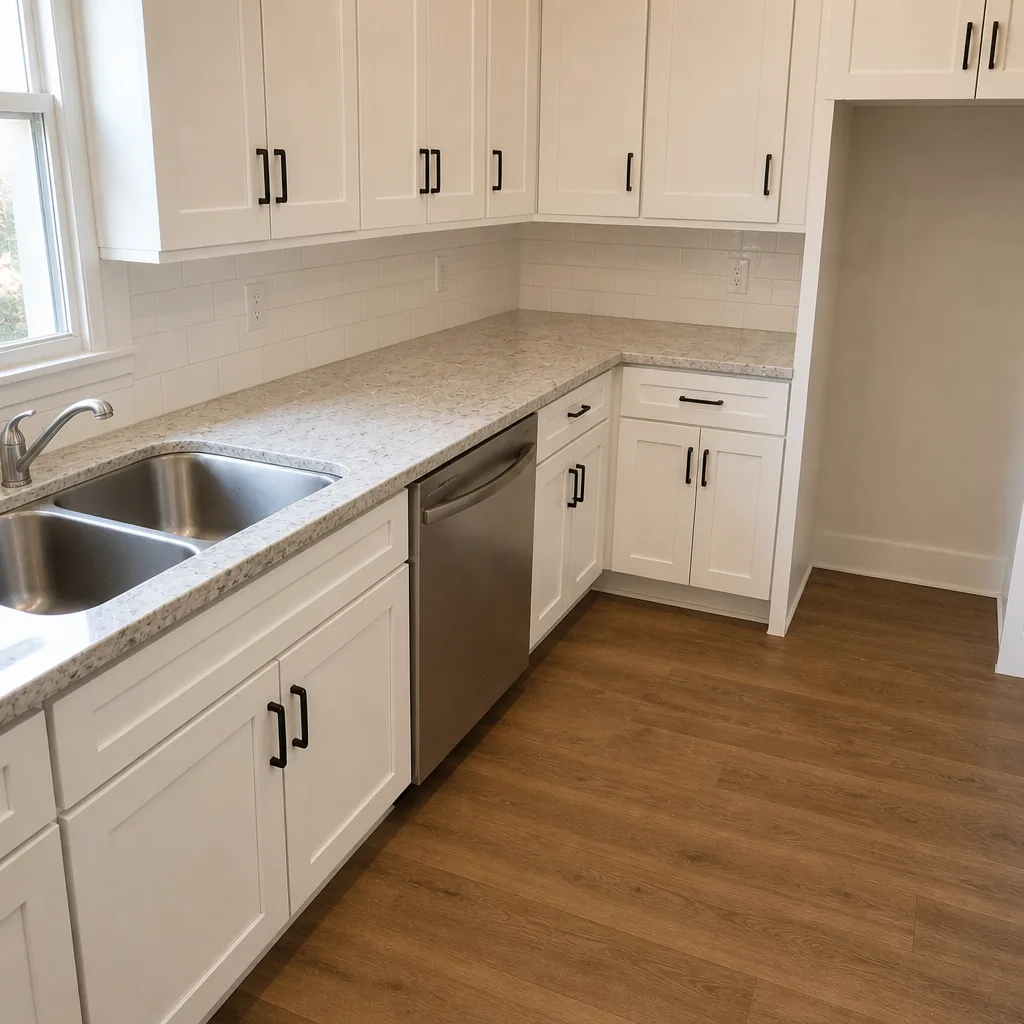 After
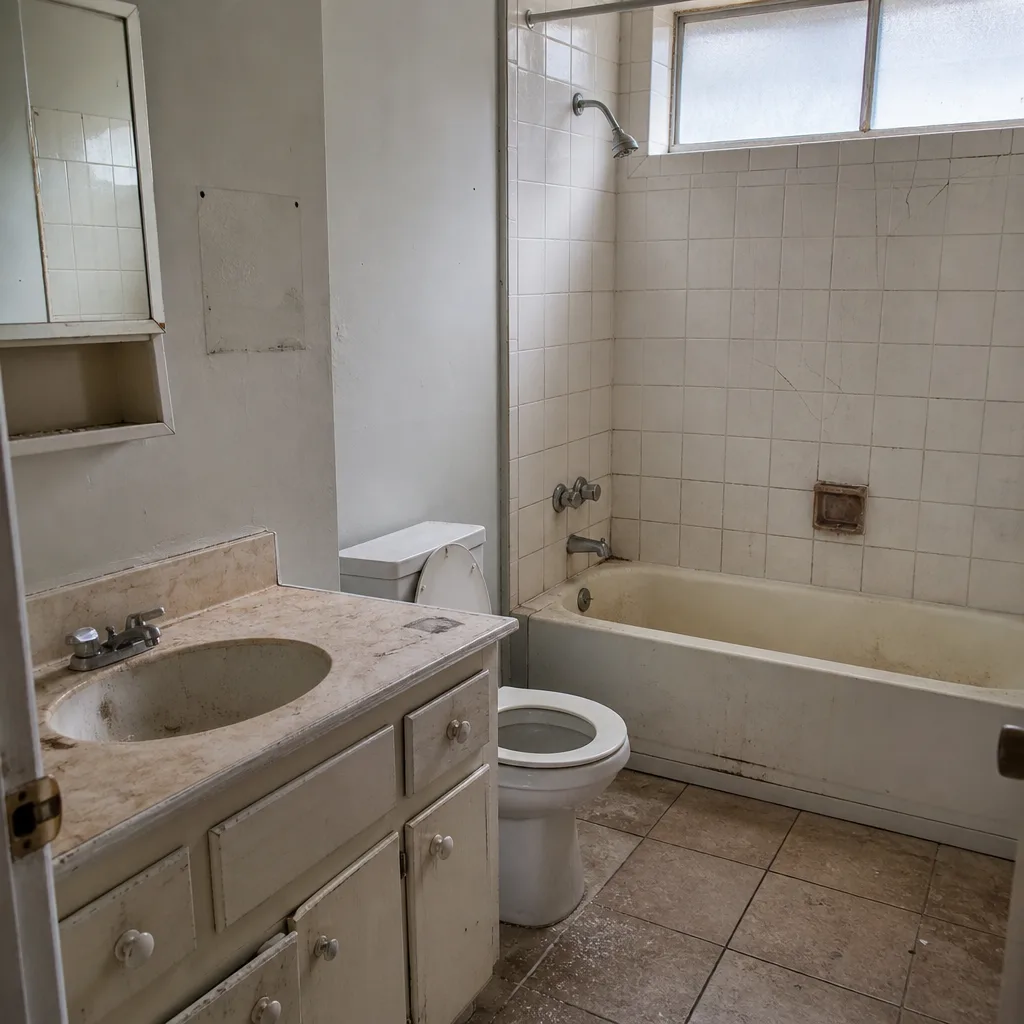 Before
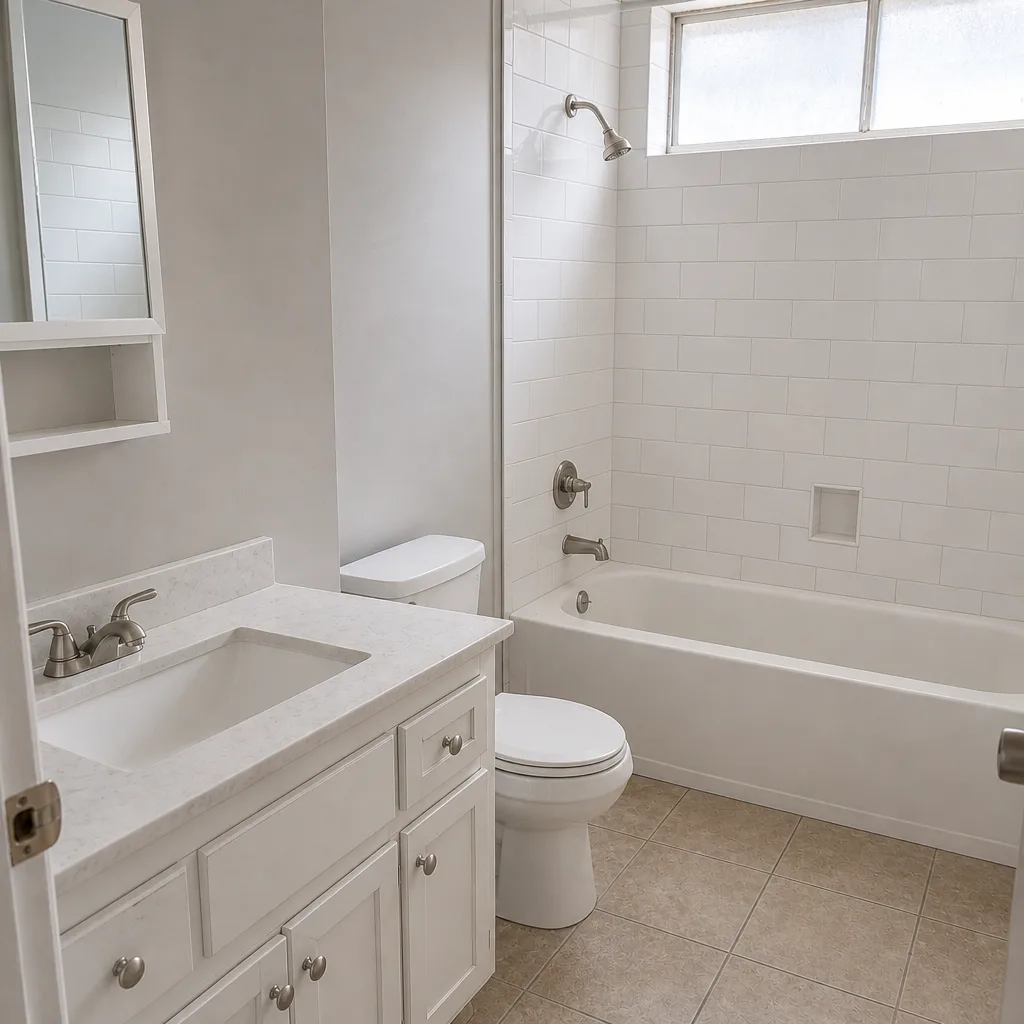 After
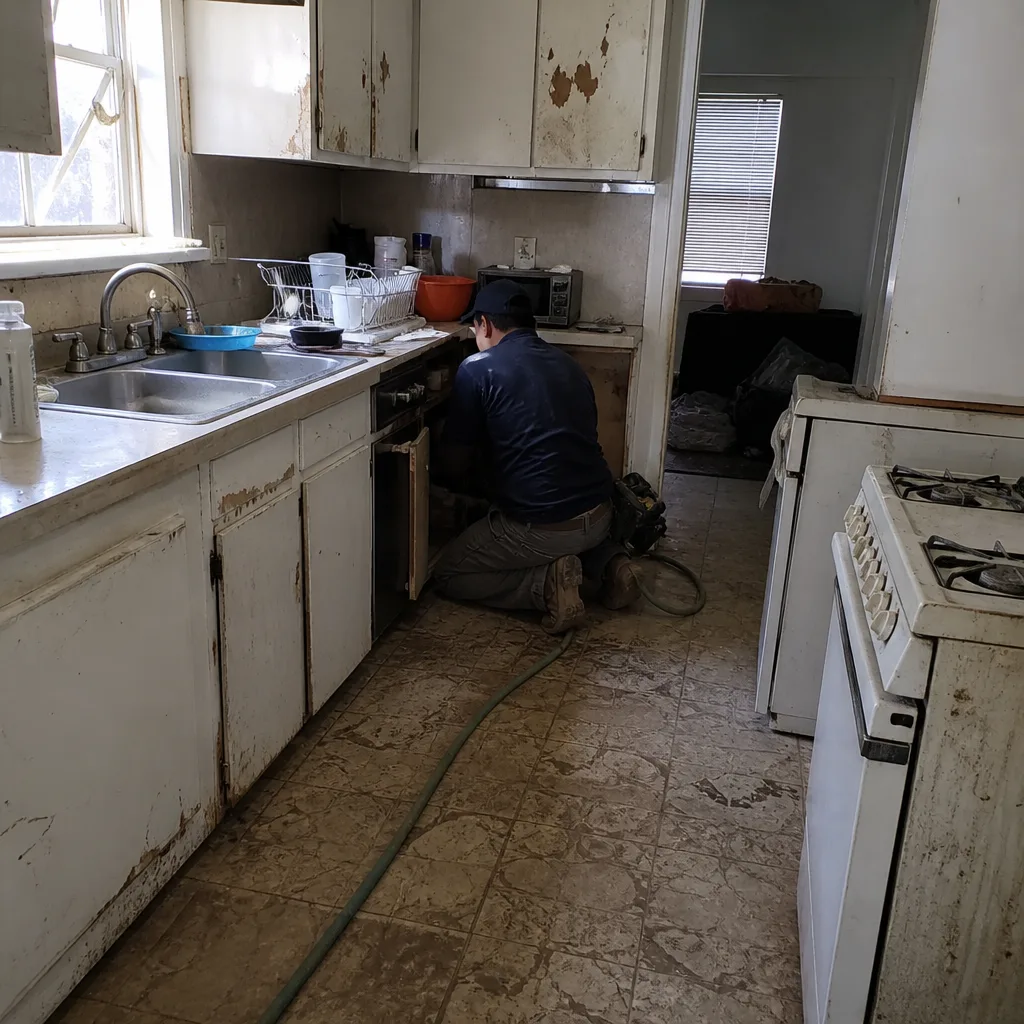 Before
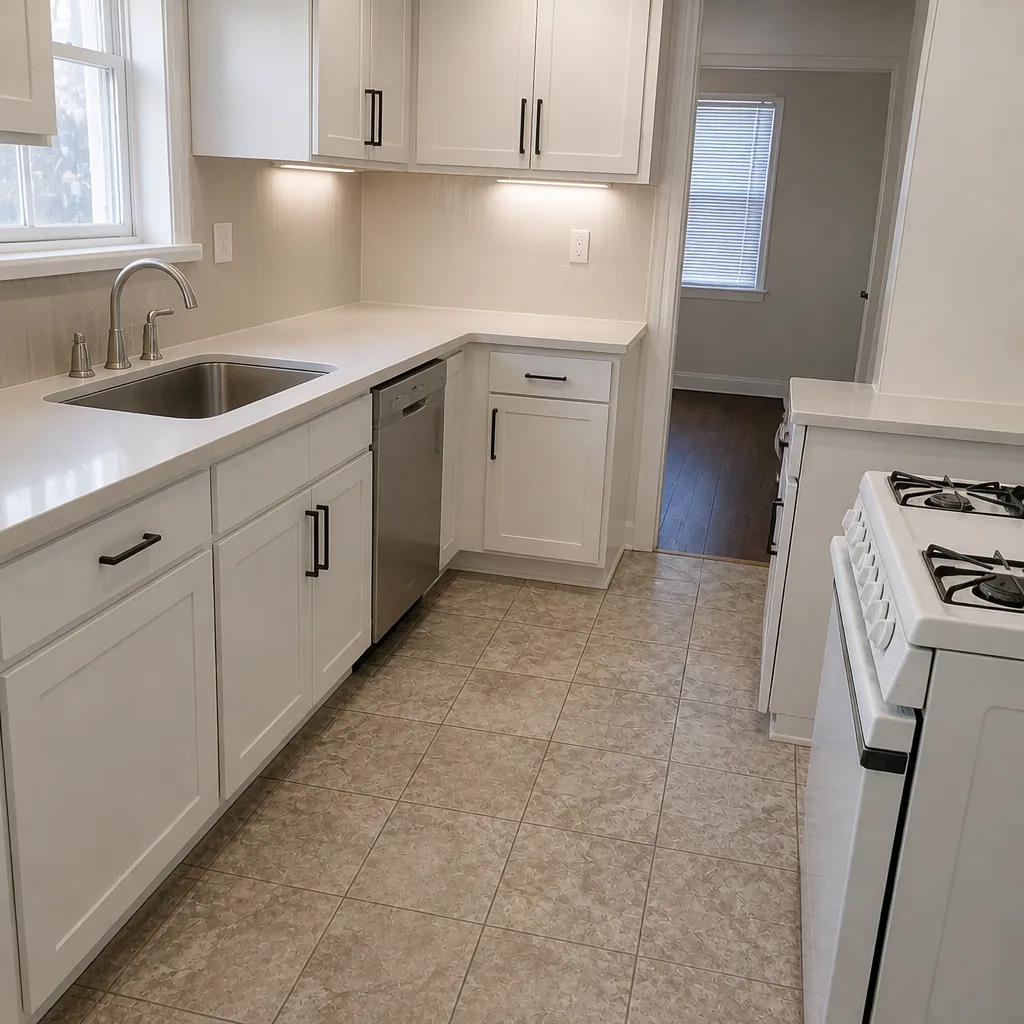 After
Asphalt vs Concrete Driveway in Mesquite, TX: Which One Actually Survives Here?
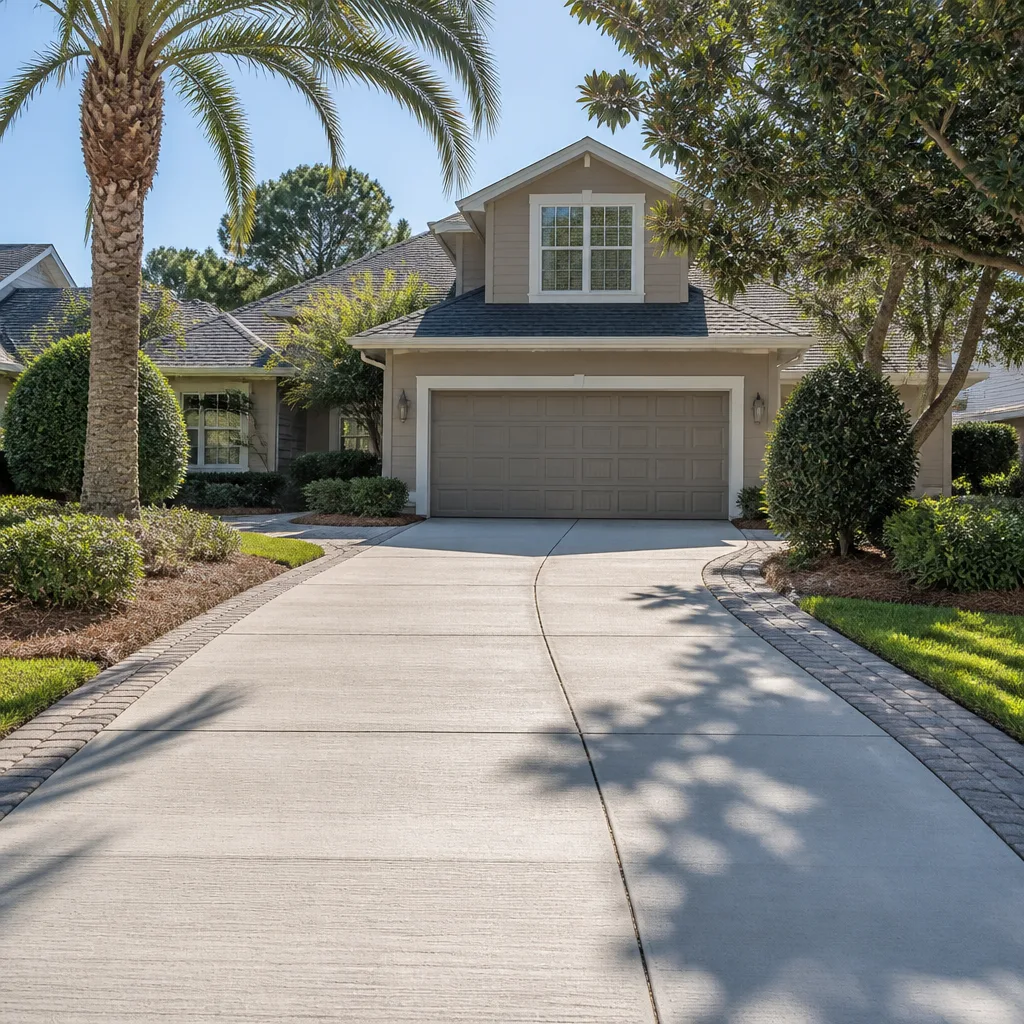
Choose concrete if you want the longest service life and you’re willing to pay for proper reinforcement, jointing, and drainage. Choose asphalt if your budget is tighter, your lot drains well, and you’re prepared to seal it every few years. That’s the honest bottom line. But the real answer in Mesquite depends on which failure mode you can live with – asphalt that softens and ruts in the heat, or concrete that cracks on the clay. Call (888) 426-8078 and we’ll walk your lot with you before you spend a dollar.
Two Failure Modes, One Climate
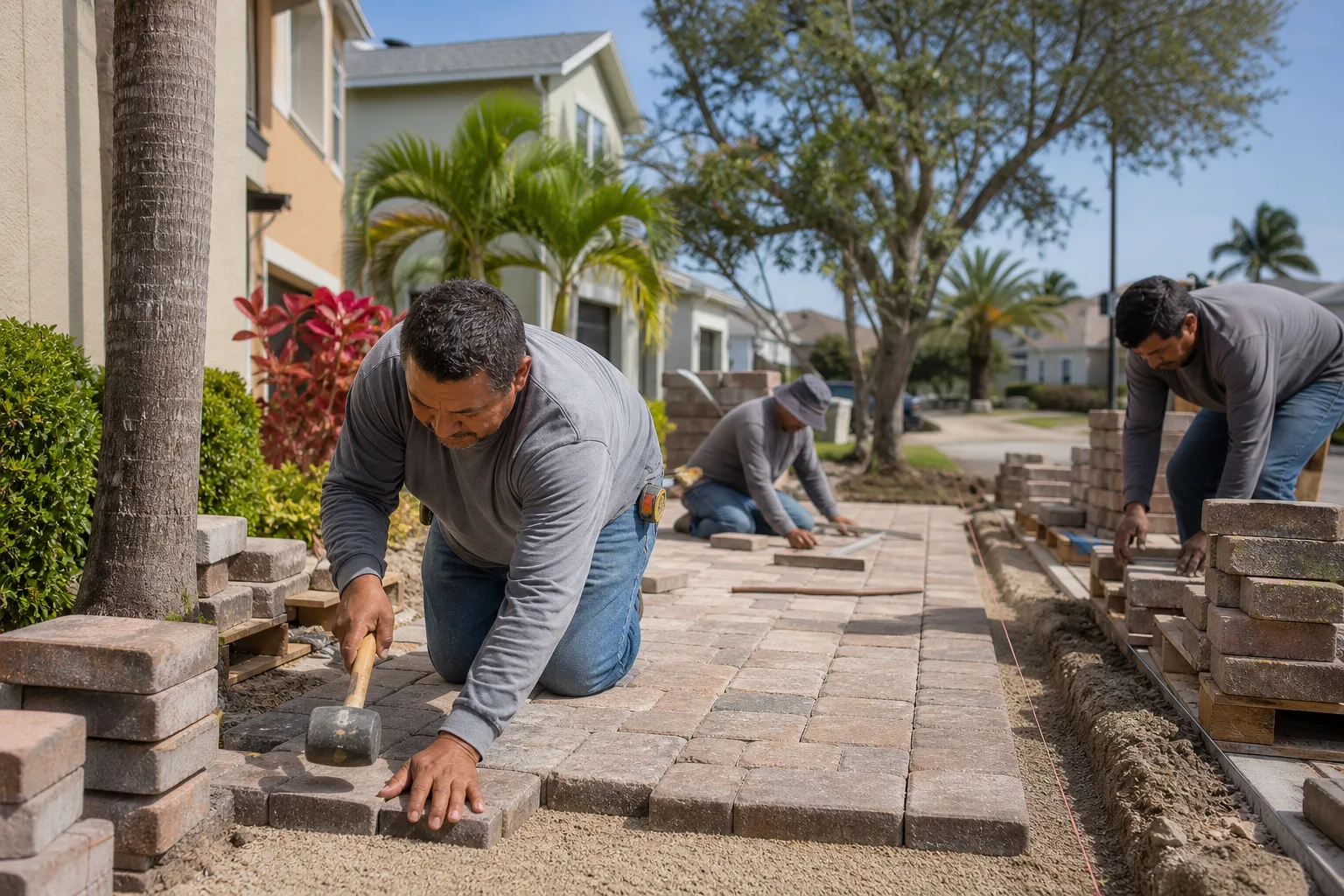
Most driveway comparisons treat this as a simple cost question. In Mesquite it isn’t. This is a built-out inner-ring suburb where the housing stock dates mostly to the 1950s through the 1970s, and most of the work here is replacement rather than new construction. That means we’re almost always pulling out a driveway that’s already lived through decades of North Texas summers and clay movement. The material you put back has to handle both.
Start with heat. Asphalt binder begins to soften once pavement surface temperatures climb past 120°F. Across a Mesquite summer, exposed pavement routinely hits 150-160°F on a sunny afternoon, and air temps sit above 100°F for weeks at a stretch. Park the same truck in the same spot every day and the tires press that softened binder down. Without a properly specified mix and enough aggregate thickness in the base, you can get permanent ruts within two or three summers. That’s not a scare tactic – it’s what a soft binder does under a sustained point load.
Concrete has its own weak spot, and the pro-concrete crowd tends to skip past it. The black clay across Mesquite swells when it’s wet and shrinks hard in drought, and that movement generates horizontal soil pressure against the slab. A standard 4-inch unreinforced pour can see that pressure exceed its tensile strength within one or two major drought-to-rain cycles. Control joints help relieve it, but they don’t make the risk disappear on a lot with poor drainage. This is the same expansive clay that keeps foundation and slab leveling crews busy in Mesquite every season.
What Each Material Really Costs in Mesquite
Upfront, asphalt wins on price. Over a 30-year horizon, that gap closes and sometimes reverses, depending on how the concrete is built and how the lot drains. Here’s how the numbers break down for a typical Mesquite driveway:
| Factor | Asphalt | Concrete |
|---|---|---|
| Installed cost | $3-$5 per sq ft | $6-$10 per sq ft |
| Typical full job in Mesquite | $3,500-$9,000 | $4,500-$12,000 |
| Sealing | Every 3-5 years ($250-$700) | Not required |
| Major resurfacing | At 15-20 years | None if reinforced and jointed well |
| Realistic service life here | 15-20 years with maintenance | 30+ years with reinforcement and drainage |
Sealing an asphalt driveway in Mesquite runs $250-$700 per application. Do that three to five times over two decades and resurface once, and the savings shrink fast. Concrete costs more on day one, but if it’s poured at the right thickness with rebar or mesh and cut joints placed correctly, it can go 30 years or more. The clay is the wildcard that changes concrete’s math – a well-built slab on a draining lot is a lifetime purchase, and a thin unreinforced slab on a poorly graded lot can crack in year three.
Groundwork’s Driveway & Pavers work is priced upfront and in writing, which means the subbase thickness, reinforcement spec, and slope are spelled out before we break ground. You’re not comparing a square-foot number against another square-foot number and hoping the details match. Alongside that, we run standing promotions that make the bigger projects easier to absorb: $1,000 off projects over $10,000, a free project estimate and design consult, and 0% financing for 18 months.
The Drainage Question Almost Nobody Asks
On Mesquite’s flat infill lots, slope and perimeter drainage decide how long either material lasts. This is the part that surprises homeowners. A perfectly poured concrete driveway with no crown and nowhere for water to go will fail faster than a mediocre asphalt job that sheds water properly. Water is what drives the clay movement that cracks concrete, and standing water is what eats asphalt from the edges in.
Before you pick a material, get these answered in writing:
- Which way does the lot fall, and where does runoff actually leave the property?
- Is there a crown or cross-slope so water doesn’t pond on the slab?
- What’s the subbase depth and compaction spec?
- For concrete, what’s the reinforcement and where do the control joints land?
- For asphalt, what mix and compacted aggregate thickness are being installed?
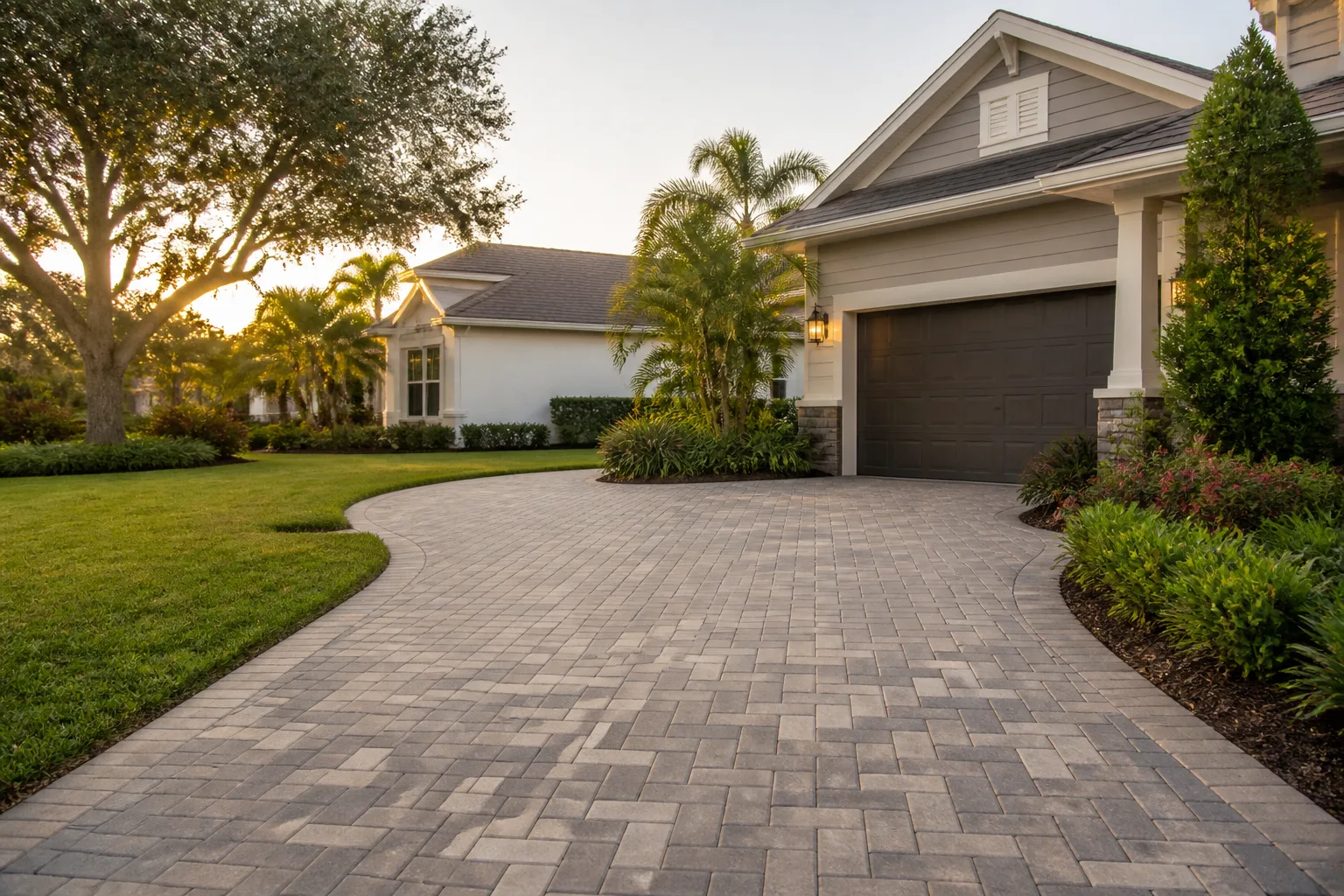
Our technicians have up to 12 years of experience reading exactly these conditions on Mesquite lots, and every job is backed by our 730-Day Done Right Promise – if it’s not done right, we make it right. That guarantee applies to the workmanship, and where a paver system suits the property better, we install those too through partners like Belgard. We also work with brands like Master Halco and Ameristar for homeowners finishing a fence line alongside the driveway.
Common Mesquite Scenarios
A 1962 ranch house off Pioneer Road with a cracked original slab. The old concrete has done its job for decades. We look at what the clay did to it, check the grading, and decide whether a reinforced replacement or a paver system will handle the movement better going forward.
A truck parked in the same spot every day on a sunny west-facing drive. Asphalt can work here, but only with a stiffer mix and enough base to resist rutting. If it’s the same vehicle on the same two tires every afternoon, we spec for it.
A tight infill lot where the neighbor’s grade sits higher. Drainage is doing the real damage on these, not the material choice. We address the water first, then quote the surface.
FAQs
Asphalt is cheaper upfront, typically $3,500-$9,000 installed versus $4,500-$12,000 for concrete. Over 20 years the gap narrows once you add sealing every 3-5 years and a resurfacing, while a properly reinforced concrete slab can last 30+ years without that maintenance. Call (888) 426-8078 for an exact quote on your lot – estimates are free.
Concrete, but only when it’s reinforced and jointed for the movement. Mesquite’s shrink-swell clay pushes against a slab hard enough to crack a standard 4-inch unreinforced pour within one or two drought-to-rain cycles. Asphalt flexes with the soil rather than fighting it, which is one reason it survives clay better than people expect – the tradeoff is heat. Call us and we’ll tell you which risk your specific lot carries.
Yes, if the mix and base aren’t specified for the load. Pavement surface temps here hit 150-160°F in summer, and asphalt binder softens above 120°F. Parking in the same spot daily can rut it permanently within two or three summers without proper thickness. Call (888) 426-8078 and we’ll spec the right mix for how you actually use the driveway.
Yes. Calls are answered by a live person 24/7, so you can reach us any time and book a free project estimate and design consult. We walk the lot, check the drainage and grading, and give you an upfront number in writing. Call (888) 426-8078 to get on the schedule.
Have It Looked At Before You Decide
If you’d rather have it looked at, Groundwork Construction Co. of Mesquite offers a no-pressure assessment in Mesquite – call (888) 426-8078. We’ll check the grading, the clay, and how you use the driveway, then tell you honestly which material fits your lot and your budget.
Written by the team at Groundwork Construction Co. of Mesquite, serving Mesquite, TX.