
Last updated November 17, 2026






Free written scope consultation - allowances, timeline, and change-order rules on paper before a single trade is scheduled
How to Hire a Construction Contractor in Mesquite: A Step-by-Step Guide
The worst contractor mistakes Mesquite homeowners make don’t happen during construction. They happen in the first twenty minutes of the first conversation, before anyone has asked the questions that actually matter. Three red flags show up again and again: a contractor with no physical address, a demand for payment before permits are pulled, and scope language so vague it can mean anything. All three are entirely legal. None are regulated. And every one of them is avoidable if you know what to ask.
This guide walks you through that first conversation and everything after it, from verifying a Texas contractor’s registration to reading a bid line by line. You’ll finish knowing how to protect a five-figure investment before a single nail is driven in Mesquite.
Quick Answer
To hire a construction contractor in Mesquite, verify their state registration and insurance, confirm they pull permits in their own name, get a written line-item bid with a fixed scope, check references on similar recent projects, and never pay for work before permits are issued. Texas doesn’t license general contractors statewide, so your due diligence on registration, insurance, and subcontractor relationships is what actually protects you.
Styles & brands we work with
- Kitchen remodeling
- Bathroom remodeling
- Home additions & ADU
- Roofing
- Windows & doors
- Driveway & pavers
- Fence
Table of Contents
- Why the First 20 Minutes Decide Everything
- What Texas Licensing Actually Requires (and What It Doesn’t)
- The Five Contract Clauses That Separate Pros From Liability Traps
- How to Verify Registration, Insurance, and Bonds
- The Hidden Layer: Verifying Subcontractor Relationships
- A Reference-Check Script That Surfaces Real Problems
- How to Read a Transparent Bid Line by Line
- Mesquite-Specific Code, Climate, and Market Context
Why the First 20 Minutes Decide Everything
A contractor who can’t answer basic questions in the first call won’t improve once they have your deposit. The opening conversation tells you almost everything about how the project will run: how they handle pricing, how they handle permits, and how they handle being asked a question they don’t like.
Here’s what we’ve seen after years of working Mesquite projects. Homeowners who ask six or seven pointed questions in the first conversation almost never end up in a change-order dispute. Homeowners who accept a verbal ballpark and a handshake timeline end up arguing about scope by month two. The questions themselves take ten minutes. The protection lasts the length of the build.
Ask these before anything else:
- “What’s your Texas registration number, and can you send it in writing?”
- “Who pulls the permits, you or a sub, and in whose name?”
- “Can I see the certificate of insurance naming me as certificate holder?”
- “Will the contract have a fixed scope with a line-item breakdown?”
- “Who’s my single point of contact from start to finish?”
- “What’s your workmanship warranty, in writing, and what does it exclude?”
A professional answers all six without flinching. A contractor who deflects, gets defensive, or says “we don’t really do it that way” has told you what you need to know. The number you see on the bid should be the number you pay, and a contractor who won’t commit to that in the first call never will.
What Texas Licensing Actually Requires (and What It Doesn’t)
Texas does not license general contractors statewide. That surprises most homeowners, and it’s the single most important fact to understand before you sign anything in Mesquite. What Texas does regulate is specific trades: electricians, plumbers, HVAC technicians, and roofers each fall under separate licensing or registration requirements. The general contractor coordinating your kitchen remodel operates outside that framework.
What that means in practice:
- No state-issued GC license exists to check. A contractor claiming a “state general contractor license” in Texas is either confused or misleading you.
- Trade licenses still apply to the people doing the work. Ask for the electrician’s license number and the plumber’s separately. A general contractor who can’t produce them for their subs is a warning sign.
- Local registration and permits are your real protection. Mesquite issues building permits and requires contractors to register with the city to pull them. That registration is public record and worth checking.
- Insurance is unregulated at the state level for GCs. General liability and workers’ compensation coverage are entirely on you to verify.
So the burden shifts to you. In a state with no GC licensing, verification becomes your job, and it’s not difficult if you know where to look. Pull the contractor’s registration through the city of Mesquite, ask for certificates of insurance directly from the carrier, and confirm active permits at the address are in the contractor’s name rather than the homeowner’s. That last one matters: if the permit is pulled in your name, the liability for code compliance stays with you.
Mesquite sits in Dallas County, where permit processes and inspection timelines move faster than some surrounding counties. A contractor who does regular work here knows the local inspection cadence and builds it into the schedule. One who mostly works outside the county often doesn’t.
The Five Contract Clauses That Separate Pros From Liability Traps
The contract is where vague promises become legal obligations. Five clauses in particular tell you more about a contractor than any review or reference. Read each one carefully before signing, and don’t be shy about asking for clarified language.
- Scope of work. Professional contracts list every task in writing, down to the specific materials, brands, and model numbers. “Replace counters with quartz” is a liability trap. “Fabricate and install 3cm quartz countertop, KraftMaid base cabinets, undermount sink” is a professional scope. If you can’t point to the specific product being installed, it’s not specific enough.
- Payment schedule. A professional schedule ties payments to milestones, not dates. Expect a modest deposit, then payments due at completion of defined phases. Never more than a third down, and never payment before permits are pulled and materials are on-site. A demand for “half up front” in a lump sum is a warning sign.
- Change-order process. Professional contracts define how scope changes get priced and approved in writing. The trap is language like “additional work will be billed at an hourly rate to be determined” with no defined rate. Any change-order clause without a stated rate or markup is a blank check.
- Warranty. Every warranty has exclusions. The question is whether the exclusions are specific and reasonable. A one-year workmanship warranty is common in the trade. Longer is better, but only if the exclusion list stays short and specific.
- Termination and dispute resolution. Read the termination clause carefully. You should be able to terminate for cause with clear notice, and any mediation or arbitration language should be balanced rather than one-sided.
We’ve seen Mesquite homeowners hit by that change-order trap more than any other. A bid with a low headline number and an undefined hourly rate for “extras” ends up costing twenty to forty percent more than the signed amount. Upfront pricing with a fixed scope and a written change-order process prevents that entirely. That’s the whole point of getting the bid right the first time.
How to Verify Registration, Insurance, and Bonds
Verification is a twenty-minute task with a phone, a browser, and a few emails. Do it before you sign, and ask for current, not expired, documentation. Here’s the order that works:
- Pull the city registration. Confirm the contractor is registered to pull permits in Mesquite. Ask them for their registration, then verify independently with the city’s building department. Registration must be current, not lapsed.
- Request certificates of insurance directly from the carrier. Two policies matter: general liability and workers’ compensation. The certificate should list you as certificate holder and name the address, project, and coverage limits. A PDF from the contractor’s email is not verification; a certificate directly from the insurance company is.
- Ask about bonds. Some contractors carry a surety bond, particularly for larger projects. A bond is not required by Texas for general contractors, but a professional who can produce one has passed an underwriting review, which is its own form of vetting.
- Check the trade licenses. Electricians, plumbers, and HVAC technicians each have their own licensing requirements. Ask for those license numbers separately and verify them through the relevant state or local authority.
- Confirm active permits by address. If the contractor has permits at other Mesquite addresses currently under construction, that’s a positive sign of an active local practice. A contractor with no permit history in the county is a stranger to the local inspection system.
- Ask for the “certificate holder” clause in writing. A professional will add you as certificate holder without hesitation. One who resists or claims “we don’t do that” is either underinsured or disorganized. Neither is acceptable.
The whole verification takes an afternoon. It’s the cheapest insurance policy on a project worth more than a new car. And it costs nothing but attention.
The Hidden Layer: Verifying Subcontractor Relationships
Most contractor failures don’t originate with the general contractor. They originate with the subcontractor the general contractor hired and never checked. This is the hidden layer, and it’s where Mesquite homeowners get burned most often.
A general contractor may be well-organized, well-insured, and well-reviewed, then hand your electrical rough-in to a subcontractor who is uninsured, unlicensed, or both. When something goes wrong, the general contractor points at the sub, the sub points at the general, and you’re left holding the permit and the bill.
Ask the questions that surface this layer:
- “Who are the specific subcontractors for each trade on my project, by name and license number?”
- “Are your subs insured under their own policy or yours?”
- “Have you worked with these subs on previous projects at similar scope?”
- “If a sub’s work fails inspection, who pays for the rework?”
Get the answers in writing. The last question in particular is a filter: professional contractors answer without hesitation that the rework is their responsibility and back it up with the warranty language. Contractors who pass the rework cost to you have told you how they operate, and they aren’t the ones you want on a Mesquite roof replacement or kitchen overhaul.
The same logic applies on trade overlap. A kitchen remodel involves plumbing, electrical, cabinetry, counters, and finish work. Every trade has its own subcontractor, and every subcontractor is another relationship to verify. A contractor who can name each sub, confirm each insurance certificate, and describe each one’s role on the project has the layer under control. We’ve seen too many Mesquite projects stalled for weeks because the electrical sub wasn’t available or the counter fabricator went quiet. The general contractor who owns those relationships prevents that stall. Groundwork Construction Co. of Mesquite home
A Reference-Check Script That Surfaces Real Problems
“Were you happy?” is a useless question. Everyone says yes, and the contractors who would fail the reference check are the ones most careful about who you call. A useful script does two things: it asks for specificity, and it asks about things that happened after signing, not just at completion.
Ask the reference for the following, in this order:
- “What was the original bid, and what did you actually pay at the end?” This one question surfaces the change-order pattern faster than anything else. A final cost within five percent of the bid is normal. A twenty percent overage deserves a follow-up question about why.
- “How many change orders did you sign, and what did each one cost?” One or two is normal on a mid-size project. Five or six suggests a lowball bid that grew into the real number once work started. Ask what each change order was for.
- “How many days past the original completion did the project run, and why?” Some overrun is normal after weather delays and inspection schedules. A project that ran months late for reasons the contractor should have anticipated is a warning.
- “What was the contractor’s communication like when something went wrong?” This is the most important question. Projects go sideways sometimes. The question is whether the contractor communicated early and clearly or went quiet when problems came up.
- “Did anyone ever come back to fix something after completion?” A professional return visit under warranty is a strong positive sign. A reference who says “no, we just lived with it” is documenting a warranty failure.
- “Would you hire them again for a project twice the size?” Smaller projects are easier to do well. Ask about a bigger project to see whether the reference’s confidence scales.
Ask for three references, and ask each one whether they’d take a call from the next homeowner. The references who hesitate are telling you something too. A Mesquite contractor with a solid reputation will have an easy list of past projects, complete with names, neighborhoods, and scope descriptions. Driveway & Pavers in Mesquite
How to Read a Transparent Bid Line by Line
A transparent bid is a specific bid. It names materials, breaks out labor and materials separately, defines the scope in the same language the contract will use, and includes a clear change-order process. A vague bid does the opposite. It says “kitchen remodel” and “materials included” and “additional work as needed,” and it leaves the actual scope to be figured out once you’re already committed.
Here’s what a line-item bid looks like for a typical Mesquite kitchen, with realistic price ranges for this market:
| Line Item | Typical Mesquite Range | What to Check |
|---|---|---|
| Demolition and debris removal | $800 – $2,400 | Is haul-away included or a separate line? |
| Plumbing rough-in and relocation | $1,200 – $3,500 | Which fixtures, brand and model named? |
| Electrical rough-in and panel work | $900 – $3,000 | Are outlets and switches quantified? |
| Drywall, patching, and finish | $1,400 – $3,800 | Level of finish (orange peel, knockdown, smooth) defined? |
| Cabinetry (KraftMaid or equivalent) | $6,500 – $18,000 | Door style, finish, hardware all named? |
| Countertops (quartz, granite, or solid surface) | $2,800 – $7,500 | Thickness, edge profile, and fabrication included? |
| Sink and faucet (Kohler, Moen, or Delta) | $400 – $1,400 | Model number and finish specified? |
| Tile and backsplash | $900 – $3,200 | Tile product and grout color named? |
| Paint and trim | $800 – $2,400 | Number of coats and finish sheen named? |
| Permit and inspection fees | Per Mesquite schedule | Is the permit line in the contractor’s name? |
Specific Mesquite kitchen remodels in this scope usually land between $22,000 and $55,000, depending on layout, cabinet line, and whether the plumbing moves. A bid at $12,000 with the same list is either missing half the scope or planning to make it up in change orders. The line-item format is what tells you which. If the bid comes back as a single lump and the scope is one sentence, ask for a breakdown. A professional will produce one without charging for it. Kohler, Moen, and Delta fixture lines are worth asking about by name, because the difference between brands is a difference in warranty length and parts availability ten years down the road. Fence Installation in Mesquite
Mesquite-Specific Code, Climate, and Market Context
Hiring a contractor in Mesquite adds a handful of local factors you won’t read about in a general guide. The city has its own permit schedule, its own inspection cadence, and its own climate problems that affect the material choices on your build.
Climate. Mesquite sits in the DFW climate zone where summer heat regularly pushes past 100°F and winter freezes have become a recurring event. That combination affects roof shingles, fence materials, and exterior paint. Roofs installed here want a shingle rated for high heat and hail, which is why GAF and CertainTeed products are the common choice on Mesquite homes. Fence posts set in the standard depth for cooler climates fail within a few years here, because the summer clay soil cracks and heaves around them. Experienced contractors in Mesquite set posts deeper and use concrete mix rated for expansive clay.
Storm season. Hail season in Mesquite runs March through June, and the roofs we see across neighborhoods like Creek Crossing and Rolling Hills show the marks. A contractor who does routine Mesquite roofing knows how hail claims interact with insurance adjusters and doesn’t push a full replacement when a repair will do.
Neighborhood housing stock. Mesquite’s housing ranges from mid-century ranch homes in older neighborhoods to newer construction in the eastern corridors. Foundation and pier-and-beam considerations differ across the city, and the plumbing rough-in complexity of any remodel often turns on when the home was built. A general contractor who works across the Mesquite neighborhoods will know what to expect on a 1960s ranch versus a 2005 build.
Local market pricing. Mesquite labor pricing runs slightly below the Dallas city core but above the outer-ring suburbs. That’s why Mesquite kitchens come in between $22,000 and $55,000 for a full overhaul, while similar scope in downtown Dallas runs higher, and similar scope in Kaufman runs lower. A bid far below or far above that range deserves a follow-up question about why.
Permits. Mesquite issues permits for structural work, electrical, plumbing, gas, fences over six feet, driveways, and additions. Permits must be pulled by the contractor, not the homeowner. Confirm each permit in the contractor’s name before work begins. Additions and ADUs require the most involved permitting sequence, including plan review and multiple inspections, and any contractor quoting a fixed price without confirming that the plans pass plan review the first time is guessing at the number. Home Additions & ADU in Mesquite
Common Mistakes to Avoid
- Hiring a contractor with no verifiable physical address. A PO box or a cell phone alone isn’t accountability. Ask for the street address of the business, verify it independently, and be wary if there isn’t a fixed location at all. Contractors who work out of a van with no address are the ones who disappear mid-project.
- Paying before permits are pulled. Permits in Mesquite get pulled by the contractor, never the homeowner, and never after the work starts. A demand for a deposit before the permit is filed is the single most reliable predictor of a bad project. The permit is your proof the work will be inspected by the city.
- Accepting a verbal scope on a mid-size project. Mesquite homeowners regularly sign “kitchen refresh, materials as discussed” for a $30,000 project. There’s no “as discussed” in a contract review, only what’s written. Any scope that can’t be listed by line is a scope that can’t be enforced.
- Not confirming the subcontractor insurance. The hidden layer of subcontractors is where the most Mesquite projects go wrong. Ask for each sub’s certificate of insurance directly from the carrier, not from the general contractor’s email.
- Skipping the reference calls and relying on reviews. Written reviews are useful but not the same as a conversation with a past client about their final cost. Call three references and ask the questions in our script. Ten minutes of phone time prevents weeks of dispute.
- Choosing the lowest bid without reading the change-order clause. The lowest bid is often the highest final cost, thanks to undefined hourly rates and “additional work as needed” language. Ask for a fixed scope and a defined change-order rate before signing.
- Ignoring the warranty terms until something breaks. Mesquite roofing and remodel warranties vary wildly. Read the exclusion list in full, and ask how the warranty claim gets processed if something fails in year three. A warranty claim that requires the homeowner to pay for re-inspection isn’t much of a warranty.
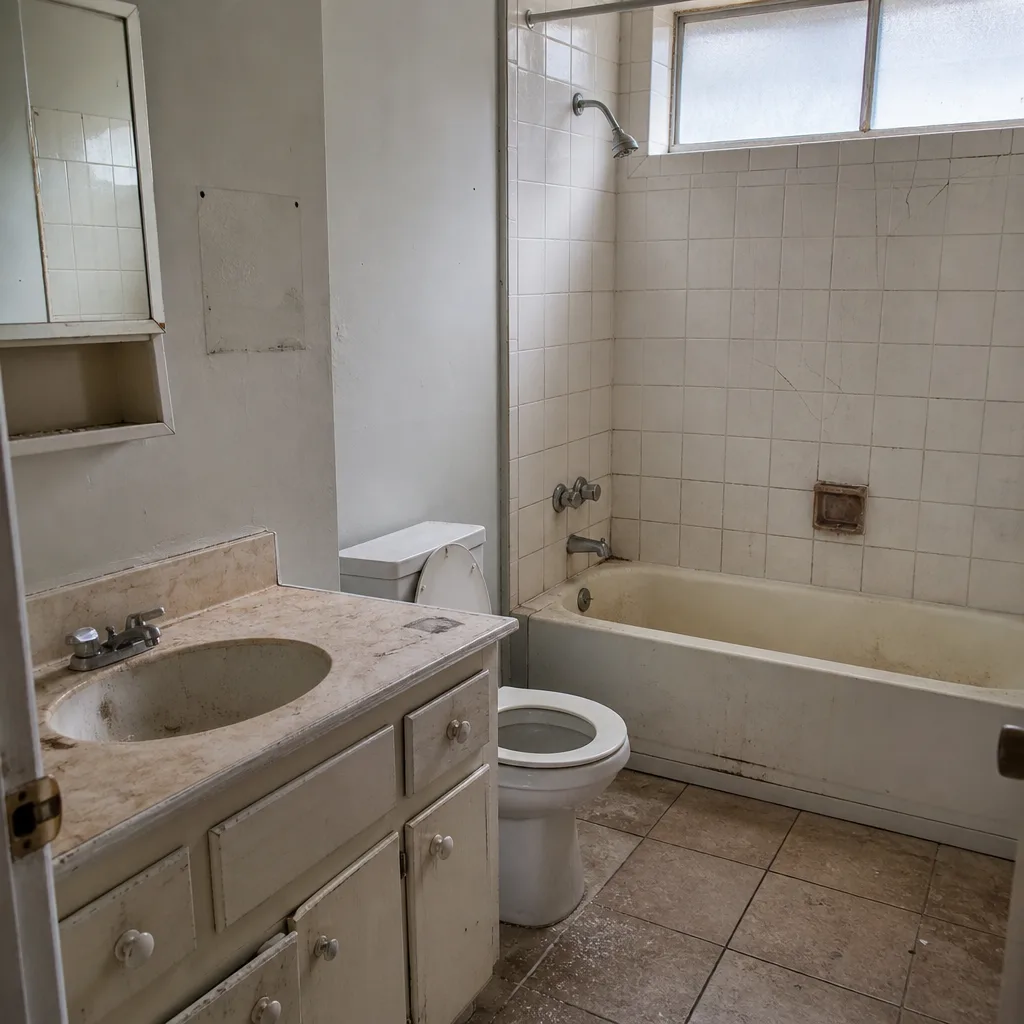
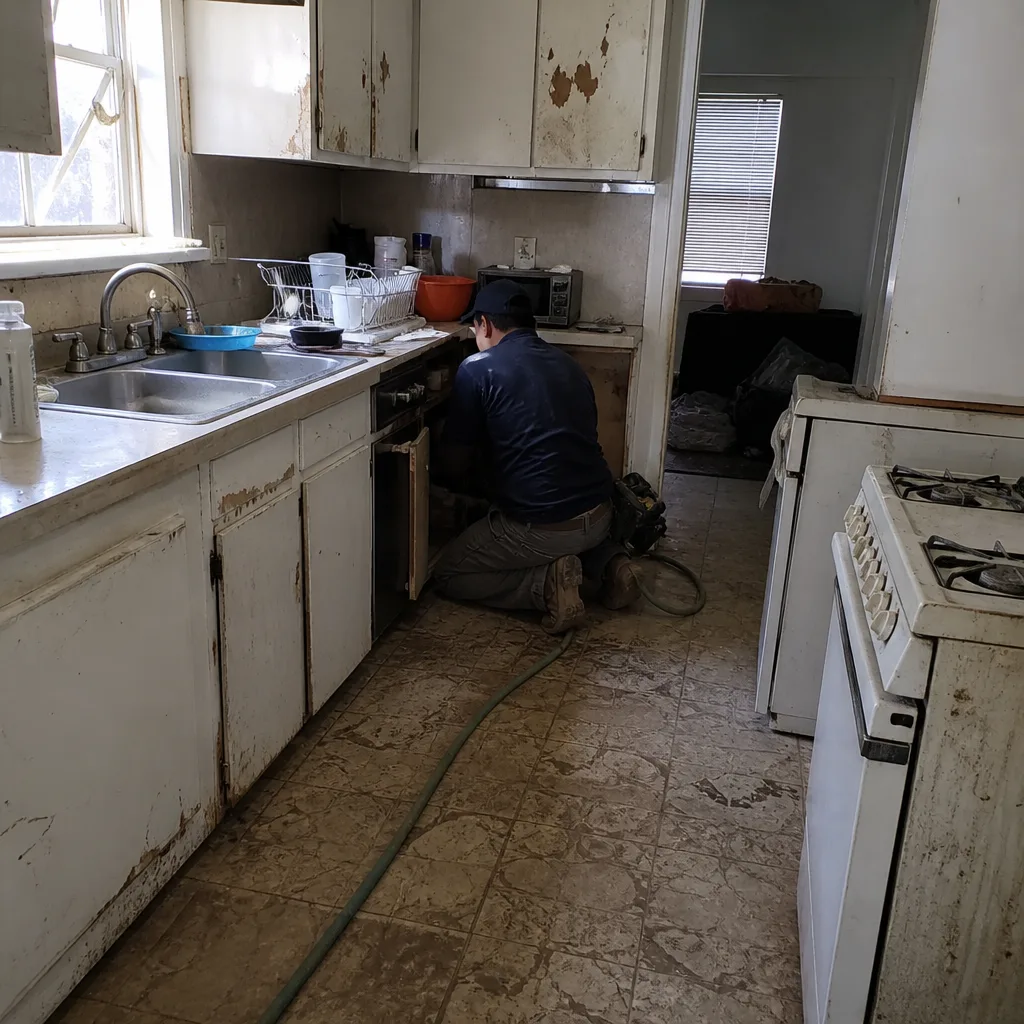
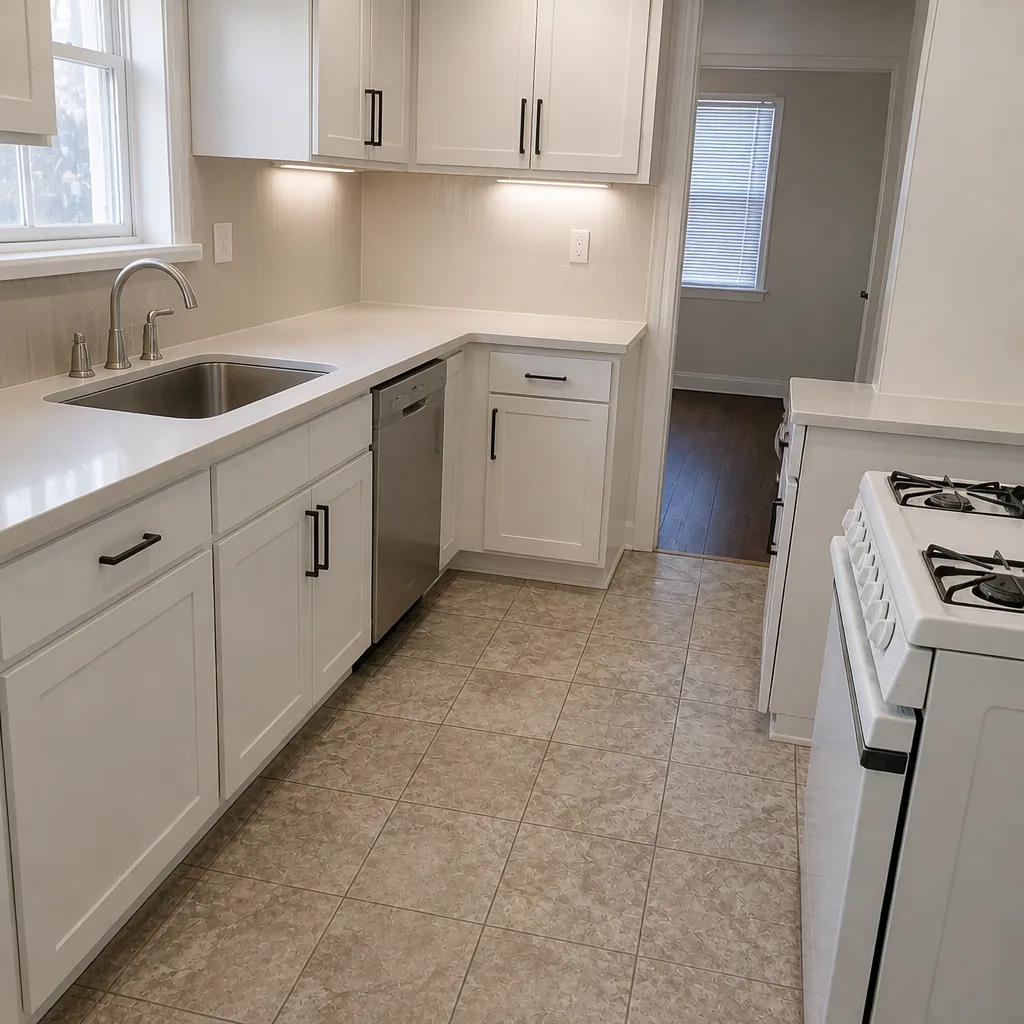
See the difference
 Before
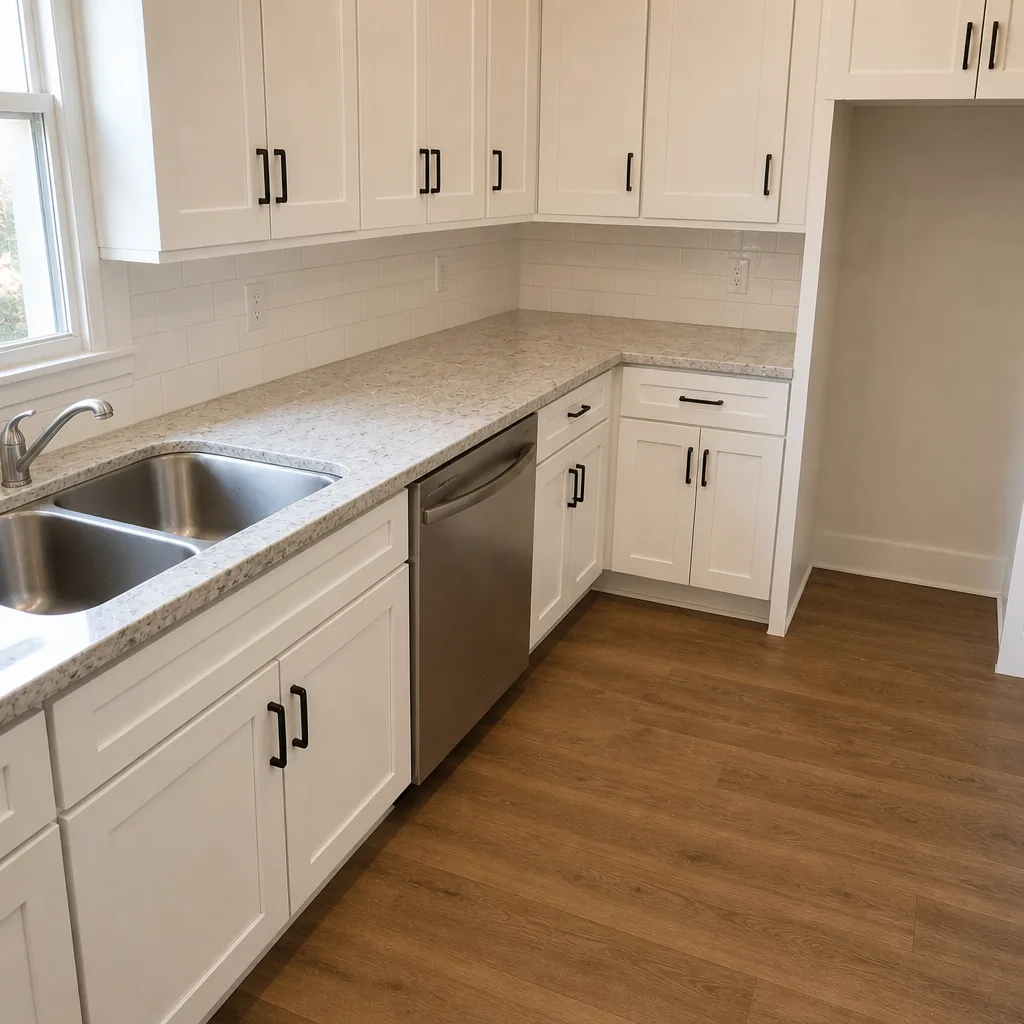 After
 Before
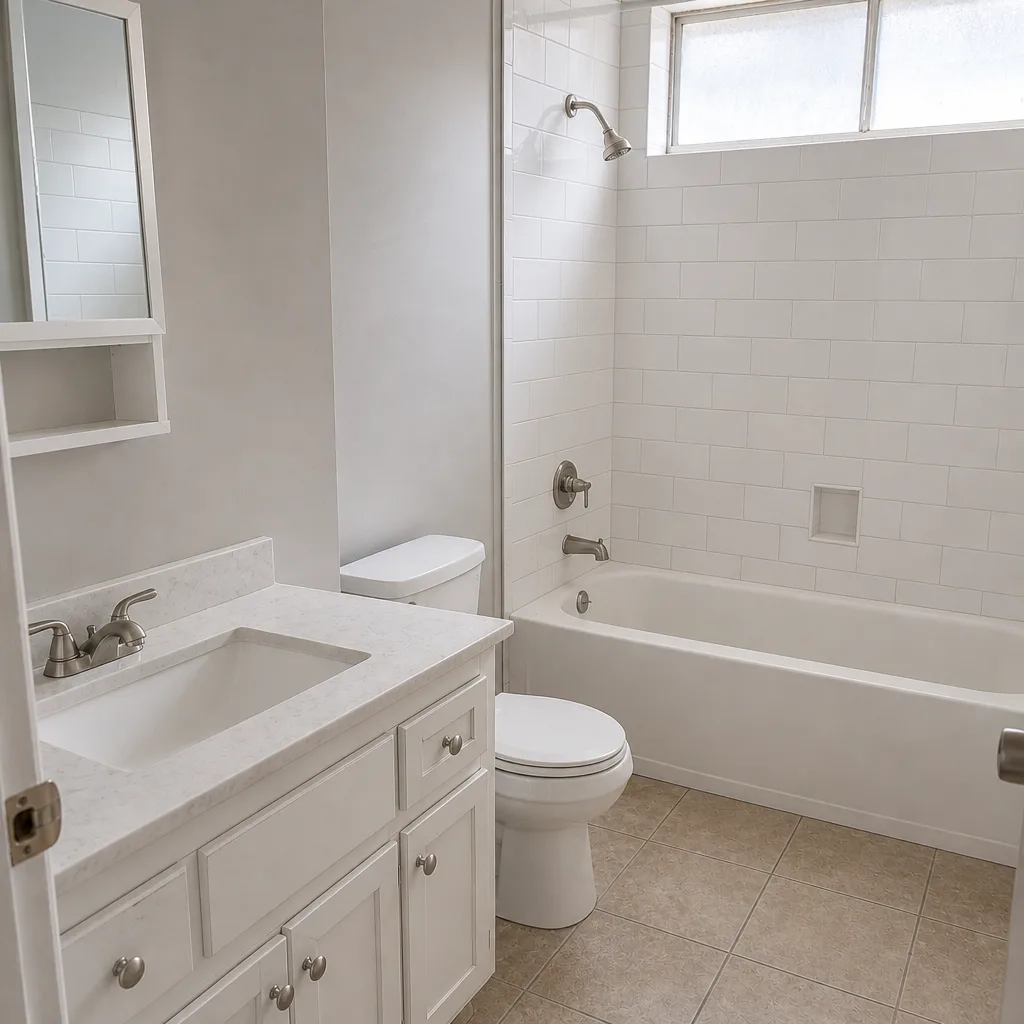 After
 Before
 After
When to Call a Professional
Some jobs are genuine DIY territory. A faucet swap, an interior paint refresh, a light fixture replacement: all manageable with care and a healthy respect for the breaker. Most construction decisions aren’t. Call a professional contractor when the work involves structural changes, moving plumbing or gas lines, running new electrical circuits from the panel, roof work above a single-story height, permitting of any kind, or a project budget above the four-figure range.
For Mesquite homeowners, the specific scenarios worth a call include a kitchen or bathroom remodel that moves walls or fixtures, roof replacement after hail season, a fence replacement along an HOA boundary, a driveway or paver installation that ties into the city sidewalk, and any addition or ADU that requires plan review and multiple inspections. The safety stakes on high-tension garage springs, gas lines, and steep roof work are real, and a trained professional belongs on every one of them. The cost of a free estimate is zero. The cost of a bad decision that requires rework is measured in months.
Groundwork Construction Co. of Mesquite offers free estimates in Mesquite – call (888) 426-8078.
Frequently Asked Questions

General contractors around Mesquite typically charge either a percentage markup on the total project (10-20% is common for residential work) or a flat project management fee on smaller jobs. For a kitchen remodel, that usually works out to $2,200-$8,000 on top of materials and trade labor. Ask any contractor to state the fee structure upfront in the bid; a transparent bid either includes the markup as a line item or quotes the total fixed price with the markup already built in. Call (888) 426-8078 for an exact quote – estimates are free.
No. Texas does not license general contractors at the state level, which means there is no state license number to check for your GC. What Texas does regulate is the specific trades: electricians, plumbers, HVAC technicians, and roofers each fall under their own licensing or registration requirements. In Mesquite, your verification is the city registration and permit process plus the contractor’s general liability and workers’ compensation insurance. Ask for both, and verify each one independently.
A construction contract in Mesquite should include a line-item scope of work with specific material brands and model numbers, a milestone-based payment schedule (never more than a third down), a defined change-order process with an hourly rate or markup, a written workmanship warranty with the exclusion list, and a balanced termination and dispute-resolution clause. If any of the five is missing, ask for it in writing before signing. No exceptions on projects above five figures.
They can ask, but you shouldn’t pay it. A deposit before permits are filed is one of the clearest red flags in the Mesquite market, because it shifts the risk of an unpermitted project entirely to the homeowner. The permit is the city’s inspection gate, and it protects you throughout the work. A professional contractor pulls the permit in their name and absorbs the fee, then collects the deposit against work performed. Any “deposit first, permit later” arrangement deserves a hard pass.
Bathroom remodels in Mesquite usually run four to six weeks, a full kitchen overhaul runs six to ten weeks, and additions with plan review typically run four to seven months. The schedule depends mostly on permit timing at the city, cabinet and counter fabrication lead times, and inspection scheduling on the trade rough-ins. Ask any contractor for a schedule with phases named and completion dates for each. A schedule that floats “weather-dependent” across the whole timeline isn’t a schedule.
The price should not change unless the scope does. Change orders should only be triggered by written scope changes the homeowner approves in advance, never by contractor circumstances, weather, or “unforeseen” conditions. The one exception is genuinely hidden conditions in older Mesquite homes, like out-of-code wiring discovered during a kitchen tear-out. Even then, the change order process should be documented in writing, priced at a rate defined in the original contract, and approved by you before the extra work begins.
The Bottom Line
Hiring a contractor in Mesquite comes down to six questions and a written bid. Ask about registration, insurance, permits, subcontractor relationships, the workmanship warranty, and the change-order process. Get the answers in writing. Read the bid line by line, and check whether the materials are named down to the brand and model number. This guide’s central conclusion is simple: the mistakes that cost the most happen before construction starts, in the first twenty minutes of the first conversation, when nobody has asked the questions that actually matter.
Take that hour before you sign, and the next six weeks of your Mesquite project go smoother because of it. Mesquite has a competitive contractor market and good options. A homeowner who knows what to ask will find them.
Get a Free Estimate from Groundwork Construction Co. of Mesquite

Call (888) 426-8078 to schedule your free estimate. Every project we quote comes with upfront pricing and a written line-item scope, so the number you see is the number you pay. Our technicians have up to 12 years of experience, every job is covered by the 730-Day Done Right Promise, and calls are answered by a live person 24/7 – no voicemail, no delays. We’ll walk you through the scope in plain language, answer every one of the six questions above, and put the answers in writing. From foundation to finish line, that’s how we run a Mesquite project.
Written by the team at Groundwork Construction Co. of Mesquite.