
Last updated November 17, 2026








Free written scope consultation - allowances, timeline, and change-order rules on paper before a single trade is scheduled
Windows & Doors Troubleshooting: Common Problems and How to Fix Them
A drafty window in a Mesquite home is usually not a window problem. In our experience, roughly 60% of the draft complaints we get called out to trace back to failed weatherstripping, settlement that has shifted the frame out of square, or exterior caulk that cracked over a dry summer. All three of those are cheap fixes, often under $50 in materials, and none of them require a new window. The homeowner who replaces glass to solve a caulk problem has spent thousands on the wrong repair. This guide is built to stop that from happening. You’ll learn a symptom-to-root-cause map for drafts, foggy panes, sticking sashes, water intrusion, and broken locks, how to tell a failed seal from a bad installation, what’s safe to handle yourself, and why North Texas clay soil keeps moving your door frames year after year.
Quick Answer
Most window and door problems fall into one of two categories: a failure of the unit itself (a broken seal, worn weatherstripping, failed hardware) or a failure of the opening around it (frame settlement, caulk failure, water damage). The fix is completely different for each, and the visible symptom rarely tells you which one you have. Diagnose the root cause first, then price the repair. Skipping that step is how homeowners end up paying for new windows when a $30 tube of sealant would have solved it.
Styles & brands we work with
- Kitchen remodeling
- Bathroom remodeling
- Home additions & ADU
- Roofing
- Windows & doors
- Driveway & pavers
- Fence
Table of Contents
- The Symptom-to-Root-Cause Map
- Drafts and Cold Spots: The Three Usual Culprits
- Condensation Between Panes vs. Condensation on Glass
- Sticking Windows and Doors: What Settlement Does
- Water Intrusion: Where It Starts and How It Travels
- Lock and Hardware Failure
- Why North Texas Clay Soil Wrecks Door Frames
- Safe DIY Repairs vs. Structural Red Flags
The Symptom-to-Root-Cause Map
Before you pick up a tool or call anyone, match what you’re seeing to what’s actually causing it. This is the diagnostic table we use on service calls across Mesquite, and it saves homeowners from spending on the wrong fix. Print it, screenshot it, whatever helps.
- Draft along the sash or door edge: worn weatherstripping, a failed sweep, or frame settlement opening a gap. Rarely the glass.
- Fog or haze between the panes: failed insulated glass unit (IGU) seal. The glass assembly needs replacing, not the whole window in most cases.
- Window won’t slide or door drags on the threshold: frame out of square from settlement, swollen wood, or failed rollers and hinges.
- Water staining on the interior sill or wall: exterior caulk failure, missing flashing, or a clogged weep channel letting water back up.
- Water between the panes: IGU seal failure, same root cause as fogging but further along.
- Lock won’t latch or handle is loose: hardware wear, or the frame has shifted so the lock and strike no longer line up.
- Condensation on the room-side glass in winter: usually a humidity problem inside the house, not a window defect at all.
Notice how many of those point back to the frame or the opening rather than the unit. That’s the pattern. In a market like Mesquite, where a lot of housing stock went up during fast growth periods and sits on expansive clay, frame-related failures are common and glass failures are less so. Get the diagnosis right and the repair budget falls into place.
Drafts and Cold Spots: The Three Usual Culprits
When a homeowner in Mesquite tells us a room “feels drafty,” we check three things in order, because they account for the large majority of cases. The first is weatherstripping. The felt or foam strips and the door sweep along the bottom are wear items. They compress, tear, and lose their spring over years of heat and use. A $15 replacement strip and 20 minutes of your afternoon often ends the draft completely. The second is caulk. Exterior caulk around window trim and door frames takes a beating from North Texas sun and the seasonal swing between wet springs and dry summers. When it cracks, air moves through gaps you can’t see from inside. The third is frame settlement, which we’ll get to in detail below.
Here’s how to tell which one you have:
- On a windy day, hold a lit incense stick or a piece of tissue near the sash edges, the bottom sweep, and the exterior trim corners. Watch where it flutters.
- If the draft is at the moving edge of a window or the bottom of a door, it’s weatherstripping or the sweep.
- If it’s at the corners of the frame or around the trim, it’s caulk or settlement.
- If it’s across the entire glass surface, it’s likely a low-e coating issue or simply cold glass radiating, not a leak at all.
One more thing worth knowing: a draft that appears only in winter and disappears in summer is almost always air infiltration at a seal, not a broken window. And if the draft comes with visible daylight around the frame, that’s a settlement or installation issue and a bigger conversation. When you’re ready to look at replacement rather than repair, our team handles windows and doors across Mesquite and can walk the opening with you.
Condensation Between Panes vs. Condensation on Glass
This is where a lot of money gets spent on the wrong fix, so let’s be precise. Condensation between the panes means the sealed insulated glass unit has failed. The gas or desiccant inside the unit has lost its seal, moisture has entered, and the unit is now foggy or milky. That’s an IGU failure, and it usually means replacing the glass assembly. It does not automatically mean replacing the entire window. On most modern windows, the IGU is a replaceable component, and swapping it costs a fraction of a full unit replacement.
Condensation on the room-side glass is a different animal. That moisture is coming from inside your house. Cooking, showers, laundry, and even plants put water vapor into the air, and when it hits cold glass in winter, it condenses. That’s a humidity and ventilation issue, not a window defect. A badly fogged bathroom window after a shower is telling you to run the exhaust fan longer or crack the window, not to call a glazier.
Two more patterns help you sort this out:
- Fog between panes that never clears: IGU seal failure. The seal is broken, period.
- Fog on the outside of the glass in summer, on the room-side in winter: humidity management inside the house. Not a defect.
- Fog on the outside surface in cold weather on a newer window with good coatings: often a sign the low-e coating is working as designed. It’s actually a good thing.
In Mesquite, IGU failures cluster on south- and west-facing windows that take the harshest sun, so check those first. If you’re comparing IGU replacement against a full window swap, look at the age of the unit and whether the frame is sound. A sound frame around a failed pane is a repair. A failing frame around a failed pane is a replacement, and that’s where brand choice starts to matter: window partners like Andersen and Marvin make a real difference in how a replacement holds up over the long haul.
Sticking Windows and Doors: What Settlement Does
A window that suddenly won’t slide, or a door that drags on the threshold in spring and clears in fall, is telling you the opening has moved. Wood swells with humidity and shrinks when it dries, and in North Texas the wet-dry cycle is dramatic. But swelling explains seasonal sticking. Chronic sticking, or a door that racks out of square and stays that way, points to the frame moving relative to the unit. That’s settlement, and it’s the recurring theme in this market.
Here’s how to figure out what you’re dealing with:
- Open and close the window or door slowly and feel where it binds. Bottom edge drag means the hinge side has dropped. Top corner contact means the frame is racked.
- Check the reveal: the even gap between the door edge and the frame on both sides. If it’s wide at the top on one side and narrow on the other, the frame is out of square.
- Try the lock. If the lock won’t line up with the strike plate, that confirms frame movement, not just a swollen slab.
- Look at the corners of the frame at the floor and ceiling. Hairline cracks in drywall or gaps in caulk at those corners are your evidence the opening has shifted.
Seasonal swelling you can often manage. Persistent racking is a structural signal. We’ll cover why the clay under Mesquite homes drives that racking in a moment. If you’re at the point of planning a doorway or window change as part of a larger project, our overview of home additions and ADU work in Mesquite covers how we approach framing and opening alignment from the start.
Water Intrusion: Where It Starts and How It Travels
Water follows the path of least resistance, and that path is almost never straight down from where you see the stain. Water entering at the top corner of a window frame can show up as a stain on the interior sill two feet away. This is why we tell homeowners to trace water, not to trust the stain. The three most common entry points are failed exterior caulk, missing or damaged flashing above the unit, and clogged weep channels that let water pool and back up into the frame.
Start your inspection from the outside:
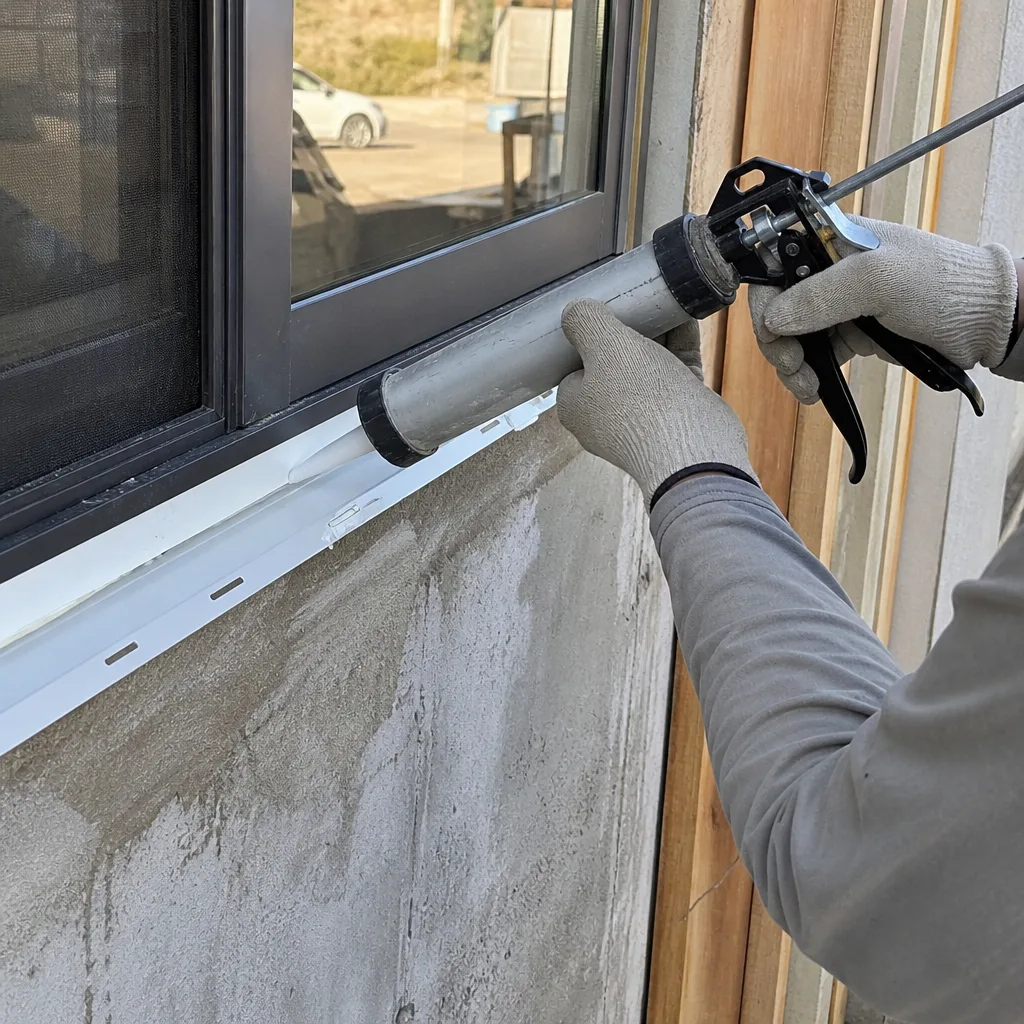
- Caulk joints: look for cracking, peeling, or gaps where the trim meets the siding or masonry. Re-caulking is one of the highest-value repairs you can do on a schedule.
- Flashing: the metal or membrane that directs water away over the top of the unit. If it’s absent, loose, or rusted through, water is getting behind the trim.
- Weep holes: the small slots at the bottom of the exterior frame that let water drain. They clog with dirt, pollen, and insects. A toothpick clears them in seconds.
- Sill slope: the exterior sill should shed water away from the wall. If it’s flat or sloping back, water sits against the frame.
Interior water staining, bubbling paint, or soft drywall around a window is a bigger concern than exterior caulk alone can explain. That suggests water has been getting in for a while and may have reached the framing or sheathing. Soft wood around a window or door frame, a musty smell in the room, or visible mold is a red flag for hidden damage behind the wall. Don’t cover it with paint and move on. That’s the point where a pro needs to open it up and see what’s there.
Lock and Hardware Failure
Hardware gets blamed for a lot of frame problems. A door lock that won’t latch cleanly is usually not a bad lock. It’s a frame that has shifted so the lock bolt and the strike plate no longer meet. You can replace the hardware all day and the door still won’t latch, because the strike plate moved with the frame. The test is simple: look at the wear marks on the strike plate. If the bolt is hitting high or low instead of dropping into the center of the opening, the frame has moved and the lock is fine.
Genuine hardware failures do happen, and they’re easy to identify:
- Window lock that turns freely with no resistance: the internal mechanism has stripped or the cam has worn. Replace the lock.
- Door handle that’s loose or spins: set screws have backed out or the spindle has worn. Tighten or replace the set.
- Deadbolt that extends but won’t throw fully: the strike plate needs adjusting, or the door has swelled enough to bind.
- Multipoint lock on a patio door that jams: often a frame alignment issue, sometimes a worn gear. Worth a pro assessment before you replace a $200+ mechanism.
Lubricate moving parts once a year with a dry silicone spray, not oil, which attracts dust. Keep it simple. The majority of “broken” hardware we’re called out to is a $10 adjustment. If your lock repair turns into a larger door or window replacement, our guide to fence installation in Mesquite is a useful reminder that exterior openings and perimeter work share the same framing and alignment concerns.
Why North Texas Clay Soil Wrecks Door Frames
Here’s the local reality that most national window guides skip. The soil under most of Mesquite is expansive clay, and it swells when wet and shrinks when dry. A wet spring can lift and heave a foundation slab; a dry summer can pull it back down. That cycle repeats every year, and it puts slow, cumulative stress on every door and window opening in the house. This is why so many Mesquite homeowners see doors that stick in spring and swing free in fall, and why door frames rack out of square over time even when nothing has “broken.”
What the clay-soil cycle does to your openings, in order:
- Year 1-3: Hairline cracks appear at the corners of door and window frames as the slab moves slightly relative to the walls.
- Year 3-8: Doors begin to drag or stick seasonally. Weatherstripping compresses unevenly. Caulk fails at the stress points.
- Year 8+: Frame racking becomes visible in the reveal gaps. Locks need adjustment. Windows that used to slide now bind at the top corners.
- Structural stage: Drywall cracks extend from frame corners, doors won’t latch, and the slab shows measurable deflection. This is beyond window and door repair and needs a foundation evaluation.
The point is that a sticky door in a Mesquite home is diagnostic information, not just an annoyance. It tells you the slab is moving and the opening is reacting. The fix for the door is adjustment; the bigger question is whether the foundation needs attention. If you’re planning exterior work, our driveway and pavers service in Mesquite deals with the same soil movement at grade, and we can flag drainage and grade concerns while we’re on site.
Safe DIY Repairs vs. Structural Red Flags
Not every window and door problem belongs in your hands. Some are straightforward homeowner maintenance. Others are warnings that need a professional assessment, and getting the line right saves you from a small fix turning into a large one. Here’s how we frame it.
Safe to handle yourself, with care:
- Replacing weatherstripping and door sweeps
- Re-caulking exterior trim joints (with proper exterior-grade caulk)
- Clearing weep holes with a toothpick or stiff wire
- Lubricating hinges, rollers, and lock mechanisms
- Adjusting a strike plate that’s slightly out of line
- Tightening loose hardware
Call a professional:
- Any window or door where you suspect a broken IGU seal and the frame is also questionable
- Interior water staining, soft drywall, soft wood, or a musty smell around an opening
- A door that has racked out of square, won’t latch, or shows a widening reveal gap
- Any sign of foundation movement (new drywall cracks extending from frame corners, doors that won’t close at all)
- Locks or hardware with internal failures that need replacement
- Any job that requires working at height on a second-story window
The two categories don’t overlap much. Caulk and weatherstripping are yours. Frame movement, hidden water damage, and foundation concerns are not. If you’re unsure which side of the line you’re on, that’s the sign to get an assessment before you spend money. The cost of a diagnosis is small compared to the cost of a misdiagnosis. Our team at Groundwork Construction Co. has the background-checked technicians and the window brand relationships (Andersen and Marvin among them) to look at the whole opening, not just the glass, and give you a written line-item quote before anything starts.
Common Mistakes to Avoid
- Replacing windows to fix a draft that’s actually a caulk problem. We see this in Mesquite constantly. Cracked exterior caulk is a $30 fix that mimics a failed window. Run the wind test before you price a replacement.
- Ignoring a sticky door because it only sticks “some seasons.” Seasonal sticking in clay soil is the first signal of frame racking. It gets worse, not better, and the fix is cheapest early.
- Painting over interior water stains without tracing the source. Water travels. A stain on the sill doesn’t mean the leak is at the sill. Trace it from the outside in.
- Replacing a lock when the frame has moved. The new lock won’t latch either, because the strike plate moved with the frame. Check alignment first.
- Using interior caulk on exterior joints. It fails within one North Texas summer. Exterior-grade sealant costs a few dollars more and lasts years longer.
- Assuming foggy glass means a new window. On most modern units, the IGU is replaceable. If the frame is sound, replace the glass and save the rest.
- Covering weep holes or sealing a window frame completely. Weep channels are there to let water out. Blocking them traps moisture inside the frame, which is worse than the draft you were trying to fix.
See the difference
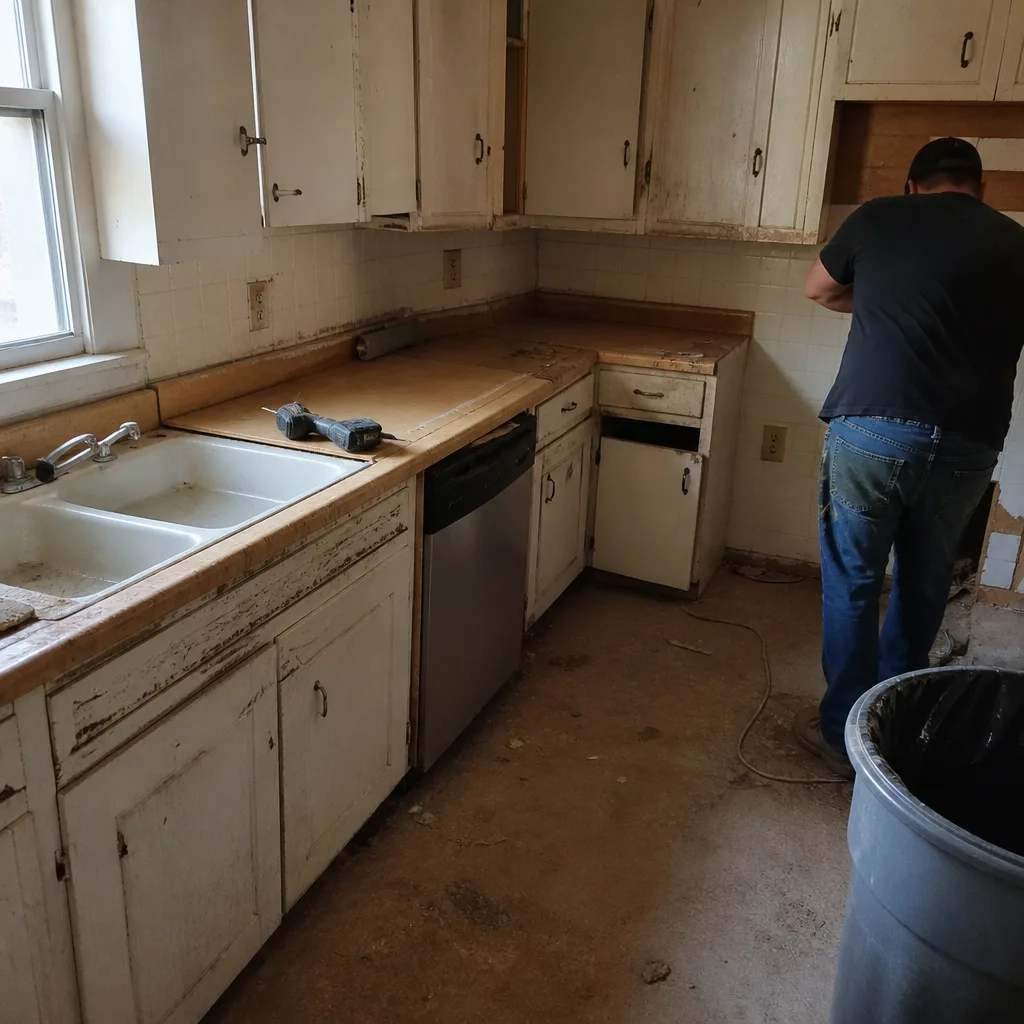 Before
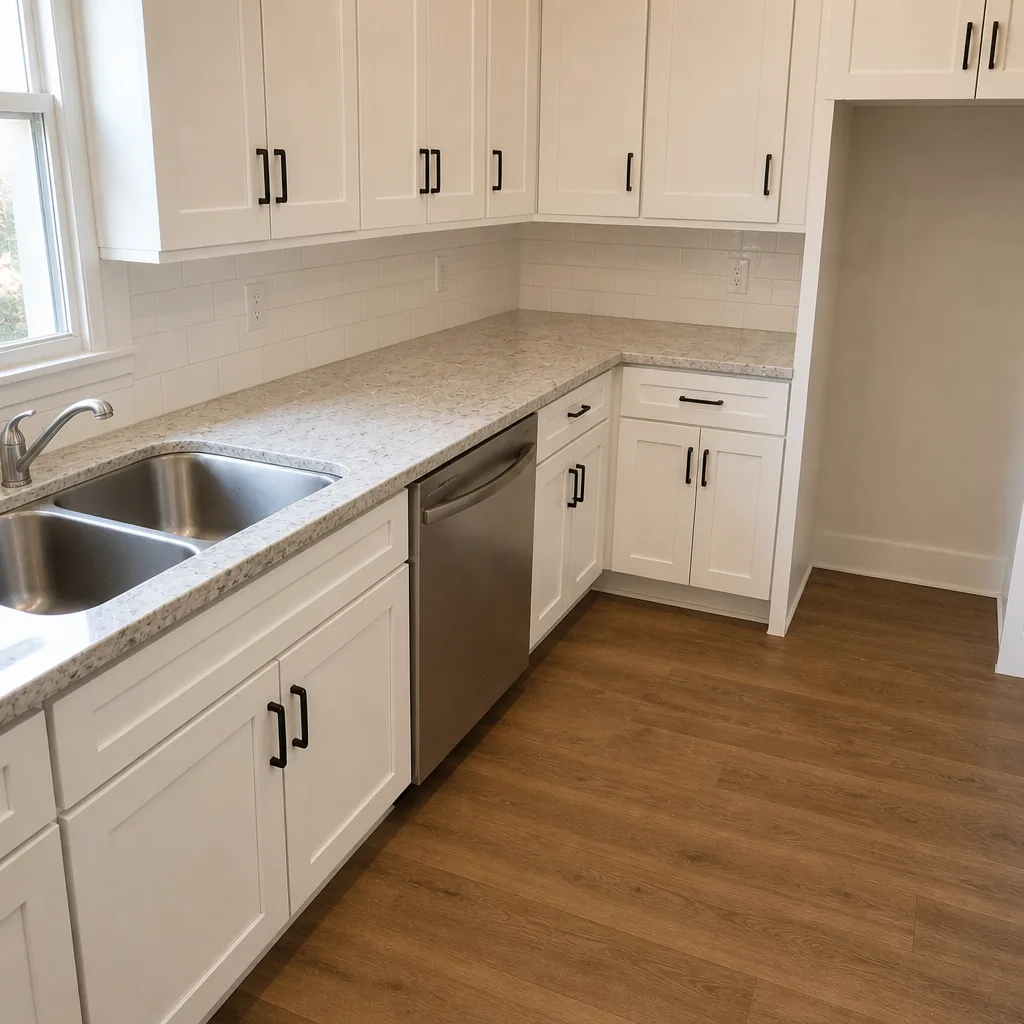 After
 Before
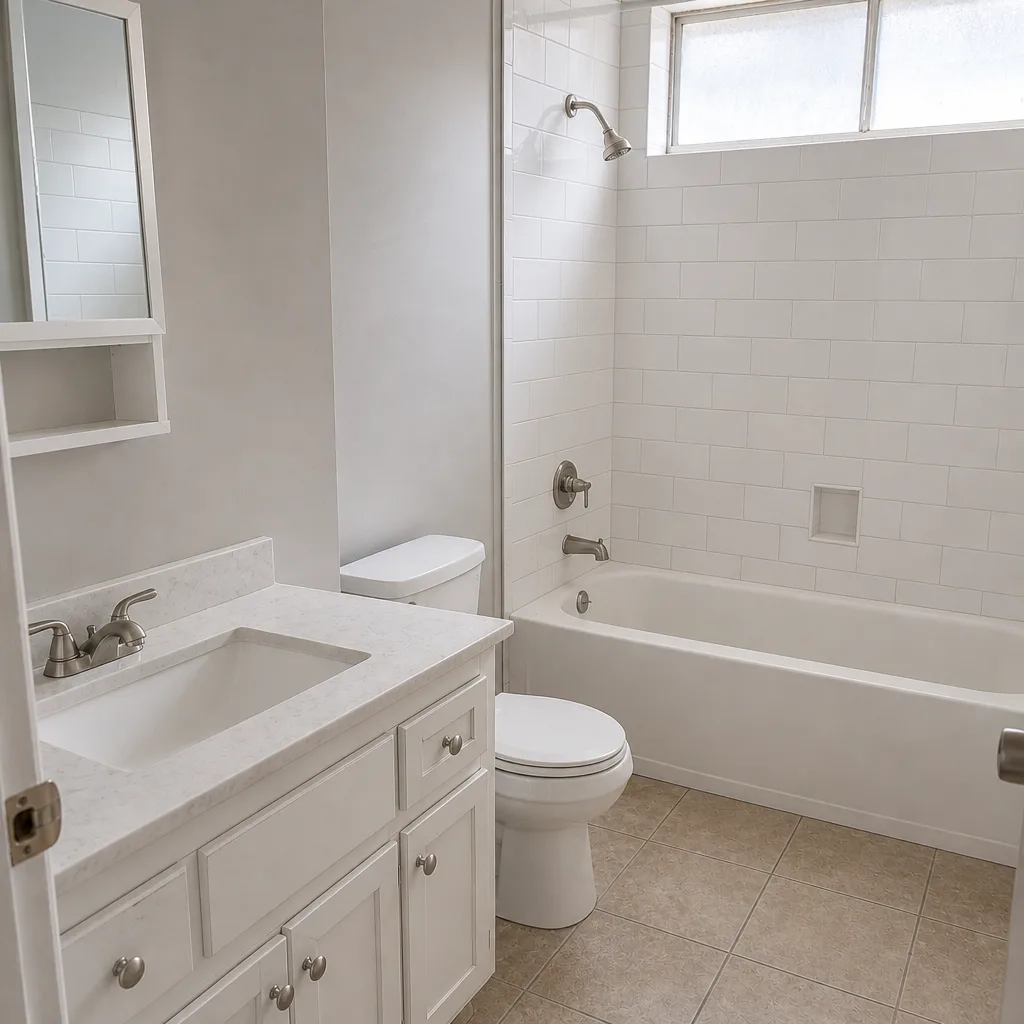 After
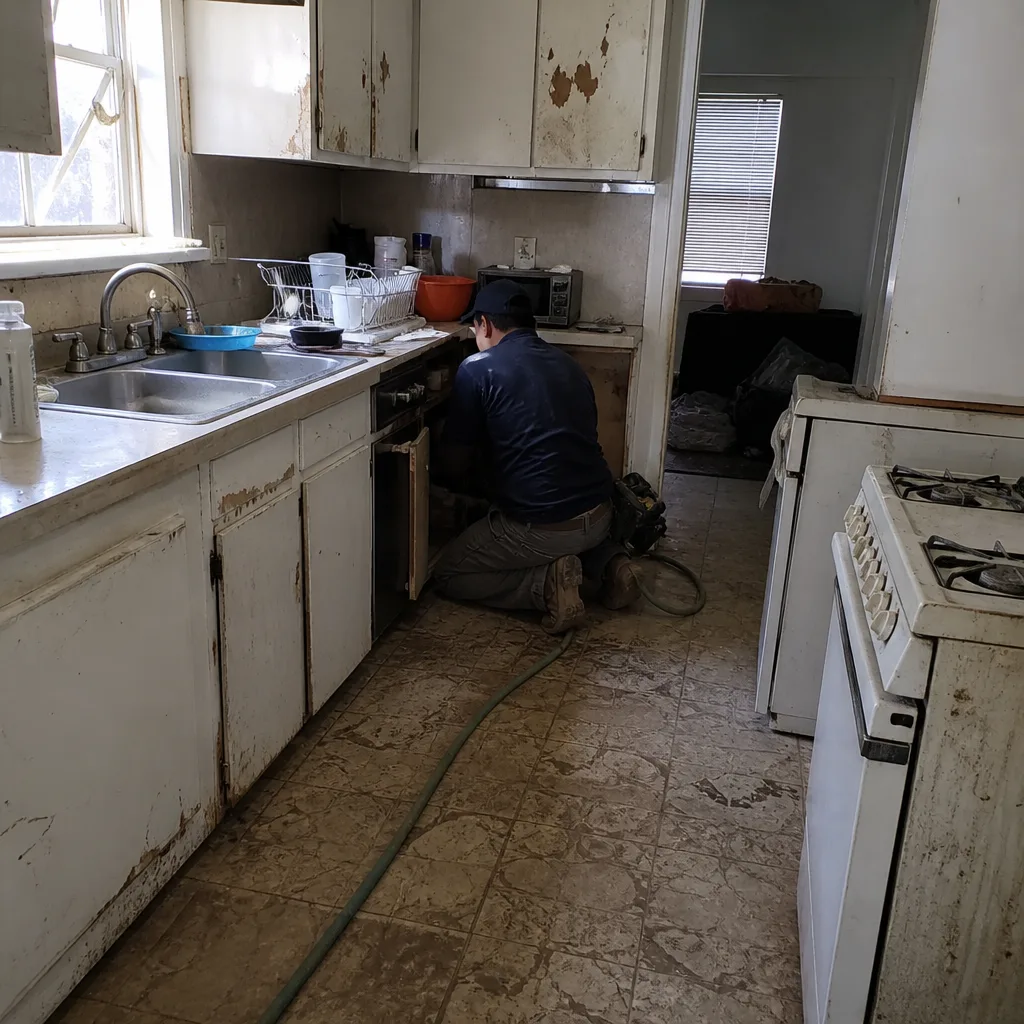 Before
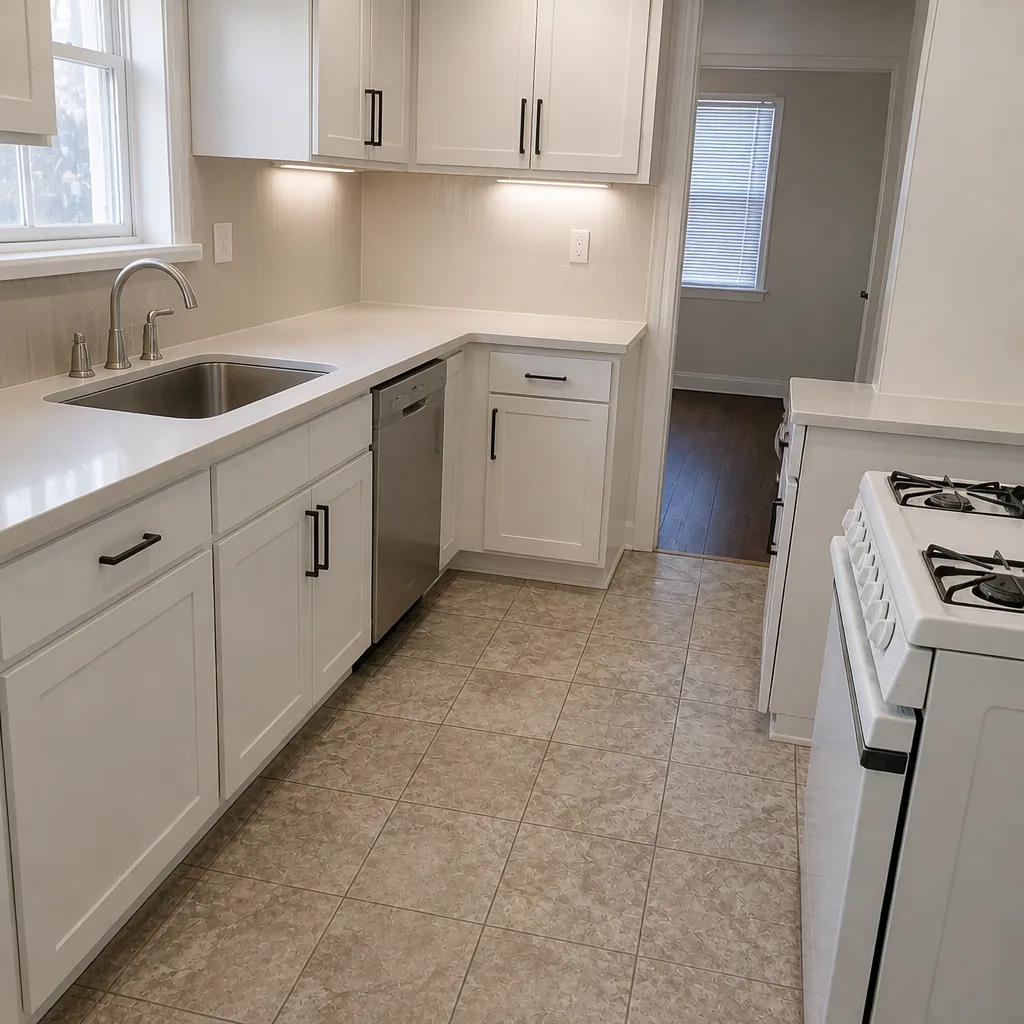 After
When to Call a Professional
Call a professional when the symptom points to the opening rather than the unit: a door that has racked out of square, a window that binds at the corners, a lock that won’t line up, interior water staining, soft drywall, or drywall cracks extending from frame corners. Those signals mean the frame has moved, water has been getting in for a while, or both, and the repair needs a proper look at the framing, flashing, and installation. A failed IGU on an otherwise sound window is worth a call too, but as a glass replacement, not a full swap. Groundwork Construction Co. of Mesquite offers free estimates in Mesquite and written line-item quotes, so you know exactly what you’re paying for before any work starts. Call (888) 426-8078 to schedule yours.
Frequently Asked Questions

Most homeowner-level repairs in the Mesquite market fall into a few ranges: weatherstripping and door sweeps run $15-$40 in materials if you do it yourself, or $100-$200 for a tech to handle it; exterior re-caulking of a window or door runs $150-$400 per opening; IGU (glass-only) replacement typically runs $200-$450 per unit depending on size and glass type; and door adjustment for racked frames runs $150-$350. Full window replacement is a separate budget entirely. Call (888) 426-8078 for an exact quote on your situation. Estimates are free, and you’ll get a line-item breakdown, not a ballpark.
No, and this is the single most common costly mistake we see. Fog between panes means the insulated glass unit (IGU) has lost its seal, not that the window frame has failed. On most modern windows, the glass assembly is a replaceable component. If the frame is sound, replace the glass and keep the frame. If the frame is also showing racking, sticking, or water damage, then a full window replacement makes sense. The diagnosis matters, and it’s the first thing we check on a Mesquite call-out.
Clay soil. The expansive clay under most of Mesquite swells when wet and shrinks when dry, and that seasonal movement lifts and settles the foundation slab a little each year. Doors and windows react to that movement at their openings, which is why they stick in the wet season and free up in the dry. If the sticking is only seasonal and mild, it’s manageable. If it gets worse each year, or the door won’t latch at all, that’s the frame racking permanently, and it’s worth a professional assessment before the problem compounds.
Yes, for the majority of drafts. Weatherstripping replacement, door sweeps, and exterior caulk are homeowner-level jobs that cost under $50 in materials and take an afternoon. Run the incense or tissue test first to find where the draft is coming from. If it’s at the sash or door edge, that’s weatherstripping. If it’s at the frame corners, that’s caulk or settlement. The last one may need a professional eye, but the first two you can handle. Call (888) 426-8078 if you’d rather have someone walk the opening with you and confirm before you spend.
Water intrusion behind the trim with intact glass points to a failure in the opening, not the unit: cracked exterior caulk, missing or damaged flashing above the window, or a clogged weep channel letting water pool. Trace it from the outside in. If you find interior staining, soft drywall, soft wood, or a musty smell, the water has likely reached the framing or sheathing, and that’s a professional assessment, not a caulk-and-paint job. In Mesquite’s climate, a lot of exterior caulk takes a beating every summer, so annual inspection of the exterior joints pays for itself.
Window and door replacements in Mesquite typically require a permit when the work involves changing the size of the opening, altering the structure, or replacing a required egress window with a smaller one. A like-for-like replacement of the same size and type often doesn’t, but the rules depend on the specific scope. Pulling permits and passing inspections is part of how we work: the number you see is the number you pay, and the inspection gets done. Call (888) 426-8078 if you’re unsure whether your project needs one; we can tell you before you commit to a scope.
The Bottom Line
The window and door problems that cost homeowners the most money are the ones that get diagnosed wrong. A drafty window is usually a seal problem, not a window problem. Foggy glass is a glass problem, not a frame problem. A sticky door in Mesquite is a clay-soil problem, not a door problem. Fix the symptom without finding the root cause and the problem comes back, often worse. Start with the symptom map, trace the root cause, handle what’s safely yours, and get a professional assessment for anything that involves frame movement, hidden water, or foundation signals. Every repair covered in this guide is one of our standard services, and it’s backed by our 730-Day Done Right Promise: if it’s not done right, we make it right. We also have 0% financing for 18 months available if a larger window or door project is on your list. From foundation to finish line, our team handles it, and our technicians arrive background-checked and in uniform. The work is built to last and backed in writing.
Ready to find out what your repair actually needs? Call (888) 426-8078 for a free estimate, and a live person will pick up, any hour of the day.
Written by the team at Groundwork Construction Co. of Mesquite.