
Last updated November 17, 2026








Free written scope consultation - allowances, timeline, and change-order rules on paper before a single trade is scheduled
Construction Warning Signs: A Mesquite Homeowner’s Reference Guide
Here’s what we’ve learned walking hundreds of Mesquite properties after the job is done: the most expensive construction defect a homeowner can inherit isn’t visible from the street. It’s improper drainage grade that sends water toward the foundation every time it rains. Bad construction rarely looks bad on day one. It looks like a clean, finished project that hasn’t been tested by one Texas summer or one ice storm yet. By the time the damage surfaces, you’ve usually lost your leverage with the builder and you’re paying twice. This guide covers what to check, what the numbers mean, and how to document a concern so it holds up in a warranty claim.
Quick Answer
Construction defects in Mesquite usually show themselves first as drainage problems, not cracks: water pooling against the slab, soil that stays soggy for days after rain, or a grade that slopes back toward the house. Visible movement like stair-step brick cracks wider than 1/8 inch, doors that suddenly stick, or a driveway slab that has dropped more than a quarter inch against the garage apron all warrant a professional evaluation. Most of these can be checked by a homeowner with a level, a tape measure, and a camera – and caught early enough to matter.
Styles & brands we work with
- Kitchen remodeling
- Bathroom remodeling
- Home additions & ADU
- Roofing
- Windows & doors
- Driveway & pavers
- Fence
Table of Contents
- Why Drainage Grade Is the Number One Thing to Check in Mesquite
- Reading Base Failure and Improper Compaction Without Tools
- Normal Settling vs. Structural Movement: The Measurements That Matter
- How to Judge Flatwork Workmanship Before Problems Show
- Framing and Exterior Surfaces: What Quality Looks Like Up Close
- Post-Storm Warning Signs That Look Cosmetic but Aren’t
- How to Photograph a Concern So It Supports a Claim
- Common Mistakes to Avoid
Why Drainage Grade Is the Number One Thing to Check in Mesquite
Mesquite sits on heavy clay soils that don’t drain like sand. Water moves across the surface slowly, and it moves toward the lowest point whether you planned one or not. If that lowest point is your slab, you have a problem that will take years to fully reveal itself and thousands to fix. The Texas climate swing – long hot summers followed by concentrated rain events and the occasional hard freeze – is what turns a small grade miscalculation into foundation movement. We’ve seen driveways and additions in Mesquite fail not because the concrete was bad, but because the water was never given a path away from the structure.
The good news: drainage is the easiest defect to check. You don’t need a level. You need rain, or a hose, and patience.
- Walk the perimeter of the house after a hard rain. Look for a visible low spot within 10 feet of the foundation where water pools and stays.
- Check that the soil slopes away from the house. A minimum of 6 inches of drop over the first 10 feet is the standard we build to.
- Look at the base of your fence posts and any freestanding structures. Water pooling at the post base means the grade slopes toward it, not away.
- Check the soil at the base of the slab for cracks that run parallel to the foundation. These are often a sign of soil washing out and consolidating against the slab edge.
- Watch your gutters during the next storm. If water is overflowing at the base rather than being carried away, the downspout discharge is pointed at the wrong place.
If you find a low spot within 10 feet of the slab, that’s a flag worth a paid evaluation. It’s also the kind of issue we fix quickly when it’s caught early: re-grading, extending downspouts, and adjusting the soil profile. When it’s caught late, it becomes a foundation drainage system on top of a possible structural repair. Before any major grading or paver work near the slab, it’s worth talking through the drainage plan with a contractor who understands how Mesquite’s soils behave. Our team does that on Driveway & Pavers in Mesquite projects because pavers and grading are inseparable.
Reading Base Failure and Improper Compaction Without Tools
Improper compaction is the defect that competes with drainage for the top spot, and it’s harder to see because it hides under a finished surface. When soil under a driveway, patio, or foundation isn’t compacted in proper lifts, it settles unevenly. The surface above stays flat for a while, then it starts to dip and shift. In Mesquite, we see this most often on properties where the builder added fill to achieve grade, or where a previous homeowner built an addition on ground that was never prepped. The tell is a surface that looks fine but has a slightly hollow or uneven feel when you walk it.
Here’s what you can check at home:
- Listen and feel. Walk the driveway, patio, and walkway in a straight line. Any spot that sounds hollow or sinks slightly underfoot is worth marking with a scrap of tape.
- Look for cracks that form in a pattern. A single crack is common. Cracks that form a ring, a diagonal across a corner, or a wide “V” at the edge point to a localized base failure.
- Check the joint at the structure. On a slab or paver driveway, look where the hardscape meets the garage apron or foundation. A drop of more than a quarter inch suggests the base under the flatwork has given up.
- Watch the corners of patios and walkways. Settling shows up at corners first because the fill has fewer sides holding it. A raised or dropped corner is your first warning.
- Check for “birdbaths” in pavers. A paver field that holds water in a low spot after rain, while the rest drains, points to a base that wasn’t compacted enough in that zone.
Replacing failed base means lifting and re-laying the surface, so this is the defect nobody wants to discover two summers after the work. If your driveway already shows these signs, an honest assessment is the best next step. We’ve built hundreds of these surfaces and the difference between a good install and a failing one is almost always the base and the compaction. For a deeper walkthrough of what a proper install involves, our Groundwork Construction Co. of Mesquite home page covers the full service picture.
Normal Settling vs. Structural Movement: The Measurements That Matter
Every new home settles. The soil under a new foundation consolidates over time, and a little movement is normal, especially in the first 18 to 36 months after construction. The problem is that homeowners are usually handed two pieces of bad advice: some contractors say “all cracks are normal,” and some frightened neighbors say “any crack means the house is falling down.” Neither is true. The difference between normal settling and structural movement is measurable. Here are the numbers we use when evaluating a property in Mesquite.
- Hairline cracks under 1/16 inch in drywall or interior trim: typically normal settling. Note them, watch them, don’t panic.
- Cracks 1/16 to 1/8 inch that aren’t actively changing: borderline. Photograph and check again in 60 days. No change means it’s probably settling.
- Cracks over 1/8 inch: this is the number at which we recommend a professional evaluation, particularly if the crack is diagonal or stair-stepped in brick or block.
- Any crack that grows over 30 days: measure with a tape and date the photo. Growth is the key indicator, not width.
- Doors that stick in one season and free up in another: often a sign the frame is moving with seasonal soil movement. Worth noting but not automatically alarming.
- Doors that stop closing entirely, or that rack visibly in the jamb: a stronger sign. The frame has moved beyond the normal flex.
A stair-step crack means the crack follows the mortar joints of the brick like a staircase. When that pattern appears on an exterior wall and is 1/8 inch or wider, it’s the most reliable visual sign of foundation movement we know of. The other one to watch is a floor that has become noticeably unlevel in a short period. A floor that feels off after five years is different from one that suddenly feels off overnight – sudden movement is always worth a call.
If you’re seeing any of these, the next step isn’t panic; it’s an evaluation. A trained eye can tell you whether it’s normal or something that needs a structural repair, and the answer matters enormously for both your stress level and your wallet. Our own technicians have up to 12 years of experience reading exactly these signs on homes throughout Mesquite.
How to Judge Flatwork Workmanship Before Problems Show
Flatwork – driveways, sidewalks, patios, and any poured surface – is where workmanship quality is easiest to evaluate after the fact. Unfortunately, most homeowners don’t get to see it before the concrete is poured. But there’s a lot you can read from a finished surface if you know where to look. The difference between good and bad flatwork is often in the details of the edges, the joints, and the finish. Here’s what we check on every property.
- Check the control joints. Properly placed joints run on a schedule that accounts for slab size, usually no more than 10 to 12 feet apart on a driveway. Joints spaced far apart, missing, or cut at odd angles invite random cracking later.
- Check the edge finish. A proper concrete edge is clean, straight, and slightly rounded. Rough, ragged, or chipped edges at the form line suggest the finish work was rushed.
- Look for “pop-outs” or small pits. A few are common. A surface covered in them, or with a scattered “bubbly” texture, suggests the mix or the finishing was off.
- Check the slope on the apron and the walkway. Water should run off the surface, not pool at the garage threshold. Any visible low spot in the surface is a future chipping point in the freeze.
- Check the joint at the house and at adjacent flatwork. A proper isolation joint (an expansion joint) should separate the slab from the foundation. Missing or filled-in isolation joints are a common shortcut and lead to cracks.
- Look at the finish consistency across the whole surface. Patches, color differences, or areas that look “smeared” suggest a rushed finish, which is usually a sign of a rushed pour.
These checks are worth doing within your first week, because contractors are most responsive right after the work is complete. The earlier you raise a concern, the easier it is to resolve in your favor. And for any surface that’s exposed to weather and drainage, the details don’t just affect appearance – they determine how long the surface lasts.
Framing and Exterior Surfaces: What Quality Looks Like Up Close
Framing quality is mostly hidden by the time you see the finished house, but exterior surfaces tell you a lot. The way a crew hangs siding, installs trim, and seals a window reveals their standard of care. If the exterior is sloppy, the flashings behind it probably are too, and that’s the part that causes rot and moisture damage years later. In Mesquite, where summer sun and occasional freeze events stress every exterior surface, that detail work is what holds up. Here’s what to look at.
- Siding alignment. Rows of siding or brick courses should be level. A sagging or wavy line is a sign of framing movement or a sloppy install.
- Trim joints. Exterior trim pieces should meet tightly, with caulk applied cleanly. Gaps or lumpy caulk suggest the work was rushed and will fail faster.
- Window and door flashing. Look at the top corners of windows and doors for signs of careful flashing and sealed trim. Open seams at the top corner are where water gets in.
- Roof and gutter transitions. Where the roof meets the gutter, and where two roof planes meet, the flashing should be crisp and sealed. Lopped-on sealant blobs are a shortcut.
- Paint and stain coverage. Uneven or thin coverage on fascia and trim means moisture can get into the wood, and that’s a problem in a climate with real summer heat.
If you’re considering an addition or new structure, the same principles apply, and the stakes are higher because the work is new. On a home addition or ADU, the framing and external detailing have to be done right the first time because a re-do is expensive. We walk every client through these details on Home Additions & ADU in Mesquite projects. If you’re building a new structure from a modern prefab manufacturer – Mighty Buildings and Boxabl both ship panelized and modular systems that arrive with much of the framing done – the outside detailing and the connection to the existing house are where workmanship still matters, so check those transitions carefully.
Post-Storm Warning Signs That Look Cosmetic but Aren’t
After a storm in Mesquite, most homeowners focus on the obvious: missing shingles, a dented gutter, a cracked fence board. Those get fixed. The problems that don’t get fixed are the ones that look cosmetic but signal something compromised underneath. The two big ones are water intrusion at the roof edge and compromised flashing around windows, doors, and fence posts. Here’s what we check after a storm, and what to look for.
- Staining on a ceiling or wall corner. A small brown ring on the ceiling below the roof line is usually not a cosmetic paint issue. It’s water that got past the shingles or flashing, and it means the decking or the framing behind the drywall is wet.
- Soft spots in siding or trim near a window. If you can press a finger into a piece of exterior trim and it gives, the trim has been taking on water for a while. The window flashing is likely the worth cause.
- A fence post that wobbles after a rain. A small wobble at the base of a fence post is a sign the soil around it has washed out. Over time, the post will lean and possibly fail. Fence work after storms is common, and it’s worth rebuilding or reinforcing before the next rain.
- A foundation crack that appeared or widened during the storm. Storm runoff against a foundation can expose new movement. Any new exterior crack is a strong signal to call for an evaluation.
- Water in the garage or at the garage door threshold. This is almost always a drainage and grade problem, not a door seal problem. The threshold is just where the water ends up.
Our Fence Installation in Mesquite team rebuilds fence lines that have failed after storms, and in most cases the repair is larger than the homeowner expected because the water has been working on the post footings for years. If a storm has exposed a wobble, that’s the moment to fix it.
How to Photograph a Concern So It Supports a Claim
Documentation is the part most homeowners get wrong, and it’s the part that decides whether a warranty claim, insurance claim, or contractor dispute goes your way. A blurry phone photo with no reference point tells a claim adjuster nothing. A small diagonal crack looks cosmetic in the wrong photo and structural in the right one. Here’s the method we recommend, and it works whether you’re dealing with a warranty, an insurer, or a builder who wants to dispute the claim.
- Start wide, then get close. Take one photo showing the whole wall or surface from 10 to 15 feet back, then a tight photo of the concern. Adjusters need both context and detail.
- Put a ruler in the frame. Any crack, gap, or uneven joint should have a tape measure beside it in the close-up. A 1/8 inch crack next to a ruler is hard to argue with.
- Take a dated photo of anything you can measure. Mark the crack with a pencil tick and date it, or take a photo of it beside a coin or a tape measure. The key fact is whether the crack is growing over time.
- Photograph the water path, not just the water. For drainage concerns, photograph the pool of water and the source – the downspout, the slope of the yard, the edge of the slab. Trace where it came from.
- Keep a written log. Note the date of each photo and one sentence on what you see. A log with 6 entries on a 6-month timeline is powerful in a dispute.
- Send everything in writing, immediately. A photo sent to the contractor on the day you notice a concern is far more usable than one taken 4 months later. If you’re within a warranty period, put the concern in writing with the photo attached.
This is the single most effective thing you can do as a homeowner to protect yourself, and it takes about 10 minutes. Clean, dated, measured documentation is what separates a claim that moves forward from one that stalls. Our team builds this into every project report on clients’ homes, and we encourage homeowners to keep their own log as well.
Common Mistakes to Avoid
- Judging work by the first rain, not the first summer. A Mesquite patio or driveway that looks fine in March can fail by August. Watch how surfaces hold up through a full season of heat and rain before you decide the work is solid.
- Waiting for the crack to get bigger before you call. By the time a crack is visibly growing, the cost of repair has usually gone up by more than the cost of an evaluation. A measured photo and a professional opinion are cheap insurance.
- Fixing the symptom instead of the cause. Caulking a crack in the foundation, painting over a ceiling stain, or patching a driveway dip without addressing the drainage or base underneath guarantees the problem returns.
- Not reading the warranty terms before you sign. The 730-Day Done Right Promise we write into our work is clear and in writing. Many builder warranties are shorter, conditional, or transfer quietly out of scope after 90 days. Read the fine print before work begins, not after.
- Letting a contractor talk you out of a written concern. “That’s normal settling” is a perfectly reasonable answer, but it should be documented. Get the contractor’s assessment in writing with a date, especially if you’re inside the warranty period.
- Forgetting to check the transitions. The corners, thresholds, and seams where two surfaces meet are where water and movement do the most damage, and they’re the first thing to inspect after any major project.
- Skipping a final walkthrough in writing. A walkthrough with a punch list and both parties’ sign-off is the strongest evidence you have that the work was done. Without it, disputes become a he-said-she-said.
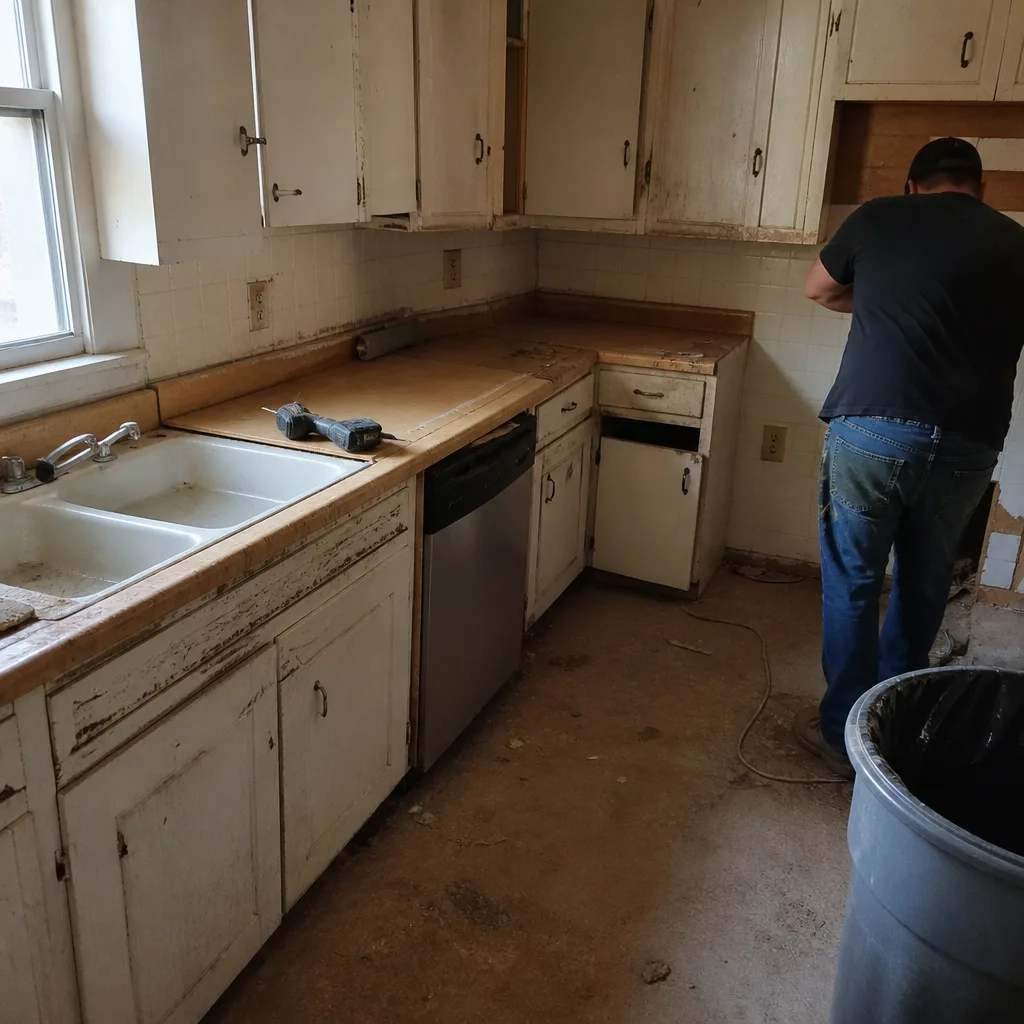
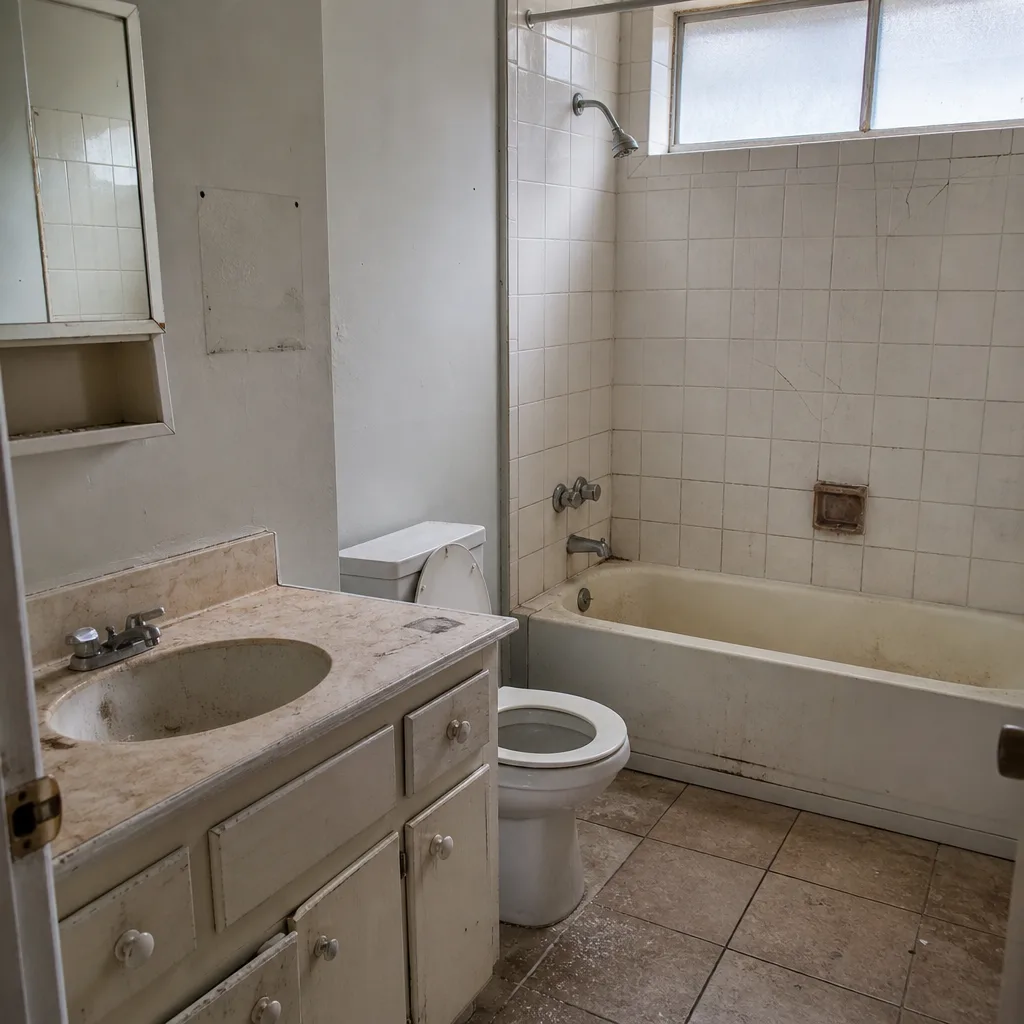
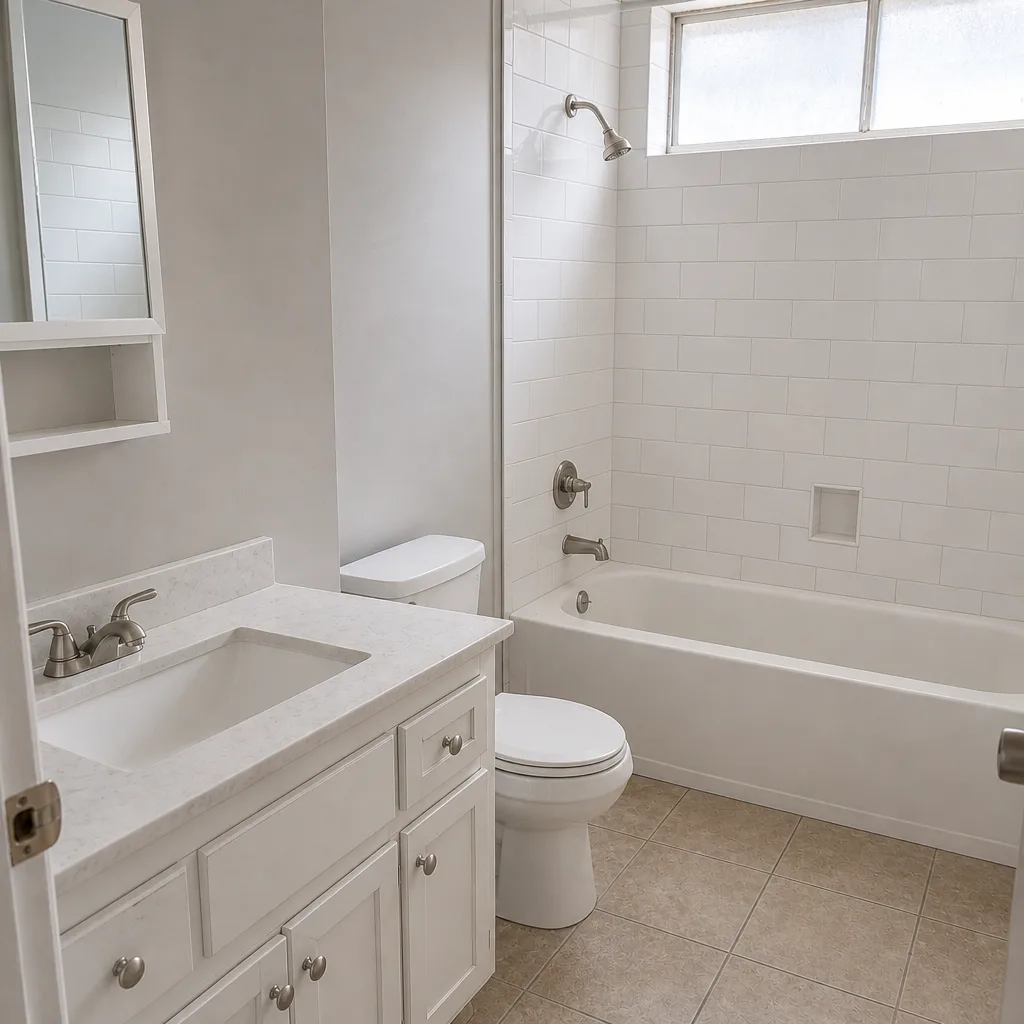
See the difference
 Before
 After
 Before
 After
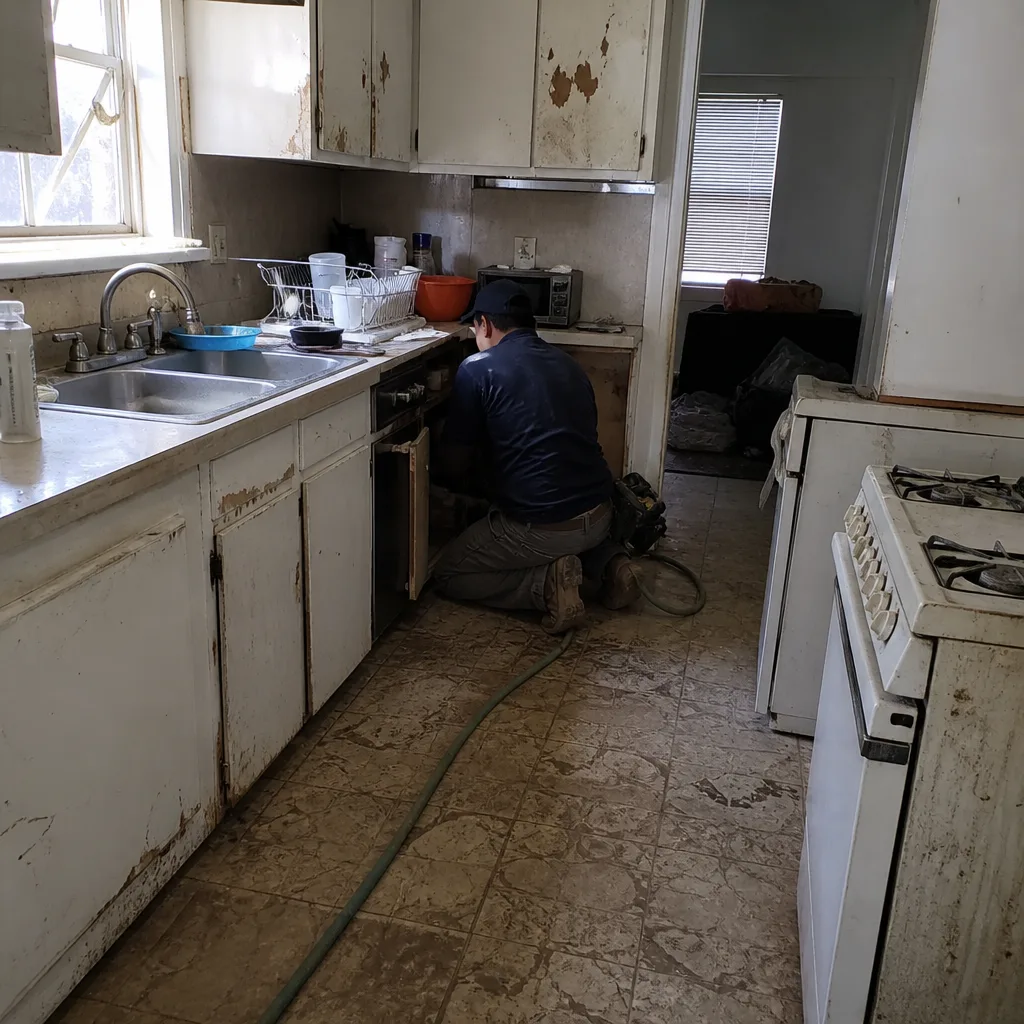 Before
 After
When to Call a Professional
Some concerns are worth watching, and some are worth a call. The line is fairly clear. Call a professional if any crack measures 1/8 inch or wider, if you’ve seen a crack grow over 30 days, if doors have started to stick or rack in their frames, if a floor has become noticeably unlevel, or if any water is pooling within 10 feet of your slab. Call sooner for anything that showed up after a storm – water stains on ceilings or walls, soft trim near windows, or a fence post that has started to move. These are the signs that the damage is real and moving, and an evaluation now is much cheaper than a repair later. Groundwork Construction Co. of Mesquite offers free estimates in Mesquite – call (888) 426-8078.
Frequently Asked Questions
Normal settling usually shows as hairline cracks under 1/16 inch that don’t grow, or doors and windows that stick and free up with the seasons. Foundation movement shows as cracks 1/8 inch or wider, stair-step brick cracks, doors that rack in the frame, or a floor that has become noticeably uneven. The clearest signal is growth over time: photograph a crack, measure it, and check it again in 30 days. If it has grown, it’s worth a professional evaluation. Call (888) 426-8078 to schedule a free estimate and we’ll take a look.
Improper drainage shows up as water pooling within 10 feet of the slab after rain, a visible low spot in the yard, soil cracking close to the foundation, or a downspout that dumps water into a spot that doesn’t drain. In Mesquite, the heavy clay soil holds water longer than most homeowners expect, so a low spot that stays wet for two days after rain is a strong sign the grade is wrong. If you’re seeing the pool, check the slope: the soil should drop 6 inches over the first 10 feet away from the house.
A single hairline crack from a control joint is normal, especially in a surface that’s been through a few summers. What’s not normal: cracks that form a ring or a corner “V”, a surface that has dropped more than a quarter inch at the garage apron, or a spot that sounds hollow underfoot. Those point to a base problem or a poor compaction job. It’s worth having them assessed, and it’s easier to fix if caught early. Call (888) 426-8078 for an honest look at your driveway.
Within a few days of the storm, while the evidence is fresh and before secondary issues set in. Look specifically at the ceiling below the roofline, the trim around windows and doors, the base of the fence posts, and the exterior cracks on the house. Stains, soft trim, and new cracks are the signs to photograph and date immediately. Documenting in the first 48 hours gives you the best chance of resolving a warranty or insurance claim cleanly.
Sometimes it is normal, and sometimes it’s a brush-off. The way to tell the difference is in writing: ask the builder to state their assessment in writing, with a date, and attach your measurement photos. A contractor who is confident in their work will put the answer in writing. If they refuse, that’s a sign to get a second opinion before the warranty period closes. Call (888) 426-8078 for a free, no-pressure evaluation.
Most drainage corrections we handle are finished in a few days, and a base failure repair on a driveway or patio typically takes about a week depending on scope. The timeline in Mesquite is influenced by soil moisture from recent rains; grading and compaction work best when the soil has had time to dry out somewhat. We’ll give you a written schedule before work begins, and the scope won’t change on you mid-job. Call (888) 426-8078 to schedule your free estimate.
The Bottom Line
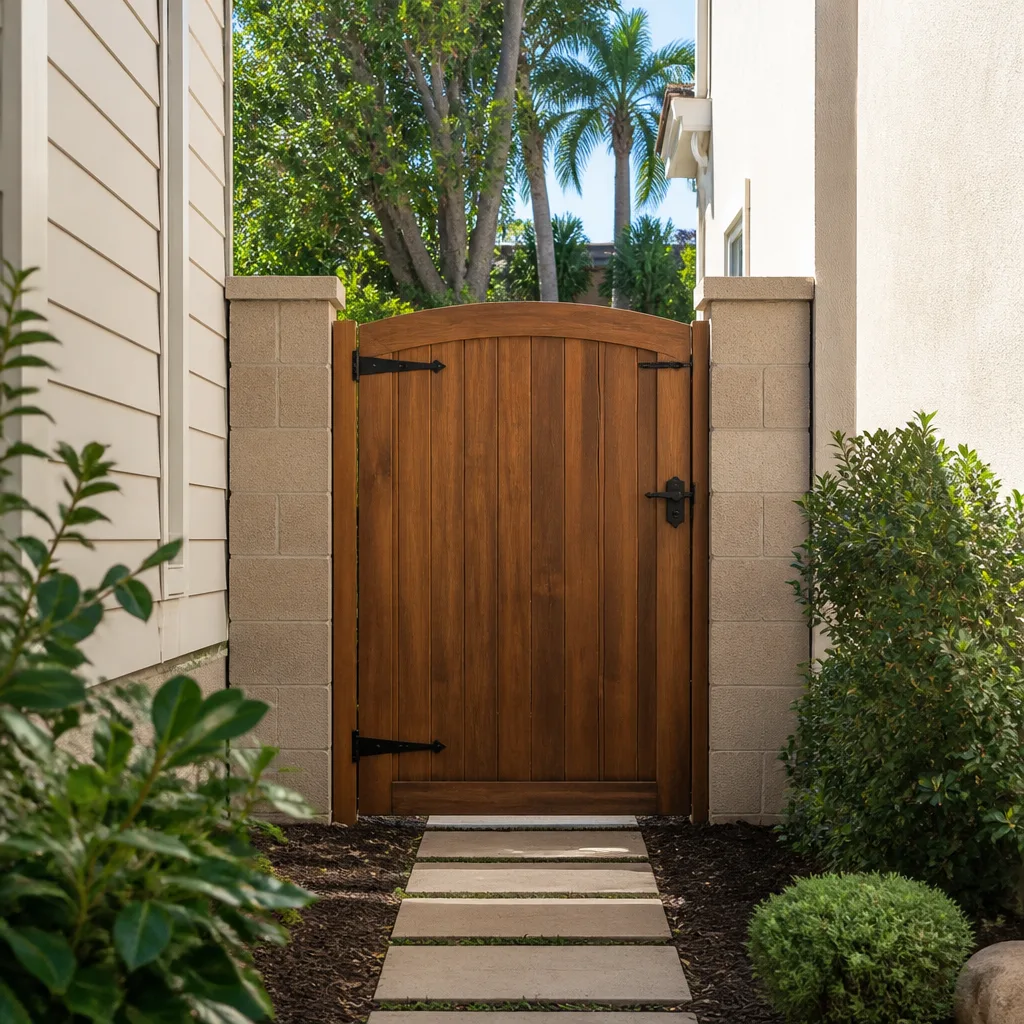
Bad construction in Mesquite almost never announces itself. It sits quietly in drainage that slopes the wrong way, base compaction that was rushed, and flashing that was sealed with a caulk gun instead of proper detailing. The damage shows up one summer or one ice storm later, and by then your leverage with the contractor is gone. The good news is that you can see almost all of it yourself, with your eyes, a tape measure, and a phone camera, long before the bill comes. Document what you see, date it, measure it, and get a professional assessment when the numbers point there. If you need an expert eye on your home, our team is ready for the call.
Groundwork Construction Co. of Mesquite builds and repairs with the 730-Day Done Right Promise behind every job – if it’s not done right, we make it right. Our technicians have up to 12 years of experience, arrive on every project background-checked and in uniform, and we price every project upfront with no surprises. Calls are answered by a live person 24/7, and we offer a free project estimate and design consult, plus $1,000 off projects over $10,000 and 0% financing for 18 months. Call (888) 426-8078 for a free estimate on your home.
Written by the team at Groundwork Construction Co. of Mesquite.