Last updated November 17, 2026



Free written scope consultation - allowances, timeline, and change-order rules on paper before a single trade is scheduled
Construction Cost Breakdown: The Mesquite Homeowner’s Reference for 2026
The lowest bid on a Mesquite construction project is statistically the most expensive option you can pick. That sounds backwards until you watch it happen: the number on the page looks $18,000 friendlier than the next one, then the change orders land, the “builder-grade” materials get swapped for the allowance-tier stuff, and the warranty is a one-page letter that stops applying the moment the crew drives off. The gap between the cheap bid and the honest one wasn’t savings. It was deferred cost.
Identical scopes in Mesquite routinely come in 40% apart. That spread isn’t fraud. It’s that most bids don’t price the same thing, and most homeowners never get taught how to read them on equal terms. This reference fixes that. You’ll learn what 2026 scopes actually run, what sits under the number, and how to spot the language that turns a bid into a change-order machine.
Quick Answer
Construction costs in Mesquite, TX in 2026 run roughly $145 to $260 per square foot for room-scale remodels, $95 to $165 per square foot for foundation and slab work, and $18 to $34 per square foot for flatwork like driveways and patios. The single biggest variable isn’t materials – it’s whether the bid you’re comparing prices the same scope, permits, soil prep, and warranty as the one next to it.
Styles & brands we work with
- Kitchen remodeling
- Bathroom remodeling
- Home additions & ADU
- Roofing
- Windows & doors
- Driveway & pavers
- Fence
Table of Contents
- What construction actually costs in Mesquite in 2026
- Why two Mesquite bids for the same job differ by 40%
- How to read a line-item bid the way a builder does
- The hidden costs Mesquite homeowners underestimate
- Why North Texas soil changes your foundation number
- Permits, inspections, and the delay tax
- How financing and payment schedules change your real risk
- A five-step method for comparing bids fairly
What construction actually costs in Mesquite in 2026
Here’s the range table we’d hand a neighbor. These are 2026 numbers for the Mesquite market, covering common scopes by size and complexity. Treat the low end as straightforward work on a sound structure and the high end as anything with surprises underneath – bad soil, old plumbing, or a layout that fights the new one.
| Scope | Typical size | 2026 range in Mesquite | Cost driver |
|---|---|---|---|
| Slab foundation (new or replacement) | 1,200-2,000 sq ft | $14,000 – $38,000 | Soil prep, rebar spec, pier count |
| Flatwork (driveway, patio, walkway) | 400-900 sq ft | $7,000 – $28,000 | Thickness, finish, drainage |
| Framing (addition or major rework) | 300-800 sq ft | $22,000 – $64,000 | Span, headers, roof tie-in |
| Full kitchen remodel | 150-300 sq ft | $32,000 – $92,000 | Cabinetry, layout change, plumbing moves |
| Bathroom remodel | 40-100 sq ft | $16,000 – $48,000 | Tile, waterproofing, fixture tier |
| Roof replacement (asphalt shingle) | 1,800-2,800 sq ft | $14,000 – $32,000 | Decking condition, pitch, tear-off |
| Detached ADU (shell + systems) | 500-900 sq ft | $140,000 – $260,000 | Utilities trench, foundation, finishes |
Those ranges are wide on purpose. A 200-square-foot bathroom in a 1970s ranch near downtown Mesquite with original cast iron plumbing is a different job than the same square footage in a newer build out toward the eastern edge of the city. The tile and fixtures aren’t what moves the number. What’s behind the wall is what moves it.
Complexity tiers matter more than square footage once you’re above a certain size. We sort them this way: Tier one is a cosmetic swap in the same footprint with no plumbing or electrical relocation. Tier two adds relocated fixtures, a new subfloor section, or a wall that comes out. Tier three means structural changes, new slab, or anything that touches the building envelope and triggers engineering. Most bids that “shock” a homeowner are actually tier-three work priced against a tier-one expectation.
Why two Mesquite bids for the same job differ by 40%
We’ve sat at kitchen tables in Mesquite where three contractors handed over three bids for what the homeowner described as “the same project.” One was $41,000, one was $58,000, and one was $49,500. On paper the middle one looked sane. In reality they weren’t pricing the same job at all, and the homeowner couldn’t see it because none of the bids used the same language.
Materials are the headline, but they’re rarely the biggest gap. Here’s what actually moves the number between two competent contractors:
- Crew experience and staffing model. A contractor running in-house crews on a fixed schedule carries payroll through a whole job. A contractor subcontracting every trade carries less overhead but hands your job to whoever’s available. Our technicians have up to 12 years of experience, and that depth shows up in walkthroughs where the crew lead can tell you what to check before framing goes up.
- Insurance coverage and bonding. General liability and workers’ comp are real line items. A bid with no coverage cost baked in is a bid where you absorb the risk if someone gets hurt on your property.
- Permit handling. A contractor who pulls the permit and manages the inspection schedule is charging for that labor. One who asks you to “handle it” is pricing a lighter job – and leaving you with a code problem if the work doesn’t pass.
- Warranty backstop. A real workmanship warranty costs money to honor. The 730-Day Done Right Promise exists because we set aside for it. A one-year verbal “call me if anything happens” costs nothing, and it’s worth nothing.
- Allowance structure. This is where bids lie most often. A $6,000 allowance for kitchen cabinetry when the homeowner wants KraftMaid isn’t a $6,000 cabinet budget – it’s a $6,000 placeholder followed by a $9,000 change order.
The bid that comes in 40% lower than the others is usually doing three things: pricing tier-one scope against a tier-three reality, hiding the allowance shortfall, or skipping the permit and warranty work that the honest contractor built in. Sometimes all three.
How to read a line-item bid the way a builder does
A bid that says “Kitchen remodel – $52,000” is not a bid. It’s a guess with a total attached. You can’t compare it, you can’t hold anyone to it, and you can’t tell what you’re actually buying. The good ones break scope down to line items with quantities, brands, and unit prices. Here’s how to check one before you sign:
- Look for a quantity and unit price on every line. A line that reads “Demo – $3,400” tells you nothing. “Demo: remove 32 linear feet of upper cabinets, 18 lf of lower, 240 sq ft of tile – $3,400” tells you everything. If quantities are missing, so is the accountability.
- Check every allowance for a brand and model. “Tile allowance $2,400” is an escape hatch. “Tile allowance $2,400 – Schluter Ditra underlayment, 12×24 porcelain, one of three approved SKUs” is a real budget. Ask what happens if your selection runs over.
- Look for what’s NOT listed. The common gaps: soffit repair, subfloor replacement, haul-away fees, drywall patching after electrical, and the cost of the final cleaning. Every missing line is a future change order with an 8-15% markup on it.
- Read the change-order clause. A fair one requires written approval and a defined markup before the work starts. An unfair one lets the contractor add scope unilaterally and bill you at will.
- Confirm permit responsibility in writing. Who pulls it, who pays the fee, and who’s on-site for the inspection. If the bid doesn’t say, it’s not in the deal.
- Find the payment schedule. A schedule that front-loads 50% before demo is a schedule where you carry the risk. The good ones step payments to milestones – demolition, rough-in, drywall, finish, final walkthrough.
When we write a bid for a Mesquite homeowner, we build it so the numbers compare. Upfront pricing, no surprises: the number you see is the number you pay, unless you change the scope in writing. That’s the standard to hold every contractor to. If they won’t put it in writing, they don’t have it.
The hidden costs Mesquite homeowners underestimate
The bid number is the visible cost. The real cost includes a short list of items that almost never live in the bid and always show up in the final invoice. Every Mesquite homeowner planning a project should budget a 10-15% contingency purely for these, and ask upfront which ones the bid already covers.
- Permit fees. Mesquite permit fees for a kitchen or bath remodel typically land between $300 and $1,800 depending on valuation; an addition or ADU can run $2,000-$6,000 in permitting and plan review. Many bids exclude the fee entirely – the homeowner pays it separately and it never gets compared.
- Soil prep and drainage correction. This is the North Texas tax. Expansive clay soil, plus the way flat land drains after a storm, means grading and drainage work that homeowners rarely see coming. A driveway or patio job that looked like $9,000 becomes $14,000 after drainage correction and the required fall away from the foundation.
- Inspection delays. Every stop-work inspection adds a day or two of crew downtime. That downtime gets priced into every bid that schedules realistically. A bid without it is a bid that’s hoping for the best or planning to skip the inspection.
- Utility relocation or upgrade. Moving a gas line for a new range, upgrading an electrical panel to handle kitchen loads, or re-routing a water heater – plumbing and electrical trades charge for the move and the permit on it separately.
- Structural repairs discovered mid-demo. A rotted subfloor section under a shower pan, or a joist that was sistered poorly in a 1970s build. The good contractors price this as a defined allowance so it isn’t a surprise markup later.
The pattern to notice is that the hidden costs are almost entirely about what’s under the surface, not what’s on top. If your bid doesn’t have an explicit line for at least the permit fee and a contingency allowance, add them to the total yourself before you compare.
Why North Texas soil changes your foundation number
Mesquite sits on the same expansive clay that runs across the Metroplex, and that clay does exactly one thing well: it moves. Wet years and dry years swing the clay volume, and the slab on top of it cracks, settles, or heaves with it. That’s why foundation work here is not a line item you can quote from a national average.
Foundation cost in Mesquite depends on four things specific to the lot:
- Soil expansion class. The higher the expansion potential, the deeper the piers and the heavier the rebar spec. Two lots a block apart can price $6,000-$10,000 apart for the same square footage because of soil test results.
- Pier count and depth. A residential slab may need anywhere from a dozen to forty-plus piers depending on span, load, and the soil report. Each pier is a real cost, not a rounding error.
- Drainage correction. Good drainage is the cheapest insurance against foundation movement. Grading to shed water away from the slab, plus a French drain or swale where the lot won’t drain on its own, is often the cheapest part of the job and the easiest to skip if the bid is thin.
- Existing slab condition. A new build versus a replacement on an existing slab that’s already failing. Repairing around an old slab that’s moved is a different job than pouring new.
When we walk a home in Mesquite, the soil and drainage questions come before the finish questions. Our Driveway & Pavers in Mesquite work is often where this plays out in plain view: a paver project without proper base and drainage fails faster here than in most places, and a driveway that holds standing water is a driveway that’s trying to undermine your foundation.
The point for budgeting purposes: if your bid for flatwork or a foundation doesn’t have a separate line for soil prep and drainage, it’s not really a Mesquite bid. It’s a generic bid with the address changed.
Permits, inspections, and the delay tax
A permit is not paperwork overhead. It’s the mechanism that ensures the work will be inspected by a third party, and the inspection is what protects you from the crew rushing the work when nobody’s watching. A contractor who avoids permits isn’t saving you money – they’re moving the risk onto your escrow.
Mesquite permit handling breaks into a few phases for most residential projects:
- Plan review and permit application. Structural work, additions, and ADUs require stamped plans and a review cycle. Simple remodels move faster. Either way, the fee is based on project valuation, not square footage alone.
- Rough-in inspection. Framing, electrical, plumbing, and HVAC are inspected before drywall goes up. This is the inspection that catches problems while they’re still cheap to fix.
- Insulation and drywall inspection. A checkpoint before finishes go on.
- Final inspection and certificate of occupancy. For an addition or ADU, this is the milestone that makes the space legally livable and financeable.
Every phase takes time. A kitchen remodel permit might take a week; an ADU permit can take 8-12 weeks in plan review alone. That’s the delay tax – not a fee, but a schedule cost you can’t ignore. A bid that says “3 weeks” for a project with a 10-week permitting path is a bid that’s either not pulling the permit or not being honest about the timeline.
We pull the permit and manage the inspections on the jobs we run. The homeowner shouldn’t be the one chasing an inspector through voicemail. That’s the difference between a contractor who builds and a contractor who coordinates, and the coordination part is what makes a project feel finished when it’s actually done.
How financing and payment schedules change your real risk
Sticker price is only half the cost story. Two bids for $60,000 can carry wildly different risk based on how the payments are structured and what protects you when things go sideways. When we quote a project, we want the homeowner comparing the payment terms as carefully as the total.
A fair payment schedule steps payments to milestones. You should never be more than one phase ahead of the work. Here’s the model to compare against:
- Deposit and materials release. A modest deposit at signing (typically 10%) plus the material release when the order is placed. Not 40% before anyone touches the house.
- Demolition complete. Payment for the demo and haul-away phase.
- Rough-in complete and inspected. Payment once the inspection passes – this is where lien waivers from your subcontractors should come in.
- Drywall, finishes, and fixtures. Payments tied to completion, not calendar dates.
- Final walkthrough and punch list closeout. The final chunk, tied to you walking the project and signing off. Hold back until the punch list is finished – not just started.
Lien waivers are the piece homeowners never ask about. Every subcontractor and material supplier on your project can file a mechanics lien against your property if they’re not paid. A general contractor who collects lien waivers from every sub at each payment is protecting you. One who doesn’t is letting the risk accumulate quietly. Ask for the waivers before you write the next check.
On the financing side, the terms matter as much as the rate. We offer 0% financing for 18 months on qualifying projects, which lets a homeowner spread a large renovation across a full payment cycle without paying interest on it. And the $1,000 off projects over $10,000 promotion stacks onto that. The point of financing isn’t to stretch a budget you can’t afford – it’s to keep the cash in your account earning for you while the work happens. Spread across 18 months, a $60,000 kitchen remodel at 0% is a genuinely better deal than draining the savings account on day one. Read the terms, confirm the rate holds, and compare the true cost against any contractor’s payment plan.
A five-step method for comparing bids fairly
Here’s the process we’d give a homeowner comparing three bids and trying to make sense of it without a builder’s decoder ring. It’s the same checklist we use internally when we’re evaluating subcontractor bids on our own jobs.
- Normalize the scope. Write a one-page scope statement first, then send it to every contractor. Every bid comes back pricing the same list, same allowances, same brands. No “we threw in a few extras.”
- Line up the line items. Build a spreadsheet. Every bid gets its line items transposed row by row. Missing lines are flagged in red. A bid with six missing lines isn’t a $48,000 bid – it’s a $48,000 bid plus whatever those six lines cost.
- Compare the allowances specifically. For cabinetry, tile, fixtures, and countertops, ask each contractor for the brand and the model the allowance buys. That’s where real differences hide. Our curated brands include KraftMaid, Cambria, Toto, and Schluter, and we show the model as part of the bid so the allowance is comparable.
- Check the risk transfers. Permit responsibility, insurance and bonding, lien waiver handling, and warranty coverage. Every one of these is a cost the honest bid carries and the cheap bid passes to you.
- Verify the warranty in writing. Not a verbal promise, a document with a defined term and a claim process. The 730-Day Done Right Promise is a written commitment: if it’s not done right, we make it right, and the clock runs two full years from final walkthrough – long enough for anything that was installed wrong to reveal itself.
Do those five steps and the 40% spread between bids shrinks to something you can actually reason about. Some bids will genuinely be lower because the contractor runs a leaner operation. That’s fine. What you won’t get fooled by is a bid that looks like it’s $18,000 cheaper because it doesn’t price the same project.
Common Mistakes to Avoid
- Picking the lowest bid without normalizing scope. The lowest bid on a Mesquite project is statistically the most expensive option once change orders and warranty gaps are priced in. Read every bid against your scope statement before you rank them.
- Ignoring the allowance trap. A $6,000 cabinet allowance that doesn’t name a brand or model isn’t a budget – it’s a starting point for a $12,000 change order. Get the SKU, or ask what the allowance actually buys.
- Assuming the permit is handled. If the bid doesn’t say who pulls the permit and pays the fee, you’ll end up doing both. Unpermitted work in Mesquite can fail an inspection years later and become a disclosure issue when you sell.
- Skipping soil and drainage on flatwork. A paver driveway or patio without proper base and drainage fails fast in North Texas clay. The cheapest driveway bid is often the one that doesn’t price the base under it.
- Front-loading payments. A contractor asking for 50% before demo is asking you to carry the risk on the whole job. Compare payment schedules tied to milestones, and ask for lien waivers at each step.
- Treating the warranty as a nice-to-have. A one-year verbal promise goes silent exactly when the problem shows up. A two-year written workmanship warranty is a real cost that the honest bid includes and the cheap bid skips.
- Forgetting the hidden line items in your contingency. Budget at least 10-15% above the bid total for permit fees, inspection delays, and mid-demo discoveries. If you don’t, the first change order gets a markup applied and puts you in a bad negotiating position.
See the difference
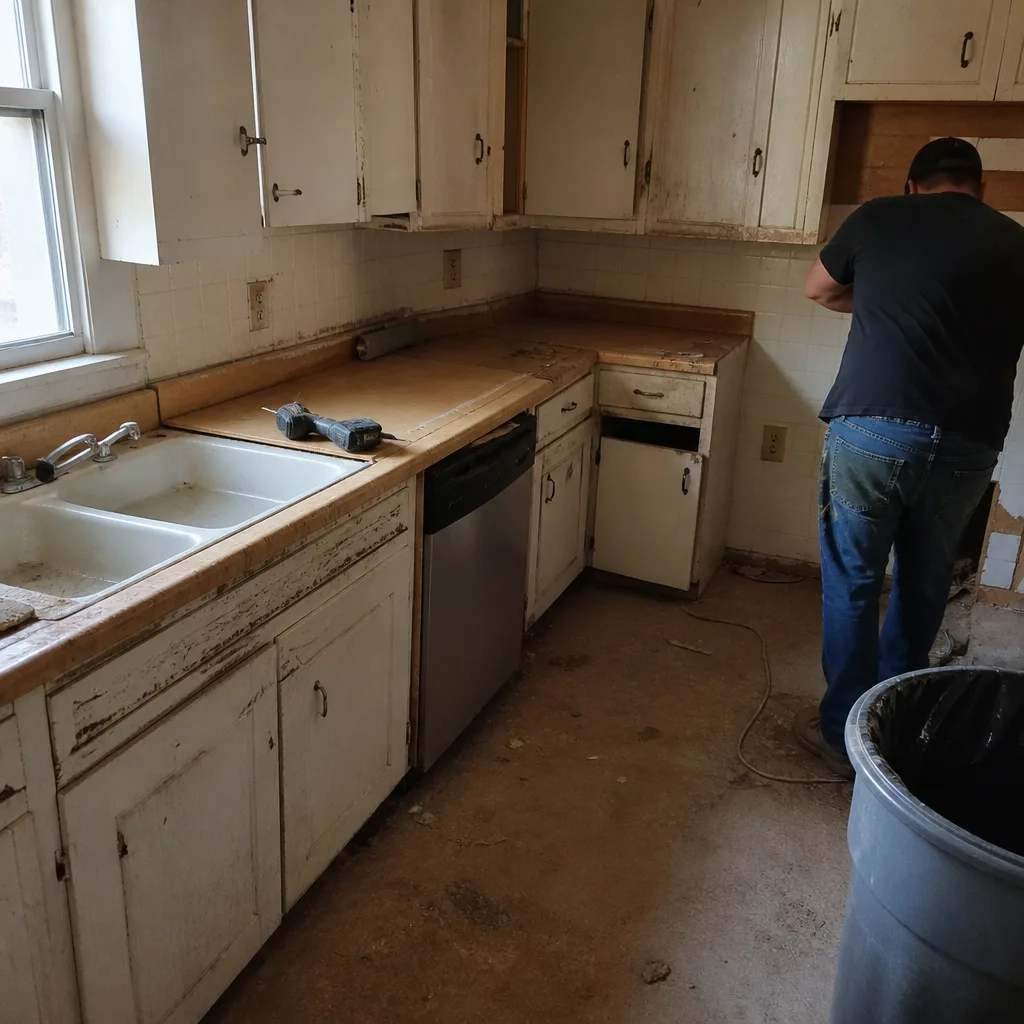 Before
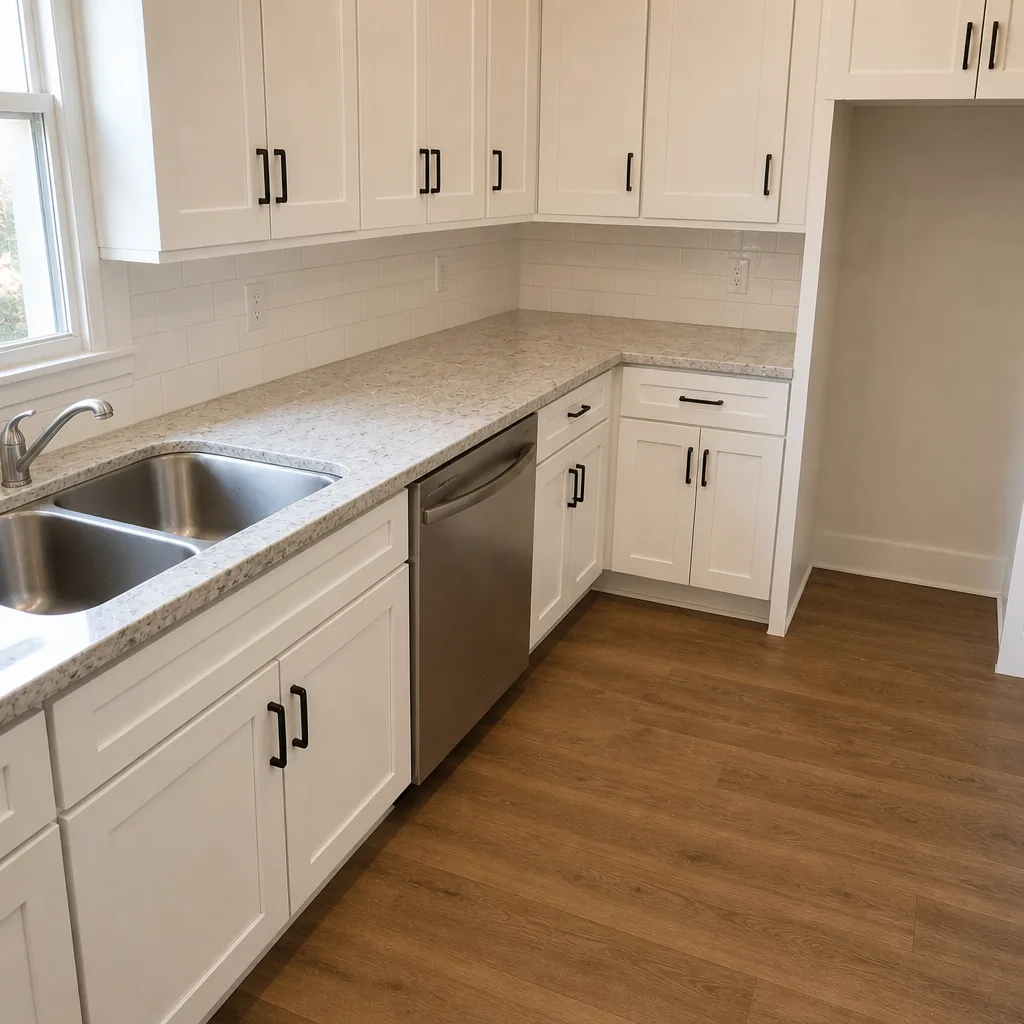 After
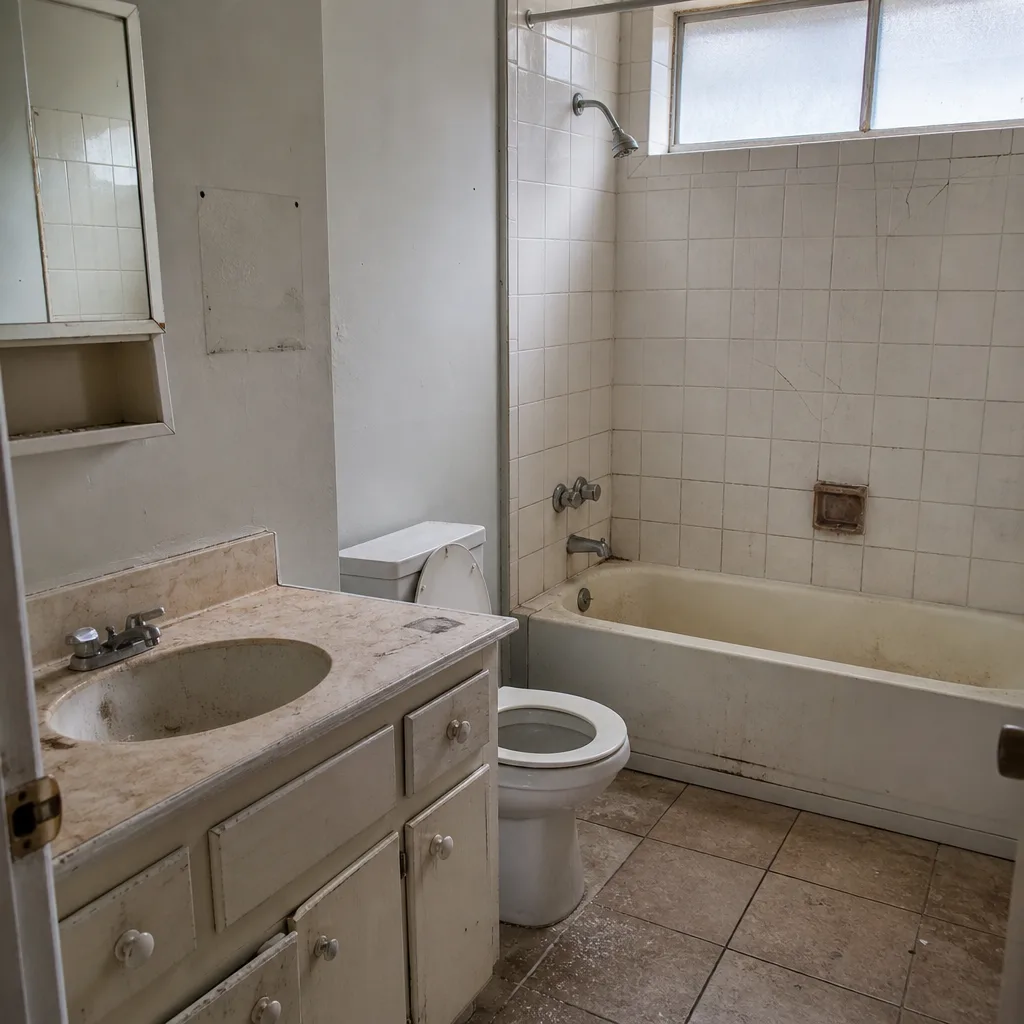 Before
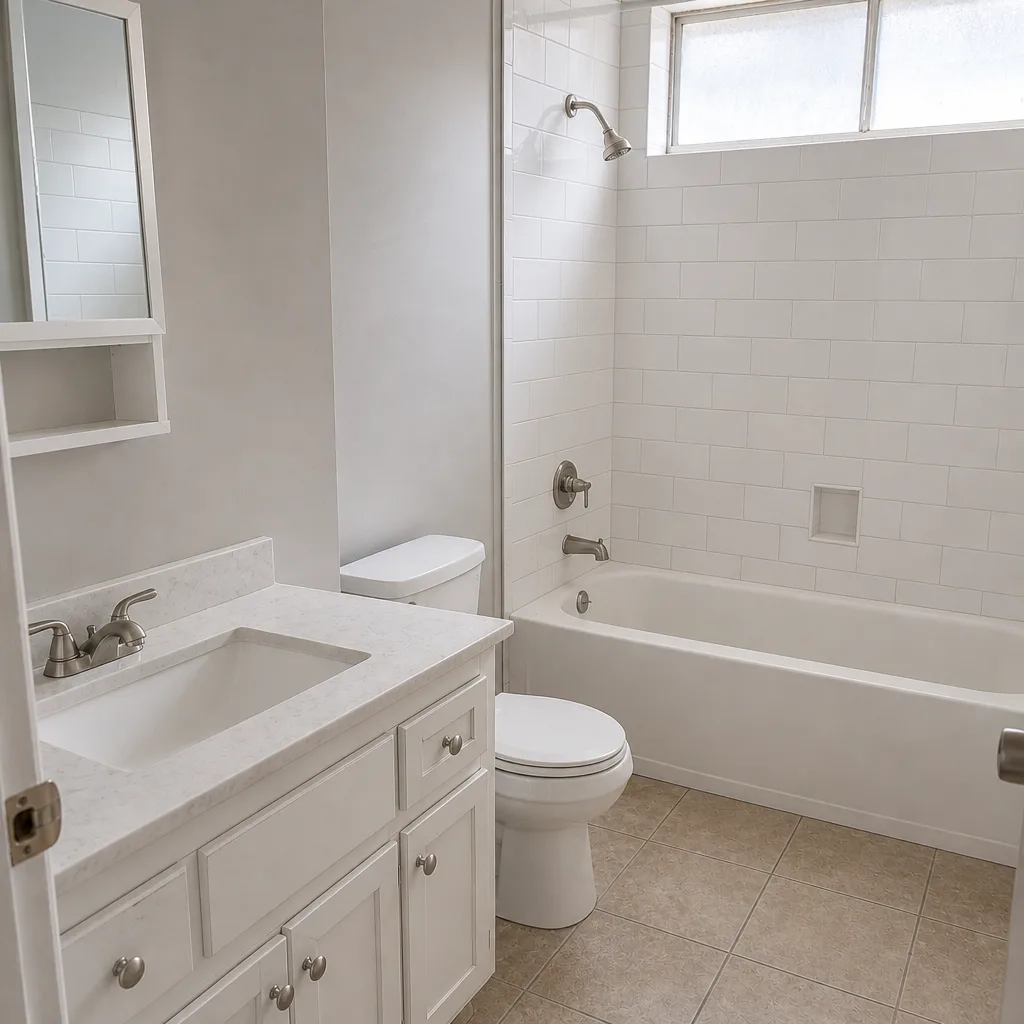 After
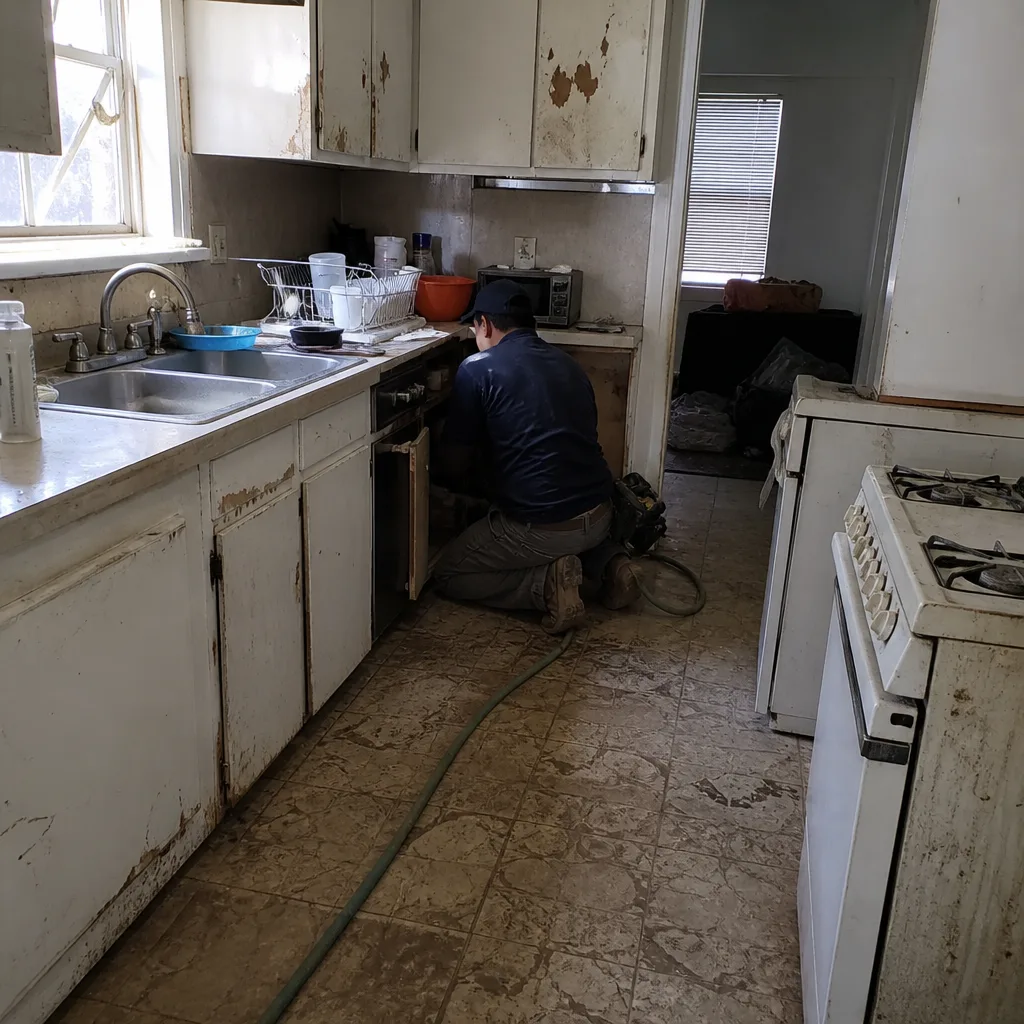 Before
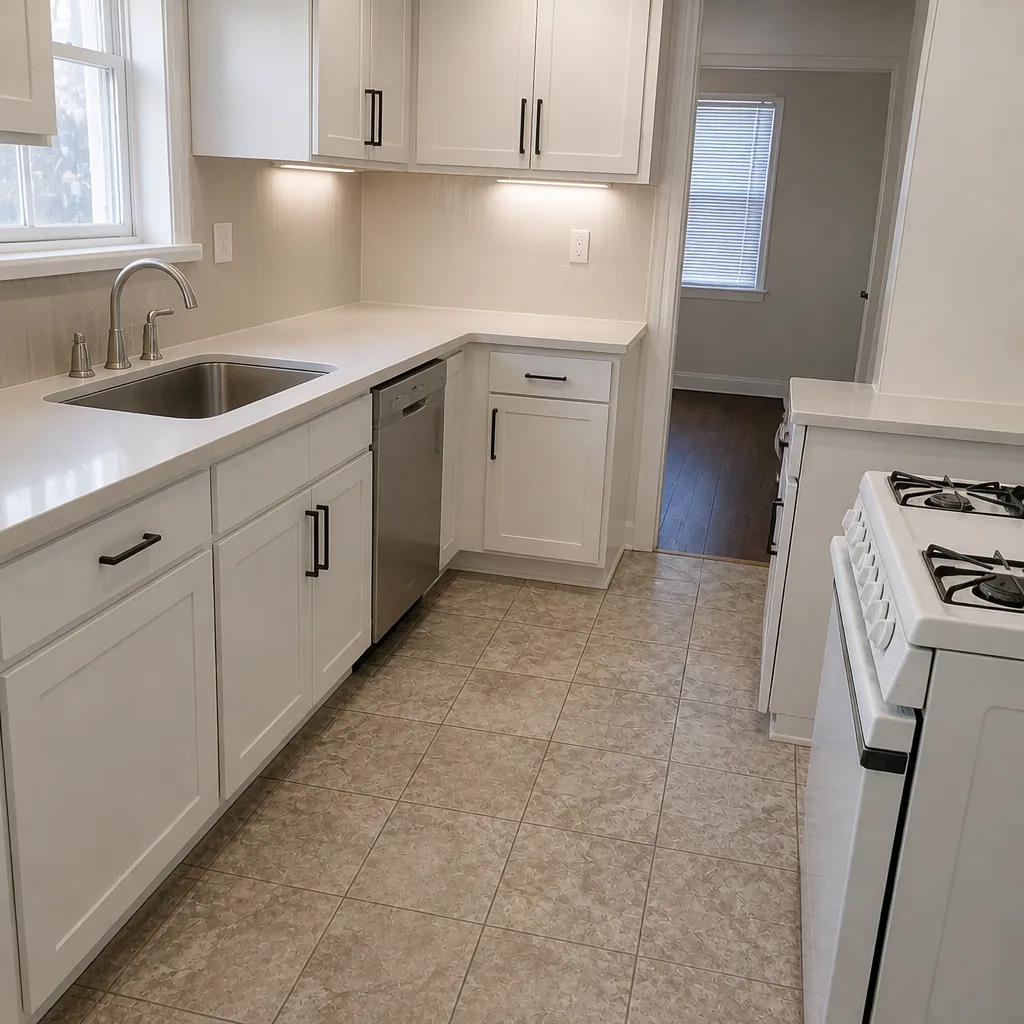 After
When to Call a Professional
Some jobs are worth DIY. Construction scopes that touch the building envelope, the structural system, or any permit-required trade aren’t. If your project involves removing a wall that might be load-bearing, moving plumbing or gas, pouring a slab, replacing a roof, or building an addition you hope to make financeable or insurable, call a professional. North Texas soil, drainage, and inspection cycles add their own risk that a weekend crew can’t price or absorb. Same rule if you’ve been burned before and need a contractor who answers a phone and backs the work in writing. Groundwork Construction Co. of Mesquite offers free project estimates and design consults – call (888) 426-8078 to schedule yours. Calls are answered by a live person, 24/7, so you’ll talk to someone instead of a voicemail box.
Frequently Asked Questions
A full kitchen remodel in Mesquite in 2026 typically runs $32,000 to $92,000 for a 150-300 square foot kitchen, with the difference driven by cabinetry tier, layout changes, and plumbing relocation. The middle of the range moves when the layout changes: a cosmetic swap in the same footprint is a different project than one that moves the sink across the room, and the bid should show which one you’re buying. Call (888) 426-8078 for a free estimate with itemized pricing.
Bids vary because most aren’t pricing the same scope. One contractor prices a cosmetic tier-one job with material allowances, another prices structural work and full permit handling, and both are described as “kitchen remodel” to the homeowner. The honest way to compare is to write a one-page scope statement first, send it to every bidder, and compare line items on equal terms.
Yes, we pull the permits and manage every inspection phase on the projects we run. Mesquite permit fees for a kitchen or bath remodel generally land between $300 and $1,800 depending on valuation; an ADU or addition runs $2,000-$6,000 in permitting and plan review. Those fees are listed in the bid, not buried in a separate invoice.
No, not unless you change the scope in writing. Upfront pricing, no surprises is the way we work: the number you see is the number you pay, with any change order requiring written approval from you before the work proceeds. The only cost that moves without your signoff is a genuine mid-demo discovery, and those are priced against an allowance set in the original bid – not a surprise markup.
Plan for 4 to 7 months on a detached ADU in Mesquite, with 8-12 weeks of that spent in plan review and permitting before a shovel hits the ground. Actual build time depends on foundation scope, utility trenching distance, and finish selection speed. A contractor who quotes a two-month timeline is either not pulling the permit or not pricing the inspection delays. Our Home Additions & ADU in Mesquite team prices the full schedule so the number and the timeline line up.
Every project we complete carries the 730-Day Done Right Promise: if it’s not done right, we make it right, and the warranty runs a full two years from final walkthrough. That’s one of the longest workmanship guarantees in the residential construction space, and it’s in writing because a verbal promise isn’t worth the paper it’s printed on. Compare it against whatever warranty a competing bid offers – and check whether that warranty is a document or a phrase.
The Bottom Line
The lowest bid on a Mesquite construction project is usually the most expensive one. Not because cheap contractors are dishonest, but because most bids don’t price the same project: the cheap one hides scope in an allowance, skips the permit, front-loads the payment, and stops the warranty at the driveway. The number that looks like $18,000 saved is really $18,000 deferred, plus a change order markup. Compare bids on scope, allowance detail, permit handling, payment schedule, lien waivers, and written warranty. That’s how you get to a total you can trust. A real number from a contractor who backs it in writing beats a cheap number every time.
Groundwork Construction Co. of Mesquite connects homeowners with independent local professionals and stands behind the work with the 730-Day Done Right Promise. We work full scope, from foundation to finish line – Groundwork Construction Co. of Mesquite home for the full picture, and Fence Installation in Mesquite when the exterior is part of the plan. Proudly serving local communities with a curated brand lineup that includes KraftMaid, Kohler, GAF, and James Hardie across every trade. Call (888) 426-8078 to schedule your free estimate and design consult – there’s a live person on the other end, 24/7.
Written by the team at Groundwork Construction Co. of Mesquite.