Last updated November 17, 2026




Free written scope consultation - allowances, timeline, and change-order rules on paper before a single trade is scheduled
DIY vs Professional Fence Installation: What’s Safe to Do Yourself
Setting a fence post looks simple right up until you realize you’re trying to anchor something permanently into soil that moves an inch in every direction depending on how much rain fell last month. That’s the part nobody shows you on a Saturday morning home-improvement segment. Around Mesquite, the blackland clay under most neighborhoods swells when it’s wet and shrinks when it’s hot, and a post that looked plumb in March can be leaning by the following spring. This guide covers what’s genuinely safe to tackle yourself and where soil knowledge, not muscle, becomes the deciding factor.
Quick Answer
Replacing boards, staining an existing fence, swapping hardware, and repairing a single panel are safe and usually worth doing yourself. Anything that involves setting new posts, running a new fence line, or pulling a permit for a full installation is where DIY fence installation stops penciling out in Mesquite. The post footing is the whole fence. Get that wrong in North Texas clay and the visible failure shows up two seasons later, long after you’ve returned the rented auger.
Styles & brands we work with
- Kitchen remodeling
- Bathroom remodeling
- Home additions & ADU
- Roofing
- Windows & doors
- Driveway & pavers
- Fence
Table of Contents
- Why Mesquite Clay Soil Changes the DIY Math
- Digging Post Holes: Manual Diggers vs Power Augers
- Post Alignment: Why String Lines and a Level Aren’t Enough
- The Mesquite Permit Reality Check
- DIY Fence Tasks With a Genuine High Success Rate
- The Honest Cost Math: When DIY Wins and When It Doesn’t
- Common Mistakes to Avoid
- When to Call a Professional
Why Mesquite Clay Soil Changes the DIY Math
Most fence installation advice online was written for sandy or loam-heavy soil. That advice breaks down in Mesquite. The expansive clay common across neighborhoods like Lawson, Creek Crossing, and the older streets near downtown behaves very differently depending on the season you dig in. In a wet spring, that clay is heavy, sticky, and prone to wallowing out a post hole into a cone shape. In August, the same ground is hard enough that a manual digger bounces off the top few inches.
The real problem is what the soil does after you’ve set the post. Expansive clay swells with moisture and shrinks as it dries. A footing that isn’t set below the active zone, or that doesn’t account for that seasonal movement, gets pushed and pulled in small increments. Multiply that by a full run of posts and the fence line slowly racks out of alignment. That’s the lean you see on older fences around Mesquite, and it almost always traces back to footing depth and concrete technique, not the lumber.
What that means for a homeowner
You can do everything by the book on top of the ground and still fail because the book was written for different dirt. Three things matter more here than anywhere:
- Footing depth below the active clay zone. Setting a post shallow because you hit hardpan and gave up is the single most common cause of early lean.
- Concrete that’s mixed and crowned correctly. A dry-mix dumped into the hole and left to absorb groundwater sets unevenly. Crowned concrete sheds water away from the post base, which is what keeps wood from rotting at the soil line.
- Consistent post spacing and a straight line. One post an inch off throws the whole run, and there’s no cheap fix once the concrete cures.
None of this is beyond a careful homeowner. But it’s soil work, not carpentry, and that’s the shift in thinking a lot of DIY fence plans miss. The skill that determines whether a fence stands for fifteen years or leans in three isn’t cutting or nailing. It’s reading what’s under the grass.
Digging Post Holes: Manual Diggers vs Power Augers
The tool you choose to dig with directly affects the quality of your footing, and that’s the part most people don’t connect. A manual post-hole digger gives you control and lets you feel changes in soil as you go. A power auger is faster and saves your back, but it can polish the sides of the hole smooth, and in shrink-swell clay that smooth wall gives concrete less to grab onto. In our experience, the cleanest footings in Mesquite clay come from a combination: auger the bulk of the hole, then clean it up and rough the sides by hand.
How to think about the two approaches
- Count your holes first. A typical residential fence run of 150 feet needs roughly 20 posts at 8-foot spacing. Twenty hand-dug holes in July clay is a different project than eight.
- Check access before renting anything. Power augers need clearance and can’t always reach a back corner behind a shed or along a tight side yard. Have a manual digger on hand as backup.
- Dig below the active clay zone. Don’t stop at the depth where the digging gets hard; that hard layer is exactly the soil that moves.
- Clean and rough the hole. Remove loose material from the bottom so the concrete bears on solid ground, and scuff smooth auger walls so the concrete keys in.
- Set and brace before pouring. Dry-fit alignment first, then pour and crown the concrete so water runs off.
There’s also a basic safety point worth stating plainly: buried utility lines run through many Mesquite yards, and an auger doesn’t care. Call 811 before you dig any hole, every time. It’s free and it’s the one phone call that prevents a very expensive afternoon.
If you decide the digging is more than you want to take on, that’s the point where a crew that sets footings for a living earns its keep. Our fence installation in Mesquite work starts with the ground, because the ground is where fences fail.
Post Alignment: Why String Lines and a Level Aren’t Enough
A string line keeps posts in a row and a spirit level keeps them vertical, which is fine as far as it goes. The problem is that both tools only tell you about one plane at a time, and eye-level checks drift over a long run. On a 200-foot fence, a post that’s a quarter-inch off plumb at each step compounds into a fence line that curves in a way you can’t unsee once it’s up. This is the quiet reason professional installers use setup tools most homeowners never buy.
What the pros actually use, and why it changes the outcome
- Batter boards and stakes. These establish a fixed, level reference line before a single hole is dug. They let you measure everything from the same baseline instead of eyeballing from post to post.
- Rotary or line laser levels. A laser projects a constant reference across the entire run, so every post gets checked against the same plane rather than the last one you set. That’s how a 200-foot fence stays straight.
- Diagonal bracing. Before concrete cures, posts get braced in two directions. A post that looks plumb while wet can shift as the concrete sets if nothing holds it.
- Consistent crown height. The finished height of every post should sit within a tight tolerance of the others. Without a laser reference, a wandering crown is almost guaranteed.
The tool gap is real, but the discipline gap matters more. A homeowner with a laser level and the patience to brace every post can get a good result. What most DIY runs lack is the habit of checking against a single fixed reference from start to finish instead of only at the first few posts. That habit is what a contractor pays for when they buy the equipment, and it’s why a straight fence looks straight from the street thirty feet away.
The Mesquite Permit Reality Check
Here’s where a lot of DIY plans quietly fall apart: the City of Mesquite requires permits for most new fence installations, and doing the work yourself doesn’t exempt you from that requirement or from the inspection that follows. Homeowners sometimes assume a permit is only for contractors, or that a fence under some magic height is exempt. Neither holds up. Fence heights, setback rules on corner lots, and material requirements are all handled at the city level, and the specifics can vary depending on where your property sits and how it relates to easements or rights-of-way.
What the permit process actually involves
- Confirm the rules for your address. Setback, height, and material rules apply to your specific lot, and corner lots in Mesquite can carry additional visibility requirements for sight lines.
- Pull the permit before you break ground. Permit requirements apply to the work, not to who performs it. Doing it yourself means you’re the one responsible for the application.
- Build to the permitted plan. If the approved plan shows a height or setback and the finished fence differs, the inspection becomes a rework problem.
- Schedule and pass inspection. An inspection can flag footing issues, alignment problems, or a discrepancy from the approved plan, and fixing any of those after the concrete has cured is expensive.
The inspection step is the part DIYers most often forget to plan for. If the fence doesn’t pass, you’re not just paying for a re-inspection; you may be tearing out and rebuilding sections. A contractor who pulls permits routinely builds to the plan from day one because the inspection is part of the job, not a surprise after it.
If permits and inspection feel like a second project on top of the first, that’s a fair read. Groundwork Construction Co. of Mesquite pulls permits as standard practice and builds to pass, so the inspection confirms the work rather than correcting it. That falls under our 730-Day Done Right Promise: if it’s not done right, we make it right.
DIY Fence Tasks With a Genuine High Success Rate
Plenty of fence work is safe and sensible to do yourself, and it’s worth being specific about which. The dividing line isn’t how hard a task feels in the moment. It’s whether the consequence of getting it slightly wrong shows up months later, when fixing it means starting over. These tasks stay on the right side of that line.
- Replacing damaged boards or pickets. Swapping individual boards is straightforward, and you can match color and style by pulling a sample to the store. No structural consequence if the boards are fastened correctly to a sound rail.
- Staining and sealing an existing fence. Regular staining extends the life of a wood fence considerably and is one of the best dollar-for-dollar DIY jobs there is. Prep matters more than technique: clean the surface and let it dry fully before applying.
- Swapping hardware. Hinges, latches, gate handles, and post caps are quick replacements that make a real difference to how a fence looks and works. A sagging gate is often a hardware fix, not a structural one.
- Repairing a single panel. If one section is damaged and the posts on either side are solid and plumb, a panel replacement is a contained job. The key word is “solid and plumb” – if the posts are moving, the repair won’t hold.
- Tightening and re-hanging a gate. Gate sag is usually a hinge, brace, or latch adjustment, and it’s worth trying before assuming the whole fence needs work.
What ties all of these together is that none of them asks you to set a new post or move a fence line. The moment a project requires new footings, a permit, or aligning posts across a run, you’ve crossed from maintenance into installation. That’s where the soil knowledge takes over and the DIY success rate drops.
If you’re weighing a repair against a full replacement, our team can walk the fence line with you and tell you honestly which one makes sense. Call (888) 426-8078 to set up a free estimate, and we’ll give you a written line-item quote so you can compare it against the DIY material cost directly.
The Honest Cost Math: When DIY Wins and When It Doesn’t
The usual argument for DIY is that you save the labor. That’s true, but it’s only half the ledger. Once you factor in rented equipment, materials, permit fees, disposal of old material, and the cost of a do-over if the footings fail, DIY fence installation in the Mesquite market often comes out much closer to professional pricing than homeowners expect. Here’s how the line items actually break down.
DIY vs professional line-item comparison
| Cost item | Typical DIY cost | Typical professional install |
|---|---|---|
| Materials (posts, rails, pickets or panels) | $2,000-$5,500 | $2,000-$5,500 |
| Concrete and hardware | $200-$500 | Included |
| Equipment rental (auger, laser level) | $100-$400 | Included |
| Permit fee | $75-$250 (you file) | Pulled for you |
| Old fence removal and disposal | $150-$600 (dump fees, trips) | Handled on-site |
| Labor | Your weekends, plus risk | Included in the quote |
| Risk of rework from failed footings | $1,000-$4,000 if it happens | Covered by workmanship warranty |
When the numbers are laid out this way, the picture gets clearer. DIY pencil out for shorter runs, simpler materials, and homeowners who already own the tools and have a willing crew of friends. Specifically, DIY tends to win when:
- The run is short, like a side-yard privacy fence of 50 feet or less.
- You’re replacing panels on existing, solid posts rather than setting new ones.
- You already own or can borrow the auger, levels, and bracing.
- The ground is genuinely diggable without fighting the clay.
- You have the time and the back for it, and you can wait out a wet or dry spell if the soil isn’t cooperating.
Professional installation tends to win when the run is long, the ground is difficult, the fence needs a permit and inspection, or the fence has to interface with a gate, a corner lot setback, or an existing structure. The material cost is roughly the same either way; what you’re really comparing is the labor and the risk. Groundwork’s no-hassle upfront pricing means the number you see is the number you pay, and 0% financing for 18 months plus $1,000 off projects over $10,000 can close the gap enough that the DIY math stops making sense. If you want a like-for-like number to check against your own spreadsheet, a free estimate is the honest way to compare.
Common Mistakes to Avoid
- Skipping the 811 call. Digging without marking buried utilities is the mistake with the worst payoff, and it’s free to prevent. It applies to every hole, even a single post repair.
- Setting posts too shallow for Mesquite clay. Stopping when the digging gets hard leaves the footing sitting right in the active clay zone that swells and shrinks, which is exactly what causes lean.
- Digging in wet spring clay. A post hole dug after three days of rain can wallow out and lose its shape, and the sides may slump back in before you pour. If the ground is saturated, wait.
- Eyeballing alignment instead of using a fixed reference. No string line at all, or a string that’s only checked once, is how a straight fence becomes a curve. Set batter boards and check every post against one baseline.
- Assuming the permit isn’t required. The City of Mesquite requires permits for most new fence installations, and self-performing the work doesn’t change that. Building without one can mean tearing out and redoing.
- Crowning concrete incorrectly or not at all. A flat or dished footing traps water at the base of the post, and that’s where rot starts. Crown it so water sheds away.
- Mismatching materials to the existing fence. A repaired panel that’s a different thickness or species than the rest can fail to match in both look and movement, especially as the wood dries. Pull a sample and match it precisely.
See the difference
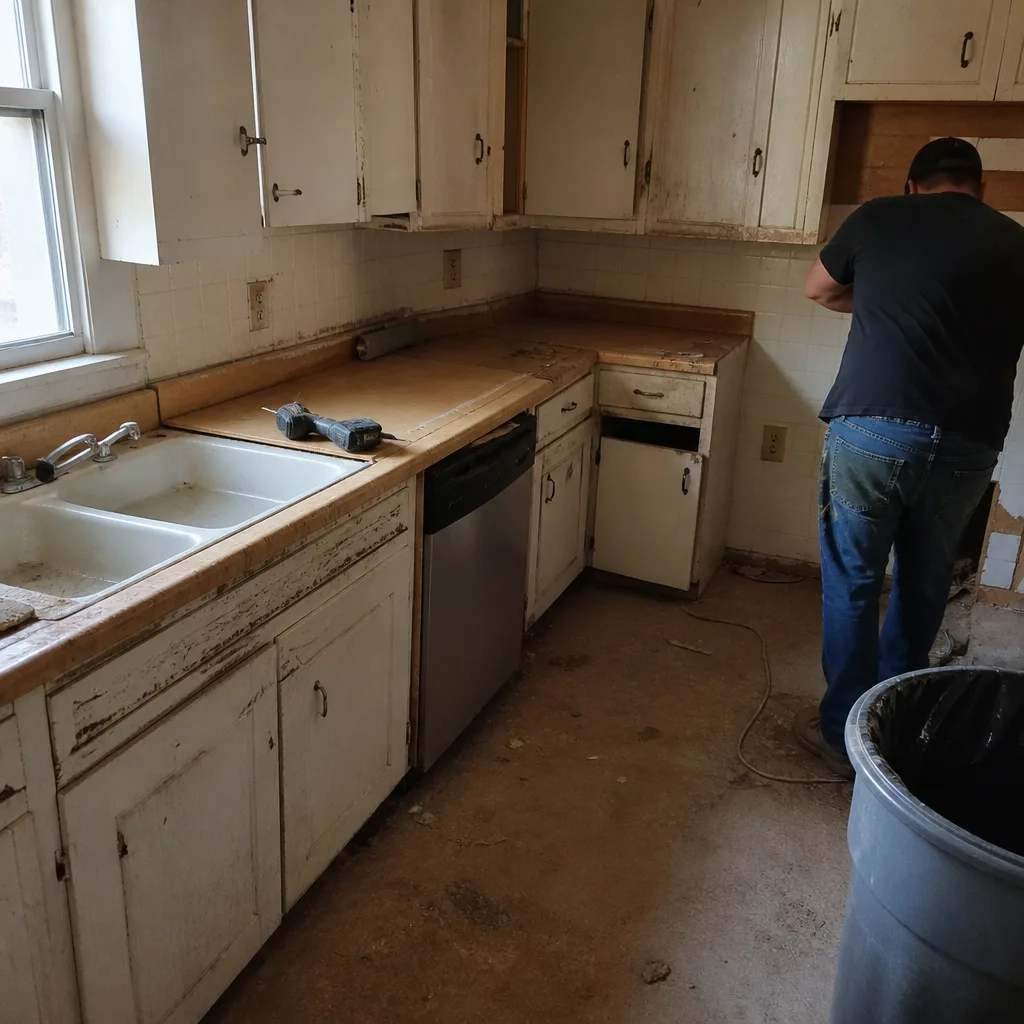 Before
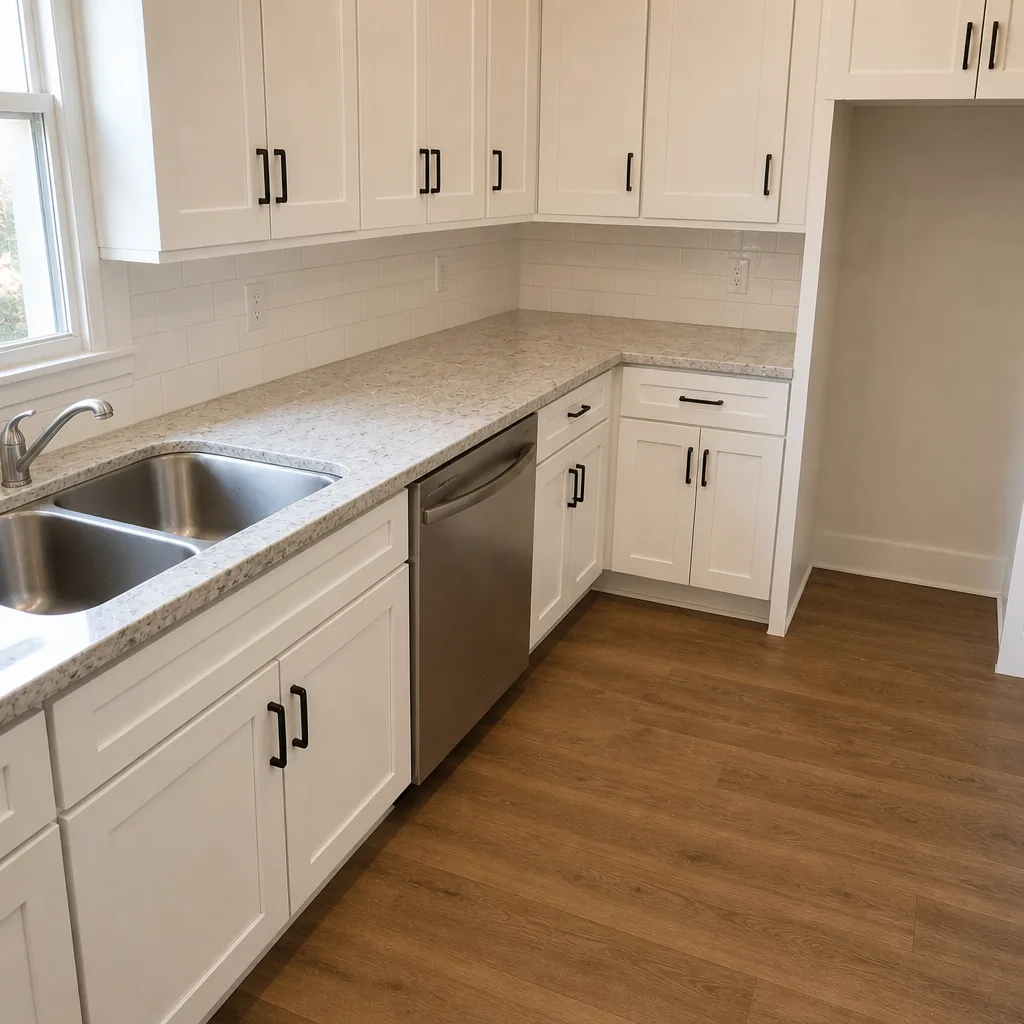 After
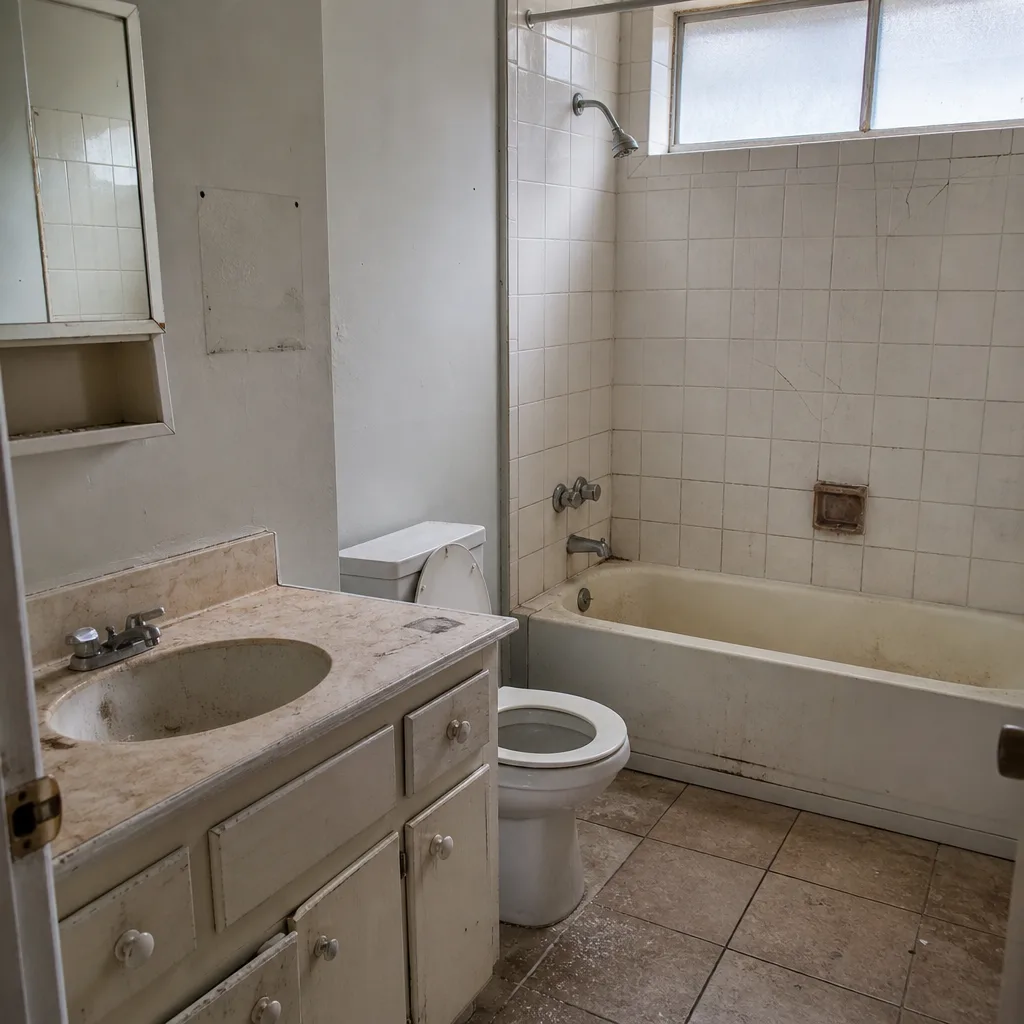 Before
 After
 Before
 After
When to Call a Professional
Call a professional the moment a project involves new post footings, a fence line longer than a short side yard, or a permit and inspection. Those three conditions are the honest boundary between maintenance and installation in Mesquite clay. Call us when a corner lot or setback rule is in play, when the ground is fighting back, or when the old fence needs to come out and the new one has to interface with a gate or structure. Call us when a repair was tried and the posts are still moving, because that’s a footing problem and a board swap won’t fix it.
Groundwork Construction Co. of Mesquite offers free estimates in Mesquite. We pull the permits, pull the old fence, and build footings that account for the soil rather than fighting it. Every installation is covered by our 730-Day Done Right Promise, materials come from partners like James Hardie, and our technicians bring up to 12 years of experience to the job. Call (888) 426-8078 to schedule your free estimate, and a live person answers around the clock.
Frequently Asked Questions
You can install a fence yourself in Mesquite, but you likely still need a permit. The City of Mesquite requires permits for most new fence installations, and doing the work yourself doesn’t exempt you from the permit or the inspection. Confirm the rules for your specific address before you order materials, and pull the permit before you break ground.
Fences lean in North Texas clay because the soil swells when wet and shrinks as it dries, which pushes and pulls on post footings in small increments over time. A footing that isn’t set below the active clay zone loses grip and the post tilts. The visible lean shows up two seasons after installation, long after the cause.
DIY fence work is worth doing yourself when it’s maintenance: board replacement, staining, hardware swaps, single-panel repairs. Professional installation is the better call when the project involves new posts, a long run, or a permit and inspection. The material cost is roughly the same either way; the difference is the labor and the risk of rework.
Fence installation in Mesquite typically runs in the range of the line items above once you account for materials, permit, and labor. Material cost is the big variable and depends on the length of the run, the material you choose, and how difficult the ground is to dig. Call (888) 426-8078 for an exact quote – estimates are free and we give you a written line-item quote.
Safe DIY fence repairs include replacing damaged boards or pickets, staining and sealing, swapping hinges and latches, and replacing a single panel when the posts on either side are solid and plumb. The moment a repair requires a new post or a moved fence line, it’s crossed into installation.
Repairing a fence generally doesn’t require a permit, but new installations usually do. The distinction matters: reusing existing posts and replacing boards is repair, while setting new posts or moving the fence line is installation. When in doubt, check with the City of Mesquite before you start. Call (888) 426-8078 if you’d rather have us handle the permit and inspection as part of the job.
Not necessarily. Once you add up equipment rental, concrete, permit fees, disposal, and the risk of rework from a footing that fails, the DIY savings often narrow considerably. A written professional quote lets you compare on equal footing. Groundwork offers no-hassle upfront pricing – the number you see is the number you pay – plus 0% financing for 18 months and $1,000 off projects over $10,000.
The Bottom Line
The fence that lasts in Mesquite isn’t the one with the straightest boards on day one. It’s the one with footings set deep enough to sit below the active clay, concrete crowned to shed water, and posts aligned to a fixed reference instead of an eyeball. Those are the things DIY fence plans get wrong, and they’re the things that only show up two seasons later. Do your own staining, board swaps, and hardware. Hire out anything that sets a new post, especially if a permit and inspection are involved. When you’re ready for the second kind, that’s what we’re here for. For the full scope of what we can handle on your property, see Groundwork Construction Co. of Mesquite home, and if your project grows beyond the fence line, we also handle driveway and pavers in Mesquite and home additions and ADU in Mesquite through the same single contractor.
Get a free estimate from Groundwork Construction Co. of Mesquite. Call (888) 426-8078 to schedule your free estimate and design consult. A live person answers 24/7, every project is covered by the 730-Day Done Right Promise, and you’ll get an upfront line-item number you can compare against the DIY math you ran in your head. Call today and let’s find out which side of the line your fence project falls on.
Written by the team at Groundwork Construction Co. of Mesquite.