Last updated November 17, 2026

Free written scope consultation - allowances, timeline, and change-order rules on paper before a single trade is scheduled
Driveway & Pavers Maintenance Checklist for Mesquite Homeowners
A single August week in Mesquite can push the surface temperature of exposed concrete and pavers past 160°F. That’s hot enough to melt the binders in cheap joint sand, cook the life out of a one-season sealant, and open hairline cracks in a driveway that looked factory-fresh six months earlier. Most of the driveway failures we get called to in Mesquite aren’t installation errors. They’re maintenance neglect during the two short windows each year that do the real damage here: the brutal summer heat spikes and the winter freeze-thaw cycles that follow. This guide gives you a month-by-month maintenance plan built for North Texas, not a generic national checklist, so your driveway survives both extremes.
Quick Answer
The short version: in Mesquite, your driveway needs a spring deep-clean and joint sand top-off, a mid-summer sealant check and shade management plan, an autumn crack-and-edge inspection before the first freeze, and one professional evaluation every two to three years to catch base issues while they’re still cheap. Pavers on expansive clay need sand replenishment at least twice a year. Concrete needs crack sealing before water freezes in the joints. Keep a dated photo log from day one to protect any warranty claim.
Styles & brands we work with
- Kitchen remodeling
- Bathroom remodeling
- Home additions & ADU
- Roofing
- Windows & doors
- Driveway & pavers
- Fence
Table of Contents
- Why Mesquite Is Hard on Driveways
- The Month-by-Month Maintenance Calendar
- Joint Sand: The Twice-a-Year Habit That Saves Your Pavers
- Base Failure vs. Surface Damage: How to Tell the Difference
- The Right Sealant for Texas UV, and the Ones That Fail
- Concrete Care: Cracks, Joints, and Staining
- What to Photograph and Date to Protect Your Warranty
- What Repairs Cost in Mesquite
Why Mesquite Is Hard on Driveways
Mesquite sits on the Blackland Prairie clay that runs through much of the Dallas-Fort Worth metroplex, and that clay moves. It swells when it’s wet and shrinks when it dries, and North Texas swings between those two states repeatedly through the year. That movement is the engine behind most of the failures we see under pavers and beneath concrete slabs across Mesquite. When the clay under a driveway edge drops, the pavers above it drop too, and a surface that was perfectly level loses its interlock.
Layer the climate on top of the soil and you get a driveway that takes more abuse than most homeowners realize. Concrete slabs, driveway aprons, and paver surfaces in Mesquite deal with this every year:
- Summer surface temperatures past 160°F on unshaded west- and south-facing drives. That’s hot enough to soften some sealers and accelerate wear on poly sand.
- UV that runs high on the index for months straight. Cheap sealants degrade within a single season here, not the two assumed by national product marketing.
- Winter freeze-thaw cycles that push water into every crack and joint, then split it open when it freezes. Sunrise temperatures in the low 20s aren’t unusual in January and February.
- Summer drought followed by heavy rain that runs clay expansion and contraction through a full cycle in a single month.
- Red clay tracking that stains light pavers and binds into open joints if the surface isn’t cleaned before winter.
We’ve pulled pavers in Mesquite neighborhoods like Creek Crossing where a two-inch sand loss at the edges was the only visible symptom of a driveway running on borrowed time. If you want the deeper backstory on how these systems are built in this climate, see our Driveway & Pavers in Mesquite page. The maintenance plan below assumes you’re starting from a driveway in reasonable shape.
The Month-by-Month Maintenance Calendar
This calendar is calibrated to the North Texas climate, not a national template. Most of the work is load-bearing in four months (June through September for heat, December through February for freeze). The rest is easy upkeep.
- January: Inspect for freeze damage. Walk the drive after a hard cold snap and look for new cracks, spalled concrete, or lifted pavers. Photograph anything new. Don’t seal in freezing weather; wait for a stretch above 50°F.
- February: Clear winter debris and clay washout from edges. Re-grade any spot where water is pooling against the slab or paver field.
- March: Deep-clean pavers and concrete. Top off joint sand before spring rains. Check edge restraints and re-tamp where pavers are loosening.
- April: Apply a UV-stable sealer if the surface hasn’t been sealed in 24 months. Don’t seal within three days of a forecast rain.
- May: Inspect the joint sand line after heavy rains. If your finger can push an inch into sand below the paver surface, you’re already past due.
- June: Move vehicles off the hottest exposure where possible. On an unshaded drive, mid-summer afternoon parking is the harshest load the surface will see all year.
- July: Re-check joint sand, especially at the apron and edge transitions where it disappears fastest. Water the drive down on 100°F+ days if you see surface whitening.
- August: Don’t pressure-wash to bare concrete, but do clean off the dust film that traps heat. Watch for sealant chalking or peeling on south-facing surfaces.
- September: Do the pre-winter inspection: cracks, edge movement, missing sand, and drainage. Anything you fix now survives winter.
- October: Replenish joint sand a second time on pavers. Seal new cracks in concrete before the first freeze.
- November: Clear leaves and debris that trap moisture. Re-check drainage swales at the drive edge.
- December: Keep de-icers off the surface. Standard rock salt will pit and scale concrete in Mesquite winters; sand is safer. Inspect after every hard freeze.
Two of those twelve months require a professional inspection if you’re not sure what you’re looking at. The rest you can do yourself. If you’re not comfortable diagnosing paver movement or slab cracking, our team can walk it with you. Reach us through the Groundwork Construction Co. of Mesquite home page.
Joint Sand: The Twice-a-Year Habit That Saves Your Pavers
On Mesquite’s expansive clay, pavers lose joint sand faster than homeowners expect. The reason is that the sand isn’t just cosmetic. It locks the pavers together into one surface. Once it erodes past about half an inch below the paver chamfer, individual units start rocking, and rocking is what opens up the joints even faster. The cycle accelerates once it starts. You’ll lose a season’s worth of sand in a summer if you don’t replenish before it gets that far.
For Mesquite, plan on two joint sand top-offs a year: one in early spring before the heavy rain season and one in early autumn after the summer bake. In our experience working pavers in this climate, poly sand holds up better than standard play sand in the DFW heat because the polymer binder resists wind and washout. Standard playground-style sand works, but you’ll lose it faster and possibly need a third top-off in a hot dry summer.
Signs your joint sand is past due:
- Paver joints look wider than they did last year
- You can push a finger down more than half an inch into a joint
- Water sits in the joints rather than draining off
- Individual pavers rock when you step on them
- Sand is collecting at the base of the driveway after storms instead of staying in the joints
Top-off order of operations, in brief:
- Clean the surface and blow out organic debris from the joints
- Let the pavers dry completely (minimum 24 hours in the sun)
- Sweep sand into the joints until they’re flush with the paver chamfer
- Lightly mist to settle, then sweep a second pass
- Stay off the surface for 24 hours if you used poly sand
Don’t skip the joint sand stage because the driveway “still looks fine.” Eroded joints are the first domino in paver failure. By the time it’s visually obvious, the base is already taking on water and you’ve lost the interlock that keeps the whole system stable.
Base Failure vs. Surface Damage: How to Tell the Difference
This is the single most useful diagnostic skill a Mesquite homeowner can learn. Surface damage is what you can see. Base failure is what’s happening underneath. The difference in repair cost is usually a factor of four to six. A cosmetic fix runs a few hundred dollars. Base repair means pulling pavers, re-compacting the aggregate, and reinstalling. That’s why the moment you see the wrong symptom, you want a professional set of eyes on it.
Surface damage (cosmetic-category):
- Hairline cracks in concrete less than the width of a credit card
- Dark staining from oil, rust, or red clay
- Chalking or dulling of the sealer
- Efflorescence (white powdery mineral deposits)
- Individual chipped paver corners
Base failure (structural-category):
- Pavers rocking when you walk on them (interlock is gone)
- Visible dips or sinkholes deeper than a half-inch over any two-foot span
- Edge pavers separating from the field or pushing outward
- Ponding water in the same low spot after every rain
- Concrete slab lifting more than a quarter-inch against an adjacent slab or the apron
We regularly see pavers in Creek Crossing and neighborhoods along the I-635 corridor where edge drop starts six to twelve inches in from the drive edge and grows. Once you can see the drop, the base underneath has already lost compaction. On concrete, the equivalent warning sign is a growing crack that’s more than 1/8 inch wide or a joint that’s opening. In our experience, a surface crack sealed within the first year is a $60 to $150 fix. An unsealed crack that pulls water into the base for two winters is a slab replacement, and that’s a different budget.
The Right Sealant for Texas UV, and the Ones That Fail
Not every paver and concrete sealer sold in the Dallas area is built for Mesquite. Many formulas are designed for mid-Atlantic or Pacific Northwest climates where UV intensity and surface temperatures are lower. Those products degrade within a single season here, but they typically carry the same “long-lasting” copy on the label. We’ve pulled sealant with peeling flakes on Mesquite driveways that had been down eight months.
What to look for at the home center or through a contractor:
- UV-stabilized acrylic sealers for paver surfaces. These hold their clarity through a Texas summer and resist chalking.
- Solvent-based penetrating sealers for concrete. They soak in rather than film-form, so they don’t peel when the surface hits 160°F. Siloxane-based products are especially good for freeze-thaw resistance.
- Explicit UV inhibitor percentages on the spec sheet, not just “UV-resistant” marketing copy.
What tends to fail in Mesquite’s climate:
- Low-cost film-forming water-based acrylics with no UV stabilizers. They whiten and peel within 12 months on a south- or west-facing drive.
- National big-box house brands that aren’t tested at sustained 160°F surface temperatures. They may be fine somewhere cooler, but not here.
- Heavy film-forming sealers on new pavers. In the first year, the release of efflorescence can be trapped by the film, and you end up with cloudy pavers and a failing sealer layer.
Our general rule: solid film-form sealers on pavers, penetrating sealers on concrete. Reapply every 24 to 36 months. Skip the reapplication if a water droplet doesn’t bead after two years, but don’t wait longer than that.
Concrete Care: Cracks, Joints, and Staining
Concrete presents a different maintenance profile than pavers because the material is a single slab with controlled joints rather than thousands of interlocked units. Most of the failures in Mesquite concrete driveways come from one of three sources: unsealed cracks, control joints that open in the summer heat, and stains that attracted nobody’s attention until the surface was already compromised.
Walk through this once per quarter:
- Fill any crack wider than the width of a dime with a flexible polyurethane concrete caulk. Don’t use rigid patching compound, which will just open again at the next expansion cycle.
- Check that control joints are still intact. If the sealant in the joint has dried out, clean the joint with a wire brush and refill.
- Test for slab edge movement against the garage apron and street. A quarter-inch gap is normal; more than that warrants a call for a professional look.
- Treat oil and rust stains with a poultice or a degreaser within a week. Long-standing stains in Mesquite’s summer sun can bake into the surface irreversibly.
- Don’t use de-icers that contain sodium chloride or ammonium nitrate. Both pit and scale concrete. Play sand or calcium chloride is safer.
Try a spray of plain water across the slab after a rain. If water pools deeper than a half-inch in any spot for more than two hours, you have a drainage issue you want to address, not just a low spot. That’s the kind of shape issue our Home Additions & ADU in Mesquite team evaluates as part of big-picture site drainage where a slab or paver install is being planned.
What to Photograph and Date to Protect Your Warranty
If you’ve had a paver or concrete driveway installed in Mesquite, the most overlooked maintenance task has nothing to do with the surface. It’s your paper trail. Warranty claims fail because homeowners can’t show when a specific crack appeared, whether it grew over time, or whether it was there when the install was completed. That documentation habit belongs on your maintenance checklist from day one.
Here’s what we suggest Mesquite homeowners keep:
- Installation-day photos across each section of the driveway, in daylight, with a measuring tape visible in at least one frame per section. This is your baseline.
- A yearly photo walk on the same calendar date (pick your birthday or any easy-to-remember anchor). Same angles, same framing, same daylight conditions where possible.
- Weather events logged: any day over 105°F, any hard freeze below 25°F, any hail or heavy rain event that visibly moved material. A simple notes file works.
- Receipts for every sealer and joint sand product you use, with the date and the section you applied it to.
- Photos of any crack or paver movement with a tape measure or coin for scale.
- Screenshots of any contractor warranty language you were given at install time, plus a copy of the contract, in one cloud folder.
Why it matters: warranty decisions usually turn on the question of whether a defect is installation-related or maintenance-related. A dated photo log protects you from having a genuine manufacturing or installation issue ruled against because the record is fuzzy. Under our 730-Day Done Right Promise, repairs that stem from our workmanship get fixed, and a clear record of when things happened makes that resolution faster. For more color on how material quality ties to long-term durability, our Fence Installation in Mesquite page covers why we work with manufacturers like James Hardie and Belgard on outdoor projects in this climate.
What Repairs Cost in Mesquite
If you’re pricing out repairs, here’s the rough Mesquite market range you should expect for common scenarios. Every driveway is different, so treat these as ballparks, not quotes.
- Concrete crack sealing (DIY-grade caulk): $30 – $90 for materials covering 20 – 40 linear feet
- Concrete crack sealing (professional): $150 – $400 depending on footage
- Joint sand replenishment (owned materials, DIY): $40 – $120 for a standard two-car driveway
- Joint sand replenishment (professional): $250 – $500
- Sealing pavers (full driveway): $600 – $1,400 depending on square footage and product
- Sealing concrete (penetrating): $400 – $900
- Localized paver re-lay (surface only): $350 – $900 for a repair under 100 square feet
- Base repair under pavers (structural): $1,800 – $4,500 depending on square footage and how deep the base goes
- Concrete slab replacement (partial, e.g. one apron section): $2,500 – $6,000
The lesson in these numbers: every maintenance dollar you spend prevents eight to fifteen in emergency repair. That’s why the calendar above matters. If you’d rather hand the ongoing care to a professional, our Driveway & Pavers team evaluates and repairs Mesquite flatwork regularly. And if you’re planning to add a structure that changes how your driveway handles runoff, look at Home Additions & ADU in Mesquite for how site grading is handled on those builds.
Common Mistakes to Avoid
- Sealing on day one. New pavers release efflorescence for weeks. Sealing too early traps the haze under the film, and you end up with a cloudy surface that needs to be stripped. Wait at least 60 days on new installs.
- Using cheap joint sand on a Mesquite summer driveway. Play sand blows out in a single storm. Poly sand costs more and lasts longer, but it’s the better value in this climate.
- Power-washing at max PSI to strip the surface. Anything over 2,500 PSI can gouge the paver face and open joints. The right approach is lower pressure plus the right cleaner, not brute force.
- Ignoring paver rock. A rocking paver isn’t cosmetic. It’s a signal the base has lost compaction. Waiting one more season costs hundreds more.
- Using rock salt in winter. Rock salt scales concrete in Mesquite’s freeze-thaw cycles. Play sand, cat litter, or calcium chloride are safer options.
- Skipping the pre-winter inspection. If you skip September, you’re going into the freeze season with cracks and open joints, and every freeze widens them.
- Never documenting the install. A well-maintained driveway still needs photos and receipts in case of a warranty question. Fuzzy timelines cost homeowners real money.
See the difference
 Before
 After
 Before
 After
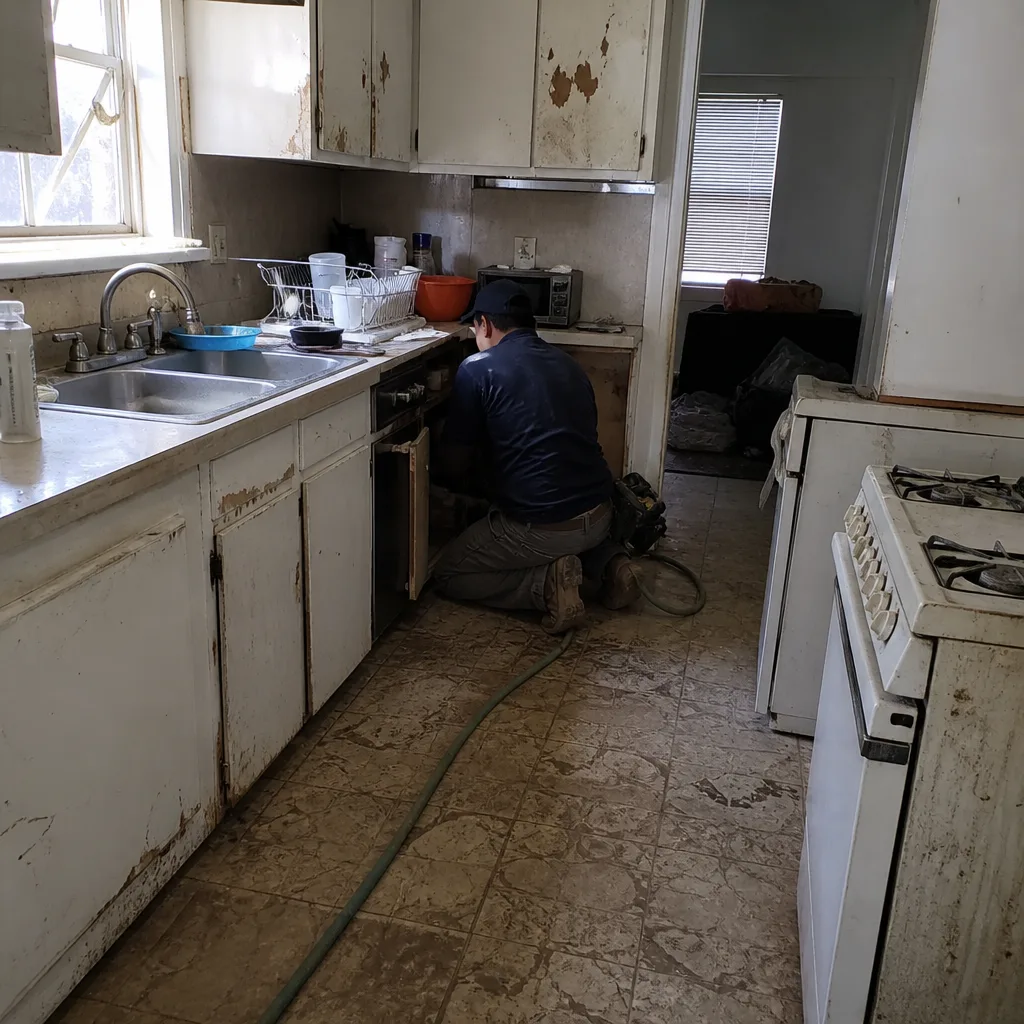 Before
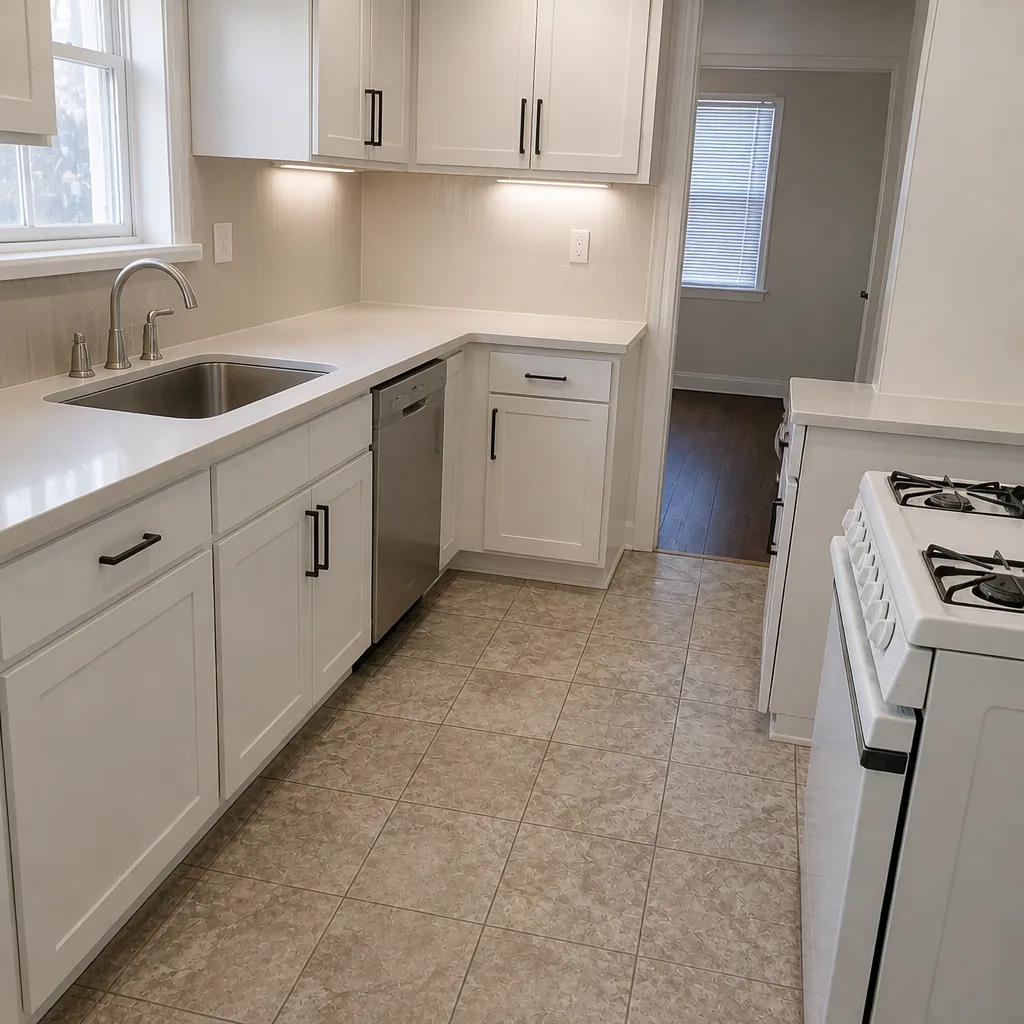 After
When to Call a Professional
Most of this guide you can handle on your own with a hose, a broom, a bag of sand, and a tube of caulk. But four scenarios are professional calls in our book. Call for pavers that rock underfoot across more than a few square feet. Call when water is ponding in the same low spot after every rain. Call for a concrete crack wider than 1/4 inch or growing visibly between inspections. And call for any paver edge that has dropped away from the field along the apron or garage transition. Those are base-level problems, and the sooner they’re diagnosed, the cheaper they are. Groundwork Construction Co. of Mesquite offers free estimates in Mesquite. Call (888) 426-8078 to schedule one.
Frequently Asked Questions
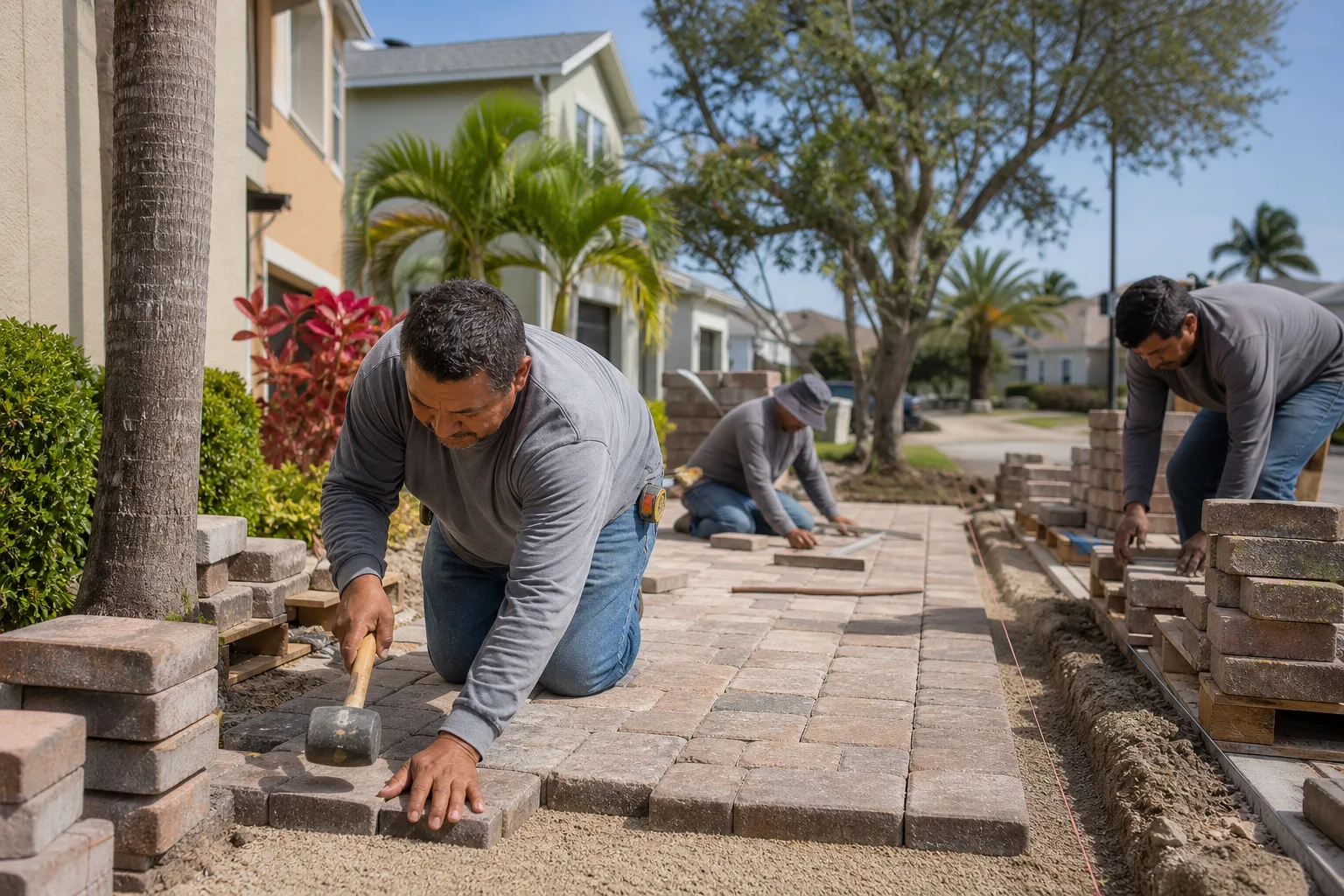
Every 24 to 36 months, using a UV-stabilized sealer designed for high-sun climates. Texas UV degrades a nationally marketed sealant within a single season, so if the surface is chalking or peeling within a year, the product wasn’t built for this climate. Call (888) 426-8078 and we can walk your surface and recommend the right product.
Localized surface repairs run $350 to $900 for areas under 100 square feet. Base repairs under pavers run $1,800 to $4,500 depending on square footage and how deep the failure goes. If you catch a rocking paver early, you’re often in the lower tier. Call (888) 426-8078 for an exact quote. Estimates are free.
Yes, but not above 2,500 PSI and not with the surface cleaner set to max. High pressure strips the surface hardener, opens joints, and blasts sand out faster than you can reapply it. Use low pressure with a cleaner meant for paver surfaces. If your drive hasn’t been cleaned in a few years, it may be worth a professional pass.
Uneven spots almost always mean the base underneath has lost compaction or has washed out. In Mesquite, that’s usually the clay layer responding to a wet winter or a dry season, and it drops the base in a localized area. Onset that happens in one month is usually this, not a cosmetic defect. Call (888) 426-8078 and we’ll assess the base before you spend on a surface fix that won’t hold.
Minor repairs like crack sealing, joint sand replenishment, and sealing generally don’t require a permit. Full driveway replacement or changes to the driveway apron at the street usually do. Mesquite’s permit office can confirm for your specific scope, and when we do the work, we handle pulling permits and scheduling inspections so you’re not stuck calling around.
Surface issues are stain, mark, or crack categories. Base issues are movement categories. If a paver rocks when you walk on it, a slab edge has lifted more than a quarter inch, or water pools in the same spot over multiple rains, you’re looking at a base problem. If you’re unsure which category yours falls into, call (888) 426-8078 for a free assessment.
The Bottom Line
The Mesquite climate runs two destructive windows a year, and if you plan around them, your driveway will outlast the neighborhood average by a decade or more. Spring clean and top off joint sand. Summer watch the UV and the heat. September is when you fix everything before the first freeze. Winter means sand, not salt. Seal with products built for Texas UV, not a national label. Document every install with photos and dates. And when something starts to move, don’t wait: base issues are one-third the cost when caught in the first season. If you want a professional pair-up, we’re here.
Ready for a hands-on assessment? Call Groundwork Construction Co. of Mesquite at (888) 426-8078 for a free estimate. We’ll walk your driveway, tell you what’s maintenance and what’s repair, and give you upfront pricing with no surprises. Every project we take on is backed by our 730-Day Done Right Promise, so it’s built to last and backed in writing.
Written by the team at Groundwork Construction Co. of Mesquite.