Last updated November 17, 2026




Free written scope consultation - allowances, timeline, and change-order rules on paper before a single trade is scheduled
Fence Installation Troubleshooting: Common Problems and How to Fix Them
If your fence leaned after one wet season and your neighbor’s didn’t, the difference isn’t luck – it’s what’s underground, and that’s fixable if you understand what actually happened. In Mesquite, we watch the same cycle repeat: black clay soil soaks up spring rain, swells, shoves posts sideways, then shrinks hard in August and leaves them hanging in loose dirt. Most homeowners blame the wind or the wood. The real failure starts a couple of feet below the grass line. This guide walks through how to diagnose a leaning post, a sagging gate, warped boards, and storm damage the way a builder does – from the ground up – and when a targeted repair beats a full rebuild.
Quick Answer
A leaning fence is usually a footing or soil-movement problem, not a wood problem. In Mesquite’s expansive clay, the fix means resetting or replacing the footing with proper depth, concrete, and drainage rather than re-plumbed posts on top of the same shifting ground. Rot, hinge failure, and board warping each have separate fixes, and matching the repair to the actual cause is what makes it last.
Styles & brands we work with
- Kitchen remodeling
- Bathroom remodeling
- Home additions & ADU
- Roofing
- Windows & doors
- Driveway & pavers
- Fence
Table of Contents
- How Do You Diagnose a Leaning Post: Footing, Rot, or Soil Heave?
- Can You Reset a Leaning Post Without Full Replacement?
- When Is Resetting a Post a Waste of Money?
- Why Is My Gate Sagging? Hinge, Post, or Frame Diagnosis
- Board Warping and Rot: Drainage Problem or Bad Wood?
- How to Document Fence Storm Damage for Insurance
- How to Keep a New Mesquite Fence From Leaning
- Repair vs. Replace: Choosing the Fix That Lasts
How Do You Diagnose a Leaning Post: Footing, Rot, or Soil Heave?
Three different failures can push a post out of plumb, and each one calls for a different repair. Misread the cause and you’ll pay to fix the wrong thing. Here’s how we sort it out on site, and how you can too before you call anyone.
Start with the failure signature. A footing failure shows a post that leans consistently in one direction, often with a visible gap or void at the base where water has washed soil away from the concrete. Rot looks different: the post rocks or wobbles at ground level but stays roughly vertical above, and a screwdriver pushed into the wood near the concrete line sinks in instead of stopping. Soil heave is the Mesquite special – the post tilts opposite a tree or in a pattern that follows the swelling and shrinking of that black clay, sometimes lifting the whole post an inch or two while the fence line waves in and out.
Work through these checks in order:
- Test at the base, not the top. Grip the post near the ground and try to move it. A post that moves at the soil line but is solid higher up points to a footing or rotted base issue, not a wind problem.
- Probe the wood. Push a thin screwdriver into the post just above where it meets dirt or concrete. If it slides in easily, you have rot and the post is done.
- Look at the concrete collar. Exposed, cracked, or lifted concrete around the base tells you the footing has been pushed around by soil movement.
- Check the tilt direction across several posts. Consistent lean in one direction suggests footing or wind; a wavy fence line following the grade pattern suggests clay heave.
- Dig a test hole beside one post. A few minutes with a shovel shows how deep the concrete actually goes. Many failing fences were set 12 to 18 inches shallow instead of the 24 to 36 inches needed to reach stable soil.
Once you’ve named the cause, the path forward gets simple. Rot means replacement of the post. Footing failure means resetting or rebuilding the base. Soil heave means the fix has to address drainage and soil movement or the next post lands in the same trap. If the whole fence was installed to the same shallow spec, this is where homeowners around Mesquite start pricing a full fence installation in Mesquite instead of chasing repairs post by post.
Can You Reset a Leaning Post Without Full Replacement?
Yes, and it works when the post itself is still sound and only one or two posts are affected. Failure comes from resetting a rotted post or ignoring the soil and drainage conditions that caused the lean in the first place. If those two boxes are clean, a reset is a real repair that can last for years.
The right way, from a builder’s view:
- Free the post. Excavate around the base to expose the old concrete collar and the bottom of the post. This is the step most shortcuts skip.
- Check the wood before committing. A screwdriver test of the buried section decides whether the post survives. Soft or punky wood means replace it – resetting rotted wood is throwing labor at nothing.
- Straighten and brace. Pull the post plumb with a come-along or bar, brace it, and verify plumb in two directions, not just one.
- Re-pour a proper footing. Wider and deeper than the original, with the concrete crown sloped away from the post so water sheds instead of pooling.
- Fix the drainage. Regrade the soil so water runs off the fence line, and consider a shallow gravel drain on the uphill side if the yard holds water.
- Reattach rails and boards. Re-check gravity before you tighten the last screw – this is where a crooked fence gets locked in for good.
A proper reset on a sound post usually costs a fraction of replacement because you’re paying for labor and concrete, not new material. If the post is rotted, skipping the reset and replacing the post is cheaper in the end. For homeowners near the Town East area, where yards tend to hold water after storms, we treat drainage as part of every reset – otherwise the repaired post leans again within a couple of seasons.
When Is Resetting a Post a Waste of Money?
Resetting is a waste when the fence’s problems are structural rather than local. If two-thirds of the posts are out of plumb, or the rails and boards are already failing, resetting one post patches a fence that’s giving up around it. You’ll be back out there next spring chasing the next lean.
The reset-only approach falls apart in these situations:
- Shallow footings across the whole line. If a test hole shows the original install used 12-inch concrete discs, every post is vulnerable and a single reset just postpones the domino.
- Rotted posts at multiple points. Wood rot spread by poor drainage rarely stays in one spot. Once you find two or three soft posts, assume more are close behind.
- Undersized posts for the height. A tall privacy fence built with undersized posts leans regardless of footing fixes. The post has to carry wind load, and a skinny post in clay doesn’t.
- Missing or badly set rails. If the rails pull free of the posts as the fence moves, the fence is working as individual pieces instead of a structure.
The honest test: stand at the end of the fence and look down the line. If it waves like a snake with more than a couple of posts off, the leaking money goes into the reset approach. And it’s not just aesthetics – a fence that moves with every storm loses its purpose as a boundary, and a fence that loses tension is also a security issue when boards and gates stop closing snug. At that point, a fresh install with proper footings and drainage is the cheaper path over five years, not the more expensive one. Free estimates from Groundwork Construction Co. of Mesquite include a footing and drainage check, so you know which side of that line your fence sits on.
Why Is My Gate Sagging? Hinge, Post, or Frame Diagnosis
Most gate sags come from three sources, and identifying the right one determines both the fix and the cost. Hinge failure means the hardware; post movement means the ground; frame racking means the gate has twisted out of square. Look at the gap pattern along the gate’s edges – it tells you which one you’re facing.
Hinge failure
Look at the hinge side. If the gate drops lower at the hinge edge and the screws are pulling loose or the hinges are bent, the hardware is the problem. Sag at the hinge side with a clean gap at the latch side often means the top hinge has loosened from the gate frame. A hinge replacement or a longer, thicker hinge is the fix, and it’s the cheapest of the three. Heavy wood gates in Mesquite often sag simply because the original build used lightweight hinges for a heavy swing.
Post movement
If the gate itself looks square but the latch side catches at the bottom or the gap changes with the season, the gate post has moved. That’s a footing problem – the clay has shifted the post holding the gate, and adjusting the gate is a temporary patch. The permanent fix is a reset post, often with a deeper footing, because the gate is the highest-stress point on any fence. Around the Broadmoor and Rodeo Heights areas we see this constantly after wet springs.
Frame racking
If the gate looks like a parallelogram rather than a rectangle – top corner dropping diagonally, corner-to-corner measurements off – the frame has racked. That’s a build-quality fix: add a diagonal brace or rebuild the frame with proper joinery. A gate frame without a brace will rack again no matter how many hinges you replace. Fixing a racked gate usually means new bracing and fresh hardware together.
Cost follows the cause: a hinge replacement is the least expensive, a post reset lands in the middle, and a gate rebuild or frame rebuild costs the most. If the gate is dragging on the ground and warped, the whole gate may need replacing, which is worth pricing against new fence sections at the same time.
Board Warping and Rot: Drainage Problem or Bad Wood?
Boards that warp and rot in a repeating pattern point to a drainage problem at the base; boards that fail randomly usually point to wood quality. In Mesquite, the pattern matters more than any single board, because our wet-dry swings punish wood at the soil line. Reading it correctly saves you from replacing good wood for a drainage problem that will just eat the new boards.
Signs the cause is drainage
- Rot starts at the bottom 6 to 12 inches and climbs, while the upper boards stay sound.
- Damp soil, mulch, or a downspout dumps runoff right at the fence line.
- Warping and cupping appear across all affected sections on one side of the yard.
- Mold, mildew, or green growth on the face closest to the soil.
Signs the cause is wood quality
- Random boards warp or split high up where water never stands.
- You find knotty, thin, or inconsistent boards mixed in with sound ones.
- The wood was never sealed or stained and shows cupping on sunny exposures.
- Boards twist at the mid-point while the bottom stays solid.
The fix splits the same way. For drainage, regrade the soil, add gravel or a French drain along the base, keep mulch pulled back, and extend downspouts away from the fence line. Then replace only the rotted boards. For wood quality, replace warped runs and seal or stain the wood so it handles the Mesquite sun and dry spells. In both cases, cedar, pressure-treated pine, and composite all behave differently – choosing the right material for the exposure may fix a problem that sealing alone can’t. Sealing won’t save a poorly built fence, and staining won’t stop a drainage problem from repeating. We frequently point homeowners toward material options that handle our climate before they replace boards at the same time.
How to Document Fence Storm Damage for Insurance
An adjuster needs to see what damaged the fence, what failed, and what replacement costs in your market, and most claims get underpaid or denied because homeowners send a single phone photo and a guess. Good documentation is proof, not a complaint. The question adjusters are answering is whether the damage was storm-caused, and your evidence should make that easy.
Here’s the sequence that gets claims approved:
- Photograph before you touch anything. Wide shots of the whole fence line, then close-ups of each damaged post, rail, and gate. Get a picture of the fallen tree or debris in place if that’s the cause.
- Capture the cause in context. The leaning post, the split rail, the gap on the gate, the downed section – each shot should show the damage and its location in the yard.
- Save the date evidence. Storm date, any weather reports, and photos of any neighboring property that also got hit. Adjusters use timelines to confirm a single storm caused the damage.
- Separate storm damage from pre-existing wear. Rot that predates the storm is usually excluded. Be honest – a clean description of what was already worn builds credibility for the storm-caused repairs.
- Get a written repair estimate. A line-item quote showing labor, materials, and footing work is what adjusters actually use. A note saying “fence is broken” gets nothing; a scope with replacement sections, reset footings, and a gate rebuild gets paid.
- Itemize and keep receipts. If you paid for temporary bracing or boarding-up to protect the yard, document it, because those costs can sometimes be recovered.
- Submit as one clean package. Photos, estimate, timeline, and a short written summary of what happened. Adjusters move faster with organized claims.
If the storm took out more than a section or two, get the estimate before you commit to anything. The same visit can price a repair versus a full replacement, and that comparison is useful in a claim conversation.
How to Keep a New Mesquite Fence From Leaning
The prevention fix is footing depth, drainage, and material chosen for our climate, and almost every preventable failure we see in Mesquite skips at least one of those three. A fence built right for the ground under it shouldn’t lean after a wet season, and it rarely does.
Footing and depth
- Footings deep enough to reach stable soil. In this clay, 24 to 36 inches of concrete, wider than the post, keeps the base stable through the wet-dry cycle.
- Posts sized for the wind load. Taller privacy fences need heavier posts than a short picket line. Skimping on post size is what makes tall fences the first to lean.
- Concrete crowned away from the post. Water should run off the collar, not into the base. A flat or dished collar traps water and starts rot.
Drainage planning
- Grade the soil so water moves away from the fence, not under it.
- Extend downspouts and redirect runoff.
- Pull mulch back from the wood and keep soil from mounding against boards.
- Add gravel or a shallow drain on the uphill side where yards hold water.
Material and finish
Pressure-treated pine handles wet soil better than many untreated woods, cedar handles sun and moisture with a natural oil edge, and composite eliminates rot entirely at a higher upfront cost. Seal or stain wood on a schedule that matches our dry, sunny summers and wet springs. The brand partners matter here too. Composite and wood grades vary, and the material choice should fit both the exposure and the look the homeowner wants.
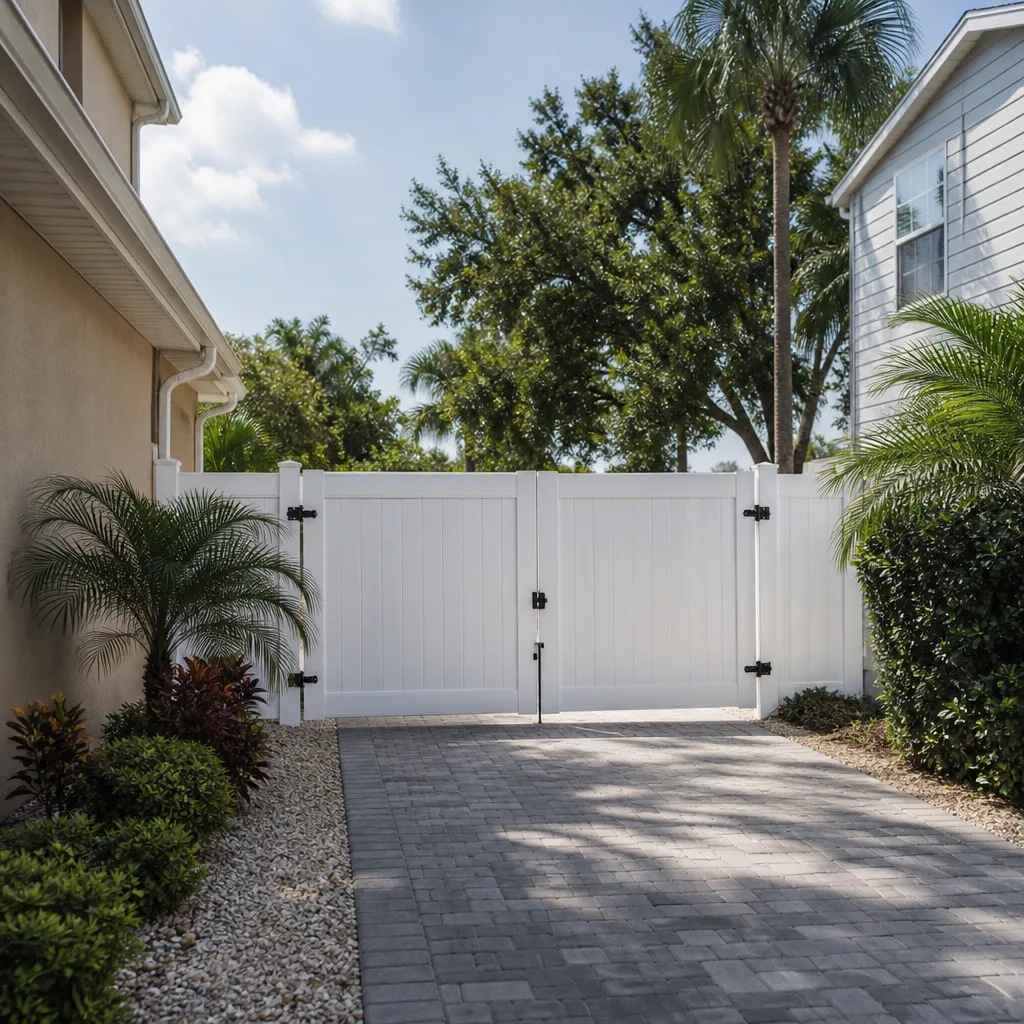
If your driveway or patio drains toward the fence, fixing that surface flow is often the cheapest protection you’ll ever buy. We size and slope flatwork so the runoff ends up where it belongs, and that keeps water fighting the fence base out of the picture. If you’re planning a driveway project alongside a fence, it’s worth coordinating the two together.
Repair vs. Replace: Choosing the Fix That Lasts
Repair makes sense when one or two posts are affected, the wood is sound, and the cause is a specific fixable issue. Replace wins when the fence was built with shallow footings across the whole line, several posts are soft, or the rails and boards are failing together. Treat the repair as an investment with a lifespan, not a patch.
Work through this decision list:
- Count the affected posts. One or two out of a long run: repair. Most of the fence: replace.
- Check for sound wood. If the probe test finds rot in multiple posts, the fence is past repairable.
- Look at the age and spec. A long run built with shallow footings will keep failing one post at a time, which costs more over five years than a rebuild.
- Consider the gate. A gate already rebuilt or braced twice is telling you the fence has stopped carrying load.
- Price both fixes on one visit. A written line-item estimate for repair and for replacement makes the math obvious. Compare the true lifespan cost, not the sticker price.
Our rule of thumb: repair when the failure is isolated and the ground under the fence is fixable. Replace when the ground under it never was. That’s why we quote upfront – the number you see is the number you pay, and both options come with the 730-Day Done Right Promise. If it’s not done right, we make it right. A fence is a long-horizon purchase, and the guarantee should match. For homes where the fence ties into a new addition or ADU, coordinating the fence line with the structure keeps the layout intact – home additions & ADU in Mesquite is worth pricing in that same visit.
Common Mistakes to Avoid
- Resetting a post without fixing the drainage. The post leans again within a season because the water still runs at the base. Fix the water first, then fix the post.
- Re-plumb with a chain and a come-along and call it repaired. A straightened post without a proper footing and crown is a temporary tweak, not a repair, and it loosens the next time the clay moves.
- Replacing boards when the posts are the real problem. New wood on a failed footing just gives rot somewhere new to start. Diagnose the base before the face.
- Assuming all sag is a hinge problem. A gate that drags after rain is usually a post issue, and changing hinges every spring wastes money on the wrong fix.
- Using undersized posts for height. A tall privacy fence needs heavier posts for the wind load, and skimping on post size in Mesquite’s wind gusts is what makes tall fences lean first.
- Failing to document storm damage before cleanup. Photos taken after the debris is hauled away are weak evidence, and the claim gets reduced or denied.
- Chasing repairs post by post forever. Once three or four posts have gone, the fence has told you the footing spec was wrong across the line. Price the rebuild rather than the next patch.
See the difference
 Before
 After
 Before
 After
 Before
 After
When to Call a Professional
Call when a gate won’t latch and the post has moved, when the fence leans after a storm and debris is still in place, or when more than two posts are out of plumb. Also call before you reset a post properly – pulling a post, setting a proper footing, and re-grading drainage is work that goes wrong quickly without the right equipment and a feel for soil conditions. Our technicians have up to 12 years of experience with exactly these failures, and they arrive background-checked and in uniform. A written line-item estimate is free, and pricing is upfront with no surprises. If the fence needs more than a patch, we’ll tell you straight. Groundwork Construction Co. of Mesquite offers free estimates in Mesquite – call (888) 426-8078. Live person answers, 24/7.
Frequently Asked Questions
Most single-post repairs in Mesquite run a modest few hundred dollars, while full-line repairs or replacements cost substantially more depending on length and material. The price depends on whether the post is rotted, how deep the footing sits, and whether drainage work is included. Call (888) 426-8078 for an upfront written estimate – the number you see is the number you pay.
Yes, if the post itself is still sound, and the repair can last if the footing is rebuilt and drainage is corrected. Resetting a post with deep, stable concrete and proper grading handles both the shift and the cause. If the wood is soft near the ground, the post needs replacing instead.
Because the clay under your fence and the clay under your neighbor’s fence behaved differently – likely a difference in footing depth, drainage direction, or the soil’s moisture history. Mesquite clay shrinks, cracks, and swells by season, and a footing that sits shallow in clay is the first thing to move. The good news: the fix is in the ground, and it’s fixable.
The gap pattern tells you. Sag that drops at the hinge side with loose screws is a hinge fix. A gate that stops latching as the season changes usually means the gate post has moved and the footing needs attention. A twisted, parallelogram-shaped gate is frame racking and needs new bracing.
Take wide and close photos before cleanup, save weather evidence and photos of neighbor damage, and get a written line-item repair estimate that shows labor, materials, and footing work. Send it all as one package with a short written summary. A line-item estimate from a licensed contractor is what adjusters use to set the claim.
We check footing depth and condition, post soundness, gate hardware and frame, board rot patterns, and grading and drainage along the fence line. The estimate covers both repair and replacement options so you can compare. Call (888) 426-8078 to schedule – we’ll walk the line with you and put it in writing.
The Bottom Line
A leaning fence in Mesquite is usually a soil and footing problem wearing a wood costume. Diagnose the cause first – footing failure, rot, or clay heave – because the fix and the cost depend on naming it right. Reset sound posts with a proper footing and drainage, replace rotted wood, sort gate sag by the gap pattern, and read board failure by its repeating pattern. Back a proper install with deeper footings, better drainage, and sealant, and document any storm damage before cleanup. Get both repair and replacement priced in writing, and let the number you see be the number you pay. That’s the repair mindset that makes a fence last. Groundwork Construction Co. of Mesquite offers free estimates – call (888) 426-8078 to schedule yours today.
Written by the team at Groundwork Construction Co. of Mesquite.