Last updated November 17, 2026


Free written scope consultation - allowances, timeline, and change-order rules on paper before a single trade is scheduled
Driveway & Pavers Warning Signs Every Homeowner Should Know
That hairline crack running diagonally from your garage corner isn’t cosmetic. It’s the driveway telling you the base beneath it is moving, and it’s been talking for months. In our experience across Mesquite, the driveway failures that cost homeowners the most money were all detectable a year or more before they became emergencies. The homeowner just didn’t know what they were looking at. This guide names the visual cues that mean “get a professional out here this month, not next year” – and the ones you can safely watch. You’ll learn how settling cracks differ from structural cracks, why water pooling near your foundation is a driveway problem first, and the three-signal threshold that means stop waiting.
Quick Answer
The warning signs that matter most on a driveway or paver system are diagonal or stair-step cracks at corners, water pooling within six inches of your foundation after rain, and pavers that rock underfoot or creep at the edges. Any one of these is worth a look; three or more appearing together means a professional assessment now, not next season. In Mesquite’s expansive clay soil, these signals tend to escalate faster than homeowners expect.
Styles & brands we work with
- Kitchen remodeling
- Bathroom remodeling
- Home additions & ADU
- Roofing
- Windows & doors
- Driveway & pavers
- Fence
Table of Contents
- Settling Cracks vs. Structural Cracks: How to Tell the Difference
- Why Water Pooling Near Your Foundation Is a Driveway Problem
- Warning Signs Unique to Interlocking Pavers
- Spotting Cut Corners in a Previous Install
- The 3-Warning-Sign Threshold
- Why Mesquite Clay Soil Accelerates Driveway Damage
- The Best Time of Year to Fix a Failing Driveway in North Texas
- Repair or Replace? Reading the Signals
Settling Cracks vs. Structural Cracks: How to Tell the Difference
Not every crack is a crisis. The skill is knowing which one you’re looking at, because the two types demand very different responses and very different budgets.
Settling cracks are what happens when soil underneath the slab compresses unevenly over time. They’re usually hairline (under 1/8 inch), roughly vertical or slightly wandering, and they show up in the first couple of years after a pour. In Mesquite’s clay soil, a little settling is normal and manageable. Most settling cracks can be cleaned, sealed, and monitored. They may never grow.
Structural cracks are the ones that make us stop the truck. They tend to look like one of these:
- Diagonal cracks running from a corner of the garage slab or the driveway apron, at roughly 45 degrees. These track the direction the base is moving.
- Stair-step cracks that jog sideways as they travel – a curve here, a shift there, a step down. Uneven movement of the base, not just compression.
- Cracks wider than 1/4 inch at any point along their length.
- Cracks with vertical displacement – you can run a finger across and feel one side sits higher than the other. That’s a slab that has physically tilted, not just shrunk.
- Cracks that reappear after being filled in the same spot within a year.
If your crack is wider than a credit card edge, is offset, or runs diagonally from a corner, that’s a structural signal. It’s not a do-it-yourself sealing job. Call a professional for an inspection. The good news: catching structural movement early is often the difference between a base repair and a full replacement.
Why Water Pooling Near Your Foundation Is a Driveway Problem
Homeowners often call a foundation company first when they find standing water against the house after a heavy rain. Most of the time, they should have called a driveway contractor. Here’s why.
A driveway is supposed to slope away from the house at a minimum 1 to 2 percent grade, directing water to the street or a drainage element. When the slab settles, or when a paver system loses its pitch, water stops flowing where it should. It pockets against the foundation instead. That water is now your foundation’s problem – but the failure started in the driveway.
The test: after the next real rain, walk your driveway within an hour. Look for standing water against the garage door threshold or the side of the house. Pockets of water still pooled six inches from the foundation more than a few hours after rain has stopped are a warning sign.
Different signals point to different root causes:
- Water pooling at the low end of the driveway near the street? Likely a settlement dip that needs re-pitching.
- Water pooling at the top, against the garage, means the whole slab has lost its slope and the base has moved. Address it before the next wet season.
- Water sinking into a paver joint instead of running off? Joint sand has washed out and the system is losing its seal.
- Water inside the garage along the door seal after heavy rain? The driveway apron is pitched wrong or heaving.
In Mesquite, we see this pattern most in older neighborhoods where the driveway has soaked for 20 years without re-pitching. A grading correction is often the cheapest foundation protection a homeowner can buy. For context on how water and slope play out around structures, our driveway and pavers service in Mesquite covers the pitch standards we hold every install to.
Warning Signs Unique to Interlocking Pavers
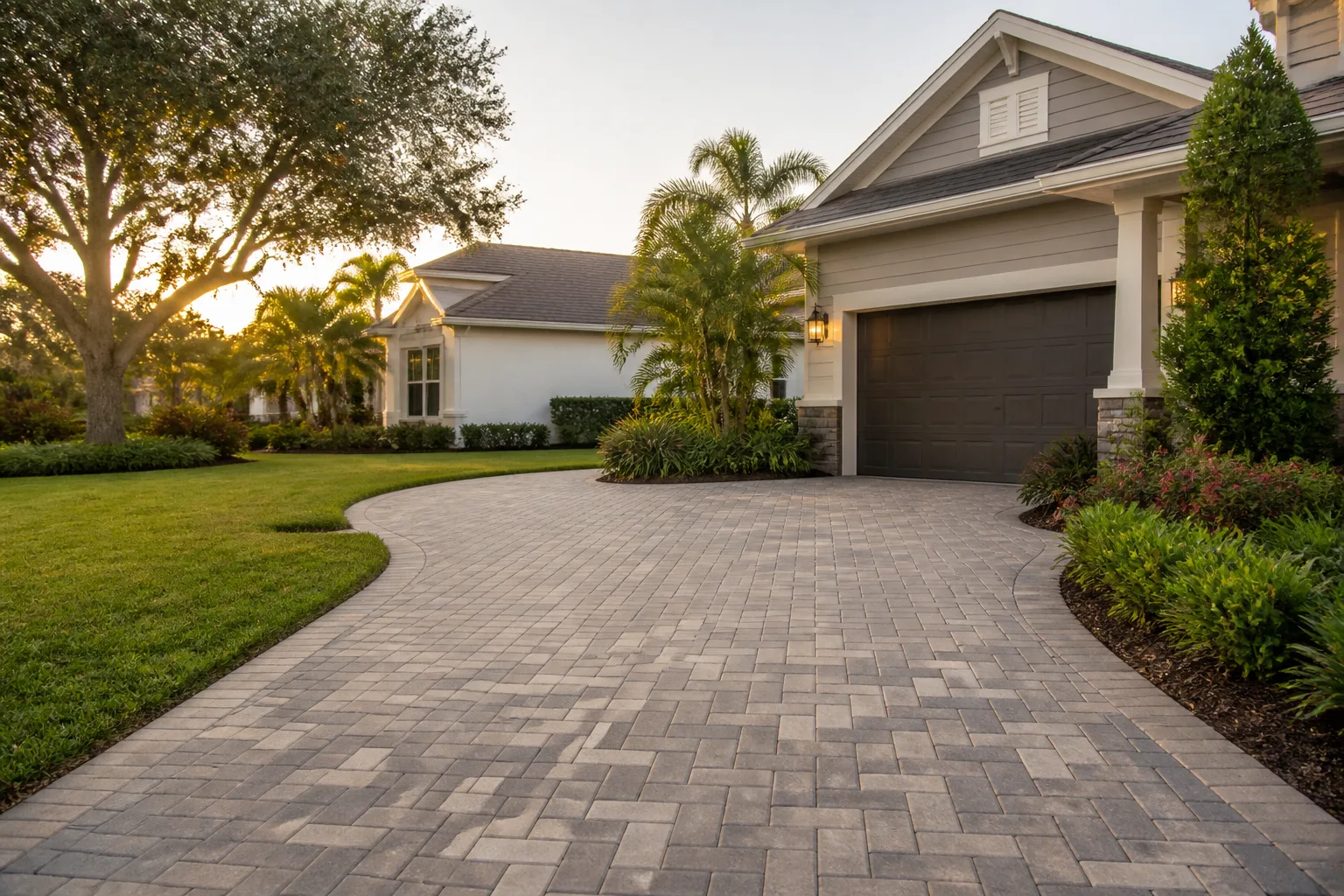
Pavers fail differently than concrete. Interlocking systems depend on three things working together: a compacted base, a bedding layer, and joint sand. When any one of these slips, you’ll see signals specific to pavers.
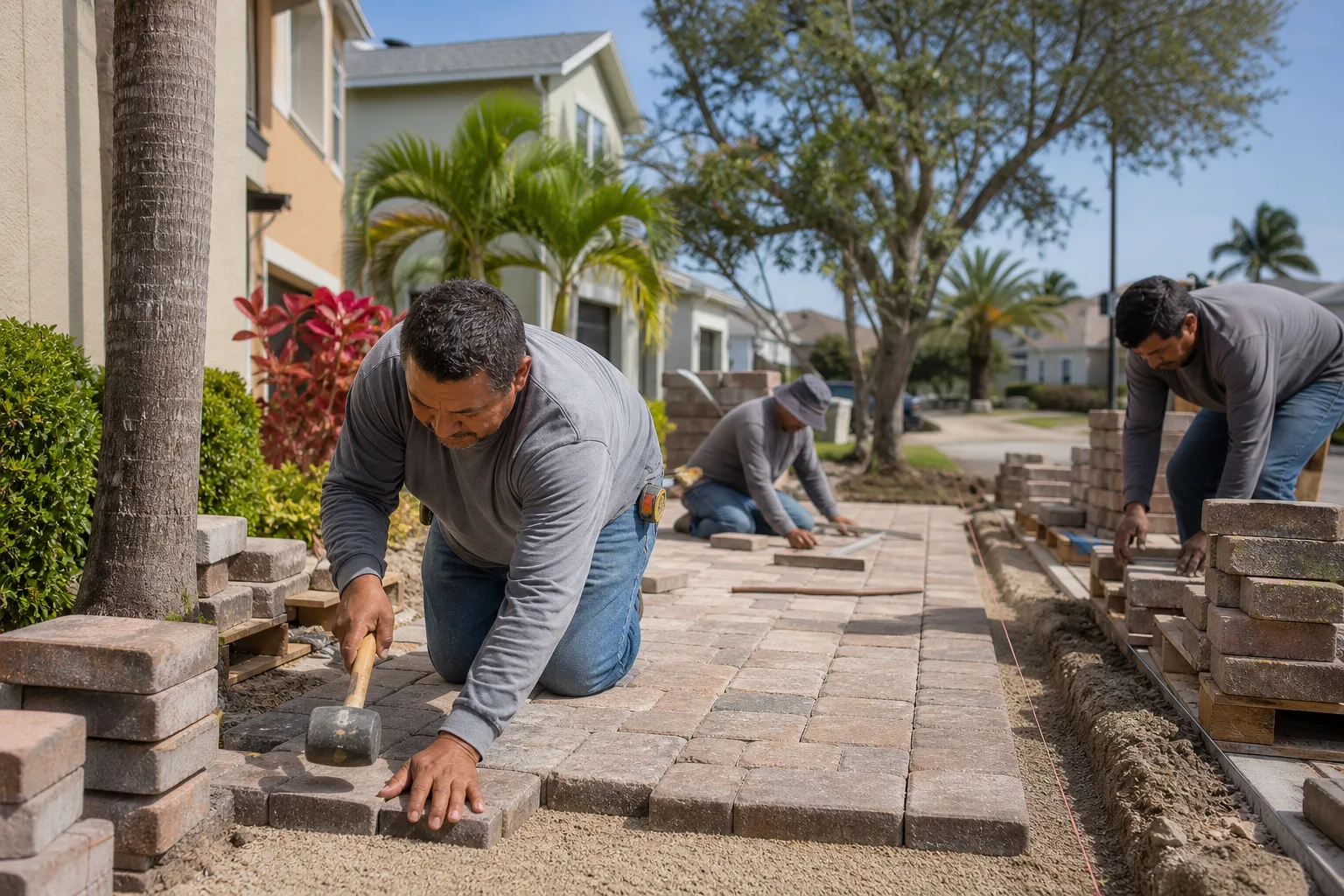
Edge creep is the first warning most homeowners notice. The pavers along the driveway edge start sliding outward toward the yard or street. It looks like the driveway is slowly expanding. This means the edge restraint failed – either it wasn’t installed correctly, or the base has started to give. Left alone, edge creep can cascade across the whole field.
Joint sand washout is subtler. Look for joints where you can see down into the gap instead of seeing packed sand. The gaps widen, pavers start shifting, and weeds take hold. Once sand is gone in more than a few isolated spots, the whole system is losing its lock.
Rocking pavers are the signal you can feel. Walk the driveway in flat shoes. If any paver rocks underfoot, even slightly, the base beneath it has failed. The paver isn’t the problem – the void under it is.
Uneven surface plane. Stand at the street and look down the driveway. If you see waves or dips that weren’t there when the driveway was new, water will find them next rain.
Color fade on a specific area. One zone of pavers lighter or darker than the rest is often where water is pooling long enough to affect the finish.
When we install with Groundwork Construction Co. of Mesquite home-grade base prep, we compact in lifts – which is exactly what prevents every one of these failures. Quality pavers like Belgard will last decades when the base is right and fewer than ten years when it isn’t.
Spotting Cut Corners in a Previous Install
If you bought your home within the past few years and the driveway looks new but is already showing problems, the previous contractor may have skipped steps. This matters both for repair planning and for post-storm insurance documentation – insurers want to know whether the damage was install-related or event-related.
Here are the signs of a shortcut base job:
- Paver surface isn’t compacted uniformly. Tap across the surface with a hammer handle – you should hear solid, consistent sound. Hollow thuds in patches mean air voids in the base.
- Edge restraint is missing, partial, or loose. Walk the perimeter. Every exposed edge of a paver field should have a restraint (usually a plastic edge or a concrete curb). Gaps or loose sections mean the installer skipped it.
- No visible joint sand fill between pavers. Look down at the joints. If you can see more than a quarter-inch of gap in more than a few spots, the sand never got a full install or has fully washed out.
- The driveway slopes toward the house. This is the worst base-prep failure. A proper install pitches water away from the structure. If you find your driveway holds water against the house, the previous installer skipped the grading step.
- Excavation was too shallow. You can’t see this from the surface, but it shows up as early settling – typically within two years of install. On a properly prepped base with six inches of compacted aggregate, settling shouldn’t show up that fast.
- Pavers are uneven in color and surface texture in a way that suggests mixed lots or below-spec products. Quality brands like Belgard ship consistent lots; bargain-bin pavers don’t.
- Concrete slabs showing honeycombing – visible aggregate pockets on the surface or edge. That’s a poor mix or rushed pour, and it fails faster.
If you’re seeing two or more of these together, don’t wait for a failure. Get an inspection and get a written assessment in hand. For more on how we approach a proper base on the front end, see our driveway paver installation overview for Mesquite.
The 3-Warning-Sign Threshold
This is the rule we give every homeowner we visit: one warning sign in isolation is a “watch it” signal. Three or more happening together is a “call a professional this week” signal.
Why? Because driveway failures compound. A crack that lets water in weakens the base, which sharpens the slope, which increases water intrusion. It’s a feedback loop – one cue amplifying the others. By the time you’re seeing three signals, the failure is already accelerating.
A quick checklist to score yourself:
- Diagonal or stair-step crack at a corner (yes/no)
- Water pooling within 6 inches of foundation after rain (yes/no)
- Rocking pavers or edge creep (yes/no)
- Displaced slab (difference across a crack can be felt) (yes/no)
- Prior repair failing in the same spot within 12 months (yes/no)
- Sunken dip greater than 1 inch across any 2-foot width (yes/no)
- Joint sand washed out in more than a few spots (yes/no)
One yes: monitor and re-check in three months. Two yes: book an inspection within 60 days. Three or more: call now. Don’t put it off for the “right season” – a failing base gets worse sitting through a North Texas summer, then a wet fall, then a freeze cycle.
Why Mesquite Clay Soil Accelerates Driveway Damage
Not all soil is created equal, and Mesquite sits on expansive clay that swells when wet and shrinks when dry. This is the single biggest factor in how quickly driveway warning signs turn into failures here.
A driveway over clay base moves, period. The question is whether the base underneath was built to flex with it. A properly prepped install uses a deep compacted aggregate base and edge restraints that hold against the season-to-season cycle. A shortcut install doesn’t, and those are the driveways that fail inside ten years.
If you’ve ever noticed that your driveway has more cracks than a friend’s a few miles away on similar soil, this is likely why. It’s not the concrete or the pavers – it’s what’s underneath, and whether the base was designed for the local soil conditions.
Expansive clay also shifts the pitch of the driveway over time. That pitch is what keeps water moving away from your house – the exact problem we discussed earlier. When the clay swells and shrinks under a driveway that wasn’t built for it, the pitch flattens. Water pools. Foundation problems start. Every homeowner deciding between repair and replacement should factor this in. And if you’re planning an addition or shop building that touches the driveway, talk to your driveway contractor and your builder together – our home additions and ADU service in Mesquite coordinates on exactly this handoff.
The Best Time of Year to Fix a Failing Driveway in North Texas
The best time is when the ground is stable and dry enough to compact a new base correctly. In North Texas, that’s typically late spring through mid-fall. Doesn’t mean those are the only times to do the work – it means those are the times when the compaction will hold and the base won’t move while it’s being installed.
What we don’t recommend is waiting through a wet fall or a winter freeze to address a driveway that’s already showing three warning signs. Freeze-thaw cycles open cracks into wider channels. Water sitting in a crack overnight, freezing, expanding, and thawing once a week through a January does damage faster than the summer heat does. Same goes for the paver systems where a washout is already there – freeze-thaw will loosen pavers more every cycle.
If your driveway is at the three-signal threshold in fall or winter, an inspection now serving as a planning step for a spring repair is still a good move. Assessment is free in Mesquite, and getting a written scope in hand lets you decide on timing with full information, not guesswork.
Repair or Replace? Reading the Signals
Once the failure is confirmed, the next question is always the same: can this be repaired, or does it need to come out? The answer is usually written in the warning signs you’ve already been tracking.
Repair signals (targeted fix is likely enough):
- Cracks confined to one area or one slab section
- Settling dip localized to under 2 feet of width
- Isolated rocking pavers (under 10% of the field)
- Edge creep limited to a single exposed edge
- Joint sand washout in a few discrete spots, not pervasive
Replace signals (partial repairs will fail):
- Cracks spread across more than a quarter of the surface
- Multiple settling dips across different sections
- Slope re-pitching required along the full driveway
- Base failure confirmed – voids, poor compaction, or no edge restraint
- Rocking pavers in more than one-third of the field
- Past repairs failing in the same spots within 18 months
A hard fact: quick-fix crack filling on a foundation-failing driveway buys you a couple of seasons, not a decade. If the base is moving, the crack keeps coming back. Repair the base or the driveway will keep telling you the same story.
Common Mistakes to Avoid
- Sealing over a structural crack instead of diagnosing it. Sealer traps moisture in the base, accelerating the failure. In Mesquite’s climate, sealing a moving crack in spring often means a worse crack by the following winter.
- Treating water pooling as a “foundation company” issue first. Nine times out of ten, it’s a driveway pitch problem – and fixing the driveway is cheaper and often fixes the symptom. Get the driveway inspected before you call for foundation work.
- Ignoring pavers that rock underfoot because “it’s just one paver.” A rocking paver is a base void. Not repairing it means the void spreads to the neighboring pavers, which is how a two-paver problem becomes a full-field problem.
- Waiting out a wet season on a driveway that already shows three signals. Freeze-thaw cycles over one North Texas winter widen the failure field wide enough to double the eventual repair scope.
- Hiring a “driveway sealer” for what needs a base repair. Cosmetic services on a base failure leave you with the same diagnosis twelve months later, minus the money spent in between.
- Skipping the written inspection when the prior install looks new. Post-storm insurance claims frequently need to establish whether damage was caused by the event or pre-existing install failure. A written assessment protects you on both sides.
- Scheduling installation in wet weather without compaction verification. A base compacted in wet clay doesn’t hold. Insist that compaction is verified before paving – and if a crew is willing to skip that step to speed up the schedule, that’s your signal to walk.
See the difference
 Before
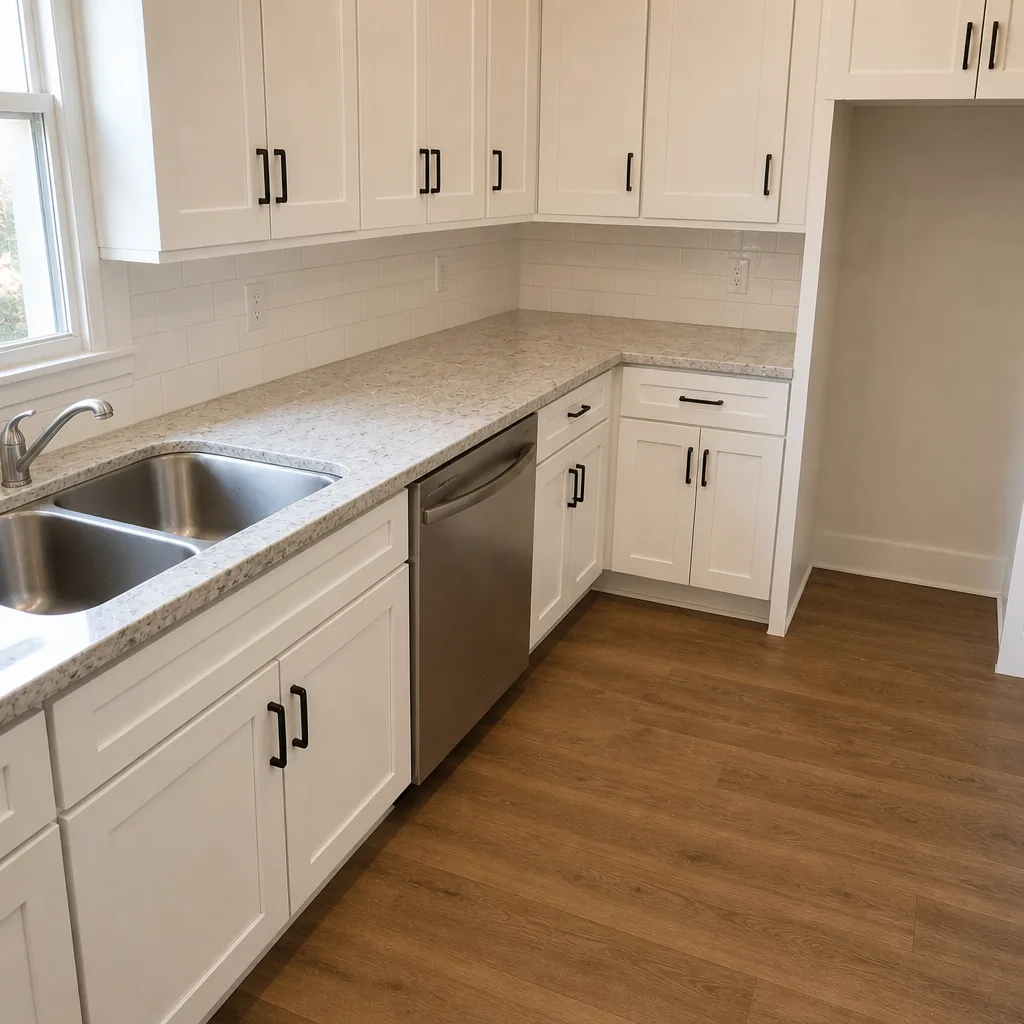 After
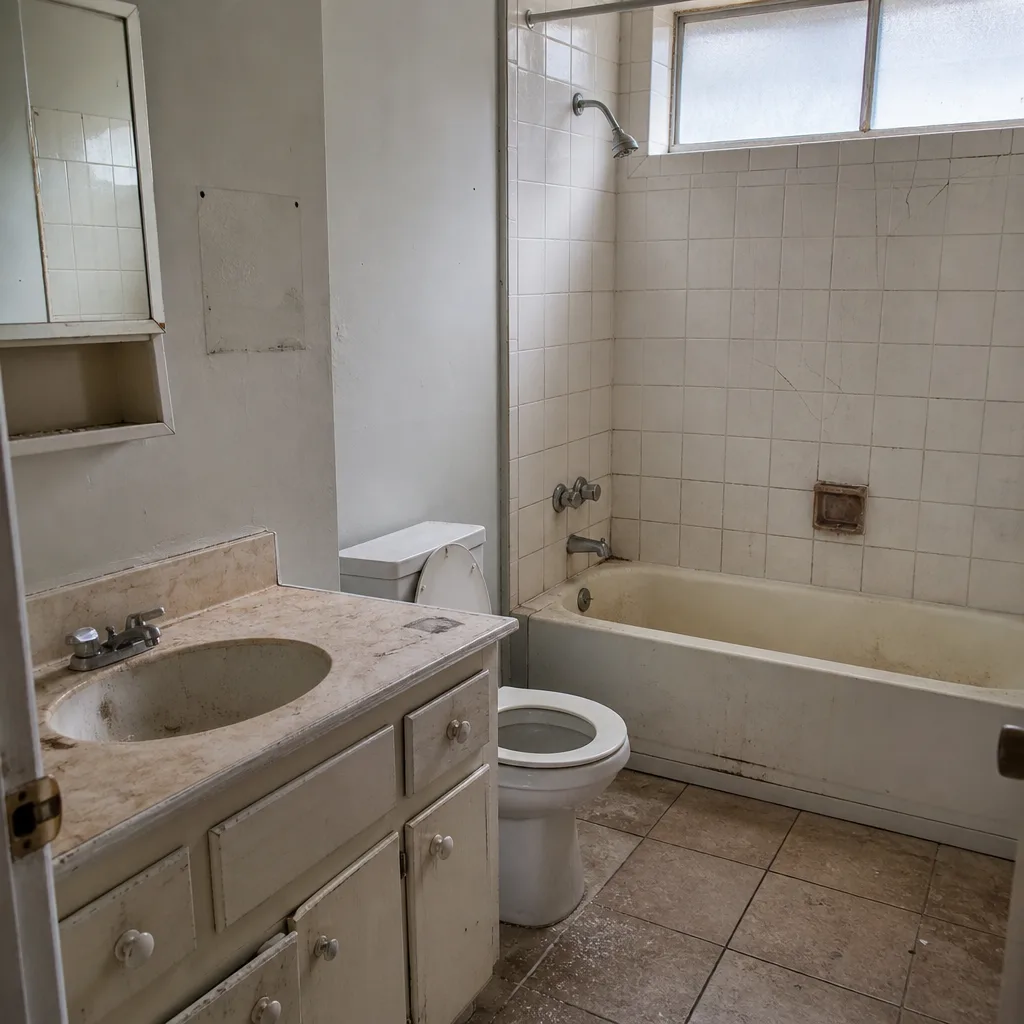 Before
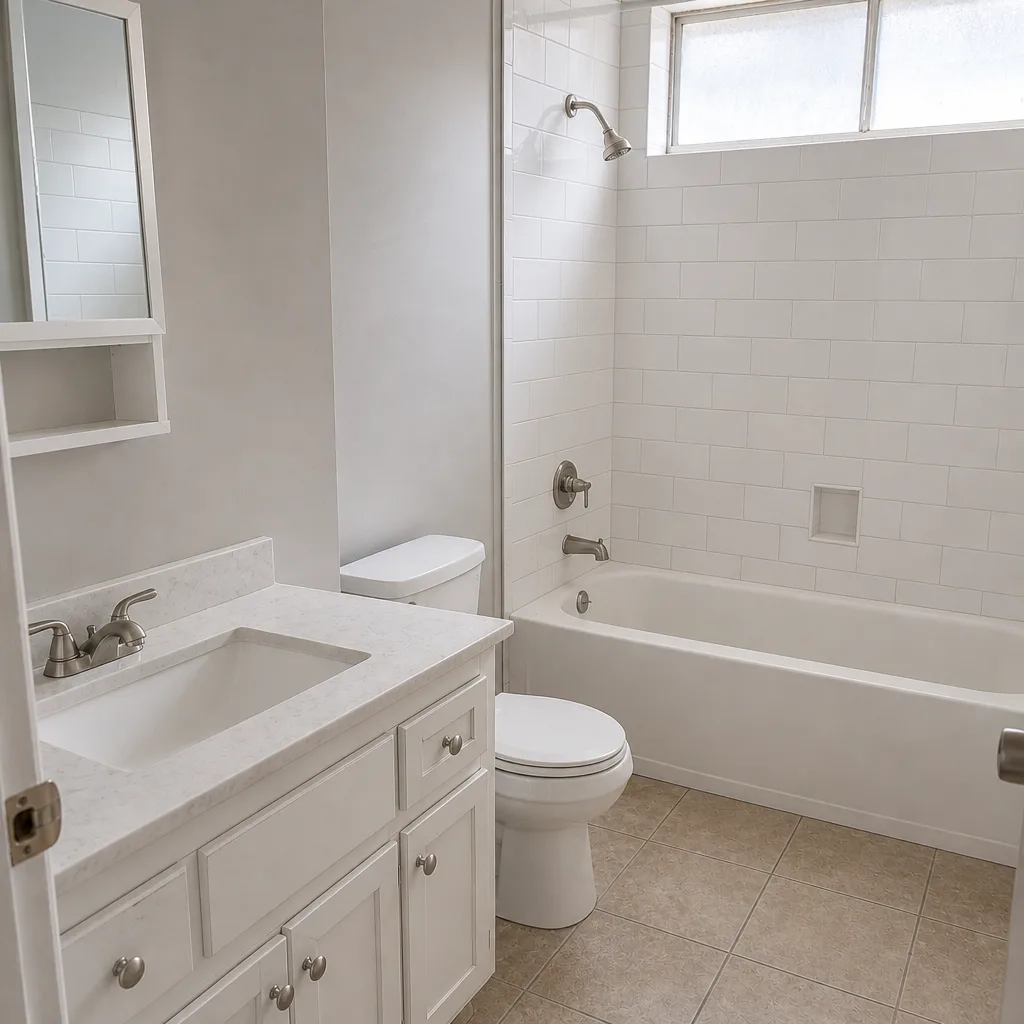 After
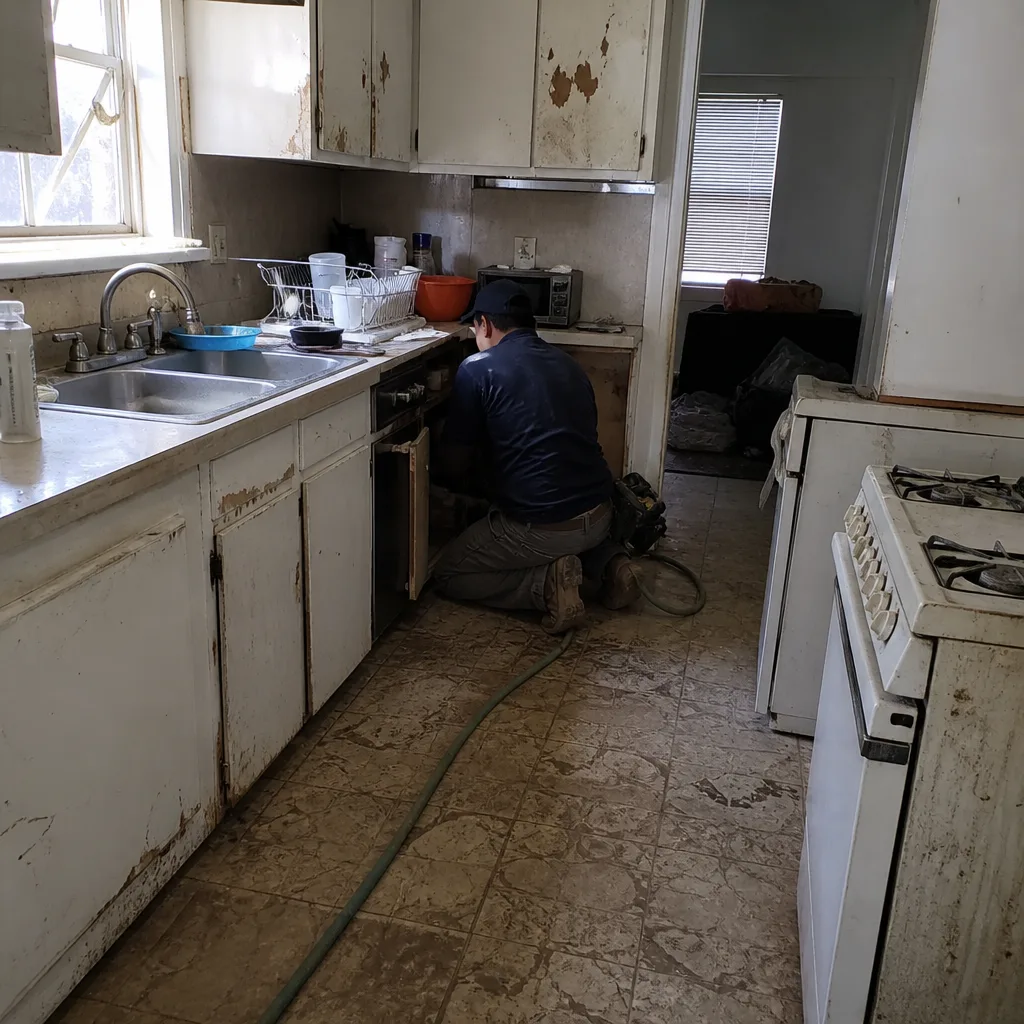 Before
 After
When to Call a Professional
Call a professional if any one of these is true: your crack is wider than a quarter-inch, your water pools against the foundation within six inches and doesn’t drain within a few hours after rain, your pavers rock underfoot, or your driveway has three or more warning signs from the checklist above. Also call if a prior repair in the same spot has failed twice – that’s base failure, not bad luck, and no amount of surface patching will fix it. Groundwork Construction Co. of Mesquite offers free estimates in Mesquite – call (888) 426-8078. Our technicians have up to 12 years of experience, every project is covered by our 730-Day Done Right Promise, and pricing is upfront – the number you see is the number you pay.
Frequently Asked Questions
The top warning signs we see in Mesquite driveways are diagonal cracks at the garage corner, water pooling within six inches of the foundation after rain, and pavers rocking underfoot. Because of the local expansive clay soil, these tend to escalate faster here than in other parts of North Texas. Any one of the three is worth an inspection.
Repairs vary widely based on the failure type – a simple slab re-pitch or a joint sand refill costs far less than a partial base repair or a paver reset. That’s why the inspection comes first and why a written, line-item quote matters. Call (888) 426-8078 for a free estimate on your specific driveway.
A settling crack is typically hairline (under 1/8 inch), roughly vertical, and appears in the first couple of years after a pour. A structural crack is usually diagonal or stair-step, wider than a quarter-inch, or has visible displacement where one side sits higher than the other. The second type needs a professional inspection – don’t fill it and wait.
Often yes – if the failure is isolated to a small area and the base beneath most of the field is intact. Individual pavers that rock can usually be lifted, base corrected, and reinstalled with matching product from Belgard or the original manufacturer. Once failure spreads beyond a third of the field, full replacement is the honest recommendation.
Replacement work often requires a permit, and repairs that affect the sidewalk apron or the city right-of-way almost always do. Requirements also vary by whether the driveway serves a residence or touches drainage infrastructure. Ask any contractor directly whether they pull the permit for your scope – the answer should be an unambiguous yes.
Not when the scope is set in writing before the work begins. Groundwork Construction Co. of Mesquite quotes upfront pricing – the number you see is the number you pay. If the inspection uncovers a hidden condition (e.g., failed base under a section that looked intact), we document it and discuss before proceeding, not after the invoice. Call (888) 426-8078 for a free estimate.
The Bottom Line
Most driveway emergencies were visible 12 to 18 months before they became expensive. Diagonal cracks, water pooling against the foundation, pavers rocking underfoot, edge creep, and joint sand washout are all specific, readable signals. One of them is a “watch.” Three or more together is a “call now.” In Mesquite’s expansive clay, that timeline compresses – what looks stable in March can be moving by winter. The homeowners who save the most money are the ones who call on the first signal, get a written assessment, and fix the base instead of the surface. If you’re seeing any of these, call (888) 426-8078 for a free estimate. Whether it’s a paver reset or a full driveway replacement, our team handles the whole scope with quality partners like Belgard and James Hardie – and every job is protected by our 730-Day Done Right Promise. For the surrounding property, our fence installation in Mesquite team is the right call when the driveway and fence share a boundary – and we’re here to answer the phone any hour, live.
Written by the team at Groundwork Construction Co. of Mesquite.